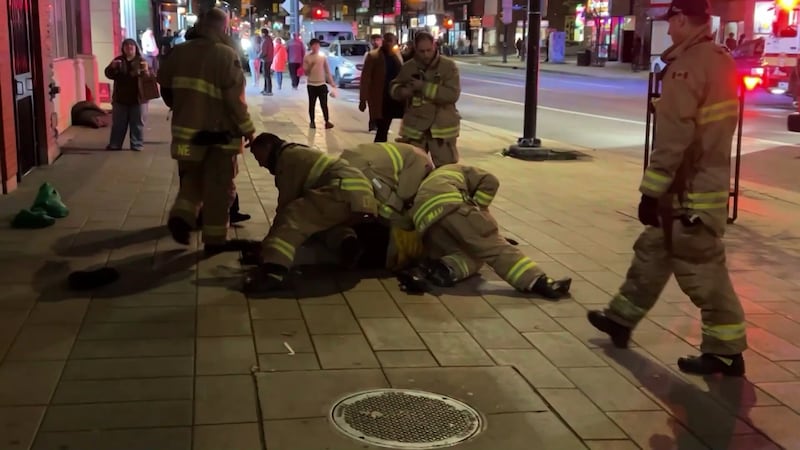
A man using an uncertified after-market adapter to charge his Tesla was knocked to the ground by an explosion in a caught-on-camera incident last year. The fiery blast happened while the driver was stopped at a non-Tesla commercial charging station in August 2024, according to an incident report published by Technical Safety B.C. earlier this month. “A short circuit between the charging cable of the charger and an after-market charging adaptor resulted in an arc-flash,” reads a summary of the findings. The driver suffered only minor scrapes after being thrown off his feet, according to the regulator, but his vehicle was left with “burn marks” and “significant scorching” at its charging port. The adapter – manufactured and sold by A2Z EV – was “blown in half, significantly melted and damaged,” the report said. An adapter is required to charge Teslas at non-Tesla charging stations, Technical Safety B.C. explained, but the company’s policy prohibits the use of third-party devices. “The policy states that prohibited devices that are advertised by third parties as compatible with Tesla charging equipment are dangerous and therefore remain prohibited, even if sold under such advertising,” the incident report reads. While the adapter was also uncertified in Canada, the regulator noted there was “no finalized approval standard” at the time that would have allowed the company to certify its product for use in the country. It had been tested in China. In an email, A2Z EV CEO Amine Zitour told CTV News the “vast majority” of the company’s North American adapters are now certified by the Canadian Standards Association. “We take safety seriously, we are part of safety committees and care for our customers’ well-being,” Zitour said. Images of the certification marks found on approved devices are available on the Technical Safety B.C. website. In a statement, the regulator said there was not “sufficient evidence” to confirm whether the “charger, adapter or some combination of the two” caused last year’s incident. “We encourage all electric vehicle owners to use certified charging equipment and inspect it for signs of damage or melting before plugging it into your electric vehicle,” the statement added. “When using third party charging infrastructure, look for any abnormal mechanical or heat damage before plugging your vehicle in. If you notice anything unusual, don’t use the equipment and notify the equipment owner. “ The Tesla driver told an investigator he had his adapter for two years and had used it approximately 50 times without incident before the explosion. The commercial charger, manufactured by Freewire Technologies, had also registered multiple “low resistance” errors, but there had been no recent incidents that would have “put the charger in fault mode and require on-site service,” according to the incident report.