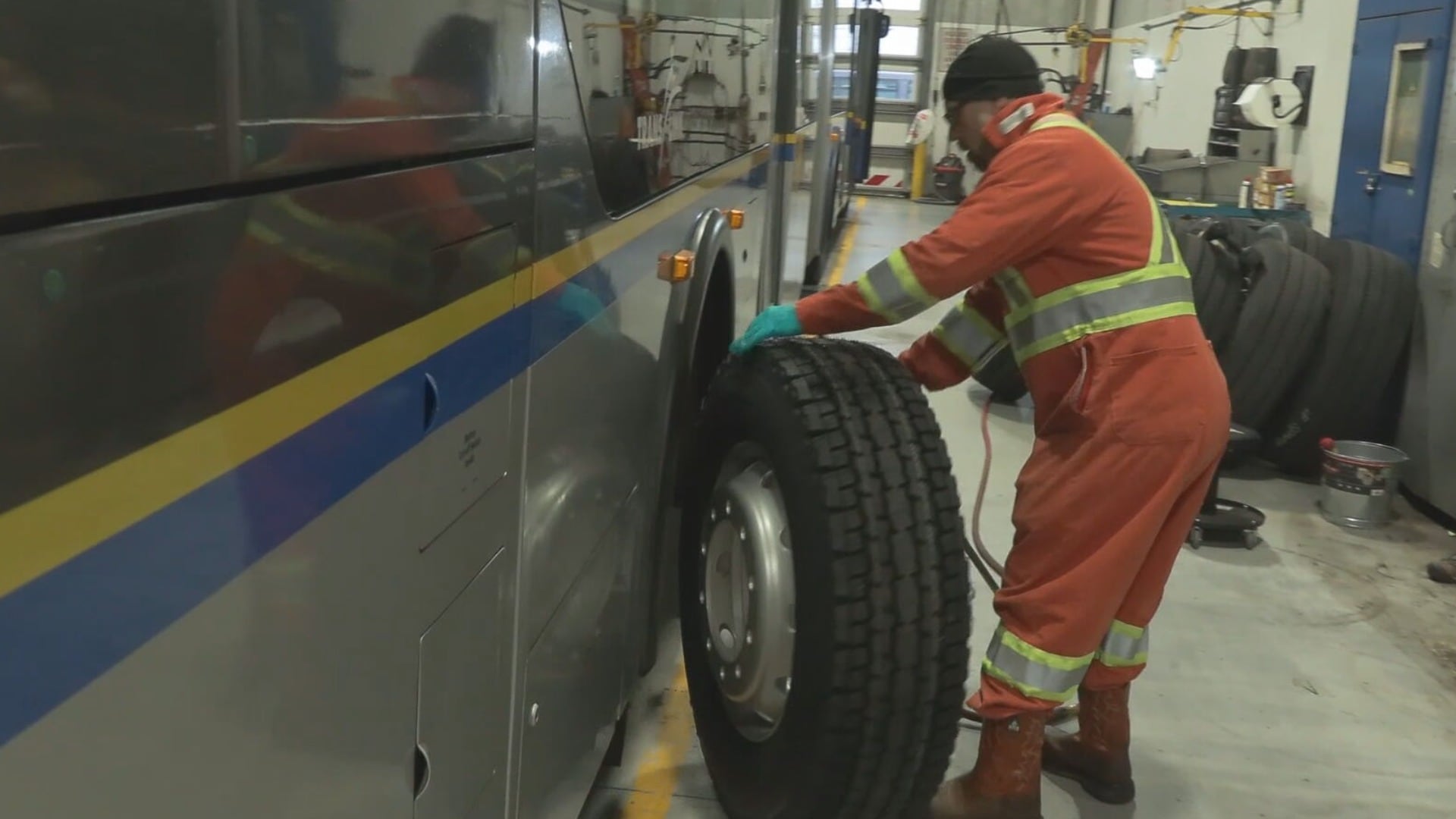
It’s too early to know how many snow days Metro Vancouver will see this winter, but TransLink wants riders to know that planning for cold weather conditions is already underway. At a media tour of the agency’s Vancouver Transit Centre, it provided some statistics on what its winter preparation looks like. That includes equipping 80 per cent of the bus fleet with specialized tires that provide better traction in snow and rain. A mechanic demonstrated just how quickly the tires can be swapped out on a Coast Mountain Bus Company vehicle, using a pneumatic wrench to replace one in under two minutes. TransLink expects its buses to travel more than 25 million kilometres this winter, and should some of those be through snow, sleet or icy conditions it’s urging passengers to be patient. That includes those who rely on SkyTrain. “Please check the service updates before you leave your home. That will give you an idea of how much time you will take for the same trip to get you on a snow day versus a regular day,” said Mo Hassabou, senior manager of customer experience and station operations. On snowy days, normally automated SkyTrains will have an attendant on board who can take the controls and safely manage appropriate speeds when the tracks get icy. Riders of buses and trains are also encouraged to dress for the conditions because despite its best efforts, on some winter days TransLink will be unable to guarantee riders won’t have to spend extra time outdoors. When temperatures dip, specialized de-icing trucks will patrol trolley routes to keep ice off the overhead wires that power buses. TransLink says staff in its operations centre will also coordinate closely with municipalities across the region because they are responsible for salting, sanding and plowing the roads. “We’re in constant communication with them, and they identify trouble areas for us and help us clear those roads so that we can keep our buses running,” said Shirley Samujh-Dayal, Coast Mountain Bus Company’s director of operations. Driving safely in winter conditions can be challenging for any driver, but it’s especially important for those trying to safely transport the travelling public. That’s why CMBC has a driver training simulator at the Vancouver Transit Centre. “We can use this to simulate different winter weather scenarios to help operators mitigate their problems they might have out on the road,” said CMBC driving instructor Bob Billington. He stressed the simulator is not used for new driver training, only for those already employed and in need of additional experience in different weather conditions.