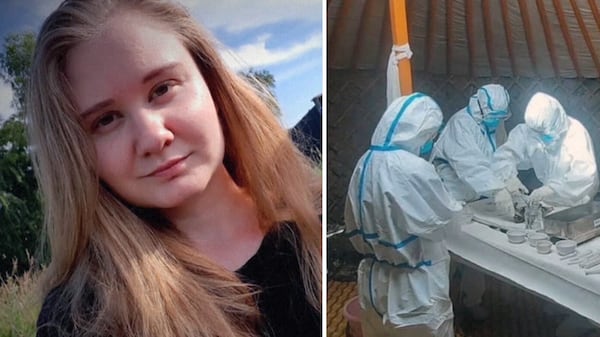
A former Simon Fraser University student says she was sexually assaulted on campus years ago—and that coverage of the “Cornell 7” case inspired her to go public with her story. The woman, who asked to be identified only as Lee, shared details of her experience last week on social media, including challenges she faced trying to report the incident. She told CTV News she was sexually assaulted by a teaching assistant during office hours when she was a first-year student at SFU in 2014. “The next thing I know he is touching my leg and trailing his fingers up,” recounted Lee. “Then he started groping me and he started rubbing me through my jeans.” Lee said she initially went to SFU’s Women’s Centre—an on-campus, student-run resource group—to get information about the process for making a report to the university. “Their response was you can report him but he will know it came from you, you can’t be anonymous and you’ll have to recount what happened with him present,” she said. Lee also tried to report the incident to the police, and said she was discouraged by their response. She recalled being told: “Unfortunately, because nobody was present, this would be a case of ‘he said, she said,’ and so it would be hard to take action.” Lee said the campus registrar also told her it was too late in the semester to drop the course with that TA without a penalty. She then transferred to a different SFU campus—but said due to her declining mental health and a lack of university support, she ultimately dropped out in 2015. “I saw a therapist at the time but nothing seemed to help,” Lee said. “I was increasingly anxious about going to school. What if I bumped into him?” She said coverage of the alleged gang-rape at Cornell University gave her the courage to speak up on Instagram and advocate for change all these years later. “I was a foreign student. I was a single mom. I was young,” she said. “And I am not any of those things anymore.” Troubling statistics According to the advocacy group Ending Violence B.C., one in 10 female Canadian students experience sexual assault in a post-secondary setting. Johanne Lamoureux, manager of community-based victim services with Battered Women’s Support Services in Vancouver, said educational institutions often do not have the tools needed to protect victims. “They come from a place of protecting themselves, they come from a place of doubt—and then the survivor gets really scrutinized and that further traumatizes them,” said Lamoureux. Assaults at such institutions often occur between a student and someone in a position of authority over them, such as a professor or teaching assistant, Lameoureux added. “There’s so much at stake—there’s your education, your reputation, there is future possibilities,” she said. Lee said she hopes by speaking up now, she can help compel more schools to implement real policies to protect their students. “Students shouldn’t have to worry about whether or not they will see their abuser in the hallway, be forced to go to class,” she said. University supports improved In a statement to CTV News, SFU associate vice-president Lisa Collins said the university is aware of Lee’s post and was “saddened to hear about anyone’s experiences of sexual assault.” She said SFU has improved supports since 2014, and continues working to do better. “Since 2018, SFU’s Sexual Violence Support and Prevention Office has provided free, confidential, survivor-centered and trauma-informed support for students and employees, regardless of when or where an experience of sexualized violence occurred,” Collins said. “Sexualized violence has no place in our community and SFU is committed to creating a campus community where all students feel welcome, safe, accepted and appreciated in learning, teaching, research, and work.” The university’s Women’s Centre has also reached out to Lee, offering to write her a formal apology. In an Instagram direct message provided to CTV News, the centre said: “I am sorry that we failed you. I am sorry you were left unsupported and dismissed, and that you weren’t given any tools to navigate the situation.” “I can’t make that not the reality of the situation you experienced.”