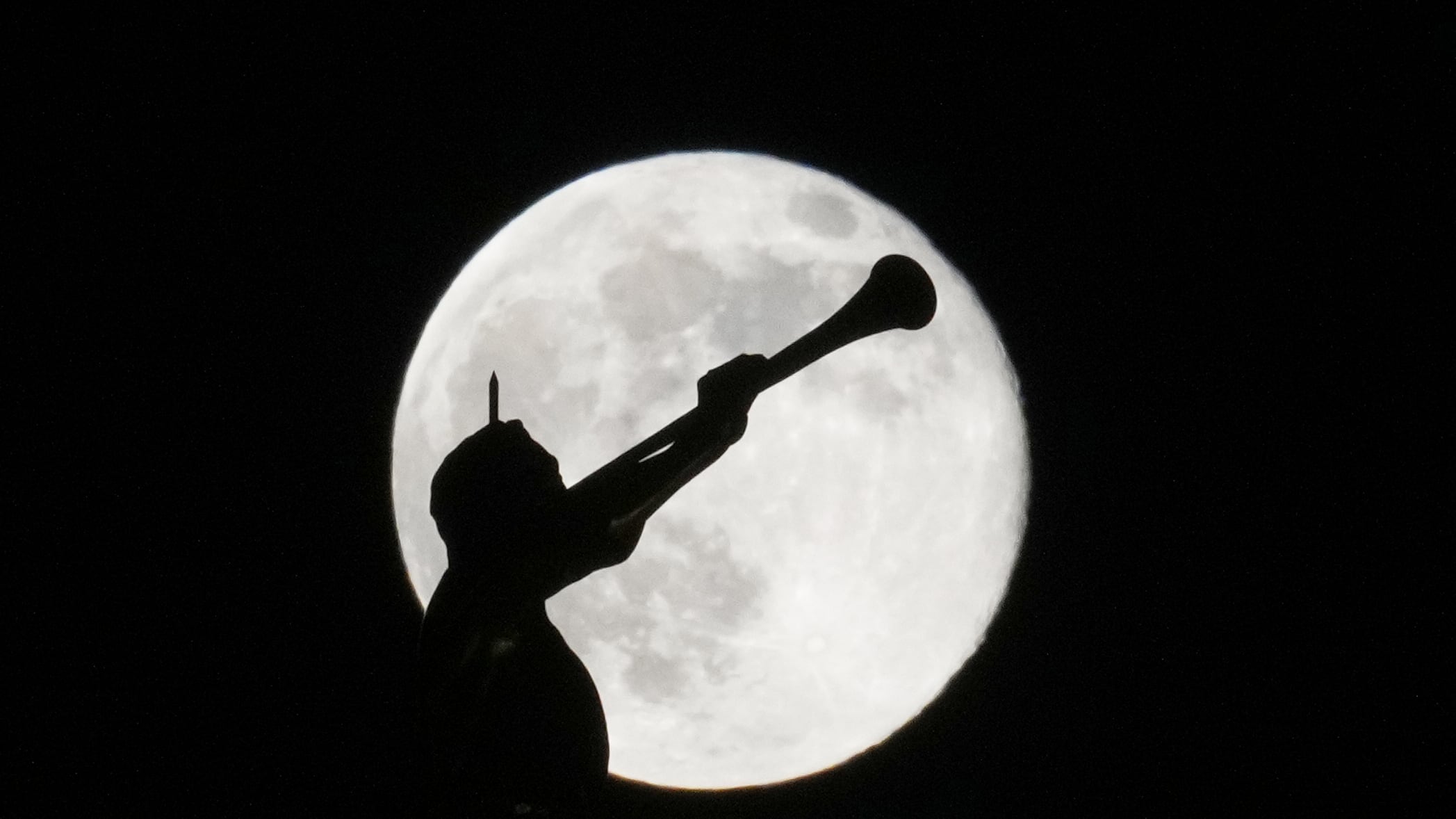
If conditions are right, you may be able to spot the Full Beaver Supermoon soon. It’s the second supermoon of the year and the first among three consecutive supermoons, according to The Old Farmer’s Almanac. The other supermoons will occur on Dec. 23 and Jan. 22. The supermoon in November is typically known as the Beaver Supermoon. It isn’t an ordinary full moon – it’s brighter and larger and happens near perigee or when the moon is “at its closest point to Earth in its orbit,” according to the Old Farmer’s Almanac. “For most casual observers, the difference is subtle, but it’s more noticeable if compared to a micromoon, when the Moon is at its farthest point from Earth,” it stated. According to The Weather Network, you can observe it from Monday through Wednesday. No special gear is required, though binoculars or a telescope may allow you to get a better view, NASA says. The moon is expected to reach its “peak illumination” at 9:53 a.m. EST on Tuesday if the skies are clear. The phenomenon could be observed from Monday through Wednesday morning. You can find out the time it will appear in your area through the Farmer’s Almanac Moonrise and Moonset Calculator. Why is it called Beaver Supermoon? The name is connected to “early Native American, Colonial American, and European folklore,” according to the almanac. “This is the time of year when beavers begin to take shelter in their lodges, having laid up sufficient food stores for the long winter ahead,” stated the almanac. “During the fur trade in North America, it was also the season to trap beavers for their thick, winter-ready pelts.” The last supermoon, called the wolf moon, appeared in January. The moon got its name because wolves howl more often during that time of year, according to The Old Farmer’s Almanac. With files from CNN