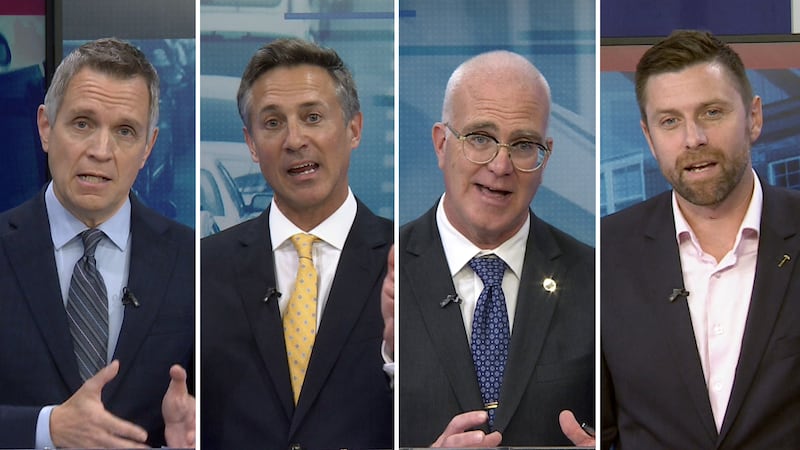
They are the meticulous, innovative surgeons extracting skin cancer from the most sensitive of areas and after years of advocacy, they’ll be able to see twice as many British Columbians. Doctors Angela Burleigh, Noelle Wong, and Iren Kossintseva joined forces to work with a Vancouver Coastal Health subsidiary to make the case for a dramatic expansion of ultra-specialist Mohs micrographic surgeries. Known for decades as the gold standard for treating skin cancer with the highest cure rates, only six surgeons in B.C. are trained and adept at the process: applying local anaesthetic around the confirmed skin cancer, removing it and sending it to the in-house lab where a technician slices it into micrographic slivers for the surgeon to scrutinize under a microscope. If they observe cancerous cells, they keep removing skin, muscle and other tissue until the patient is cancer-free. “That means sometimes we’re rebuilding noses from scratch, eyelids from scratch, entire halves of faces,” said Wong. “It’s not just about giving them a nose, we want to give them their nose back.” With expertise and operating time limited, Burleigh says the system has “reserved it for the most sensitive areas, so eyelids, noses, lips, ears, genital areas.” As a result, patients can wait 12 to 18 months for their services. In extreme cases, facial tumours can visibly grow each week, or send tendrils deep under the skin’s surface with little indication of the infiltration and risk unseen. Burleigh added that penile squamous cell cancer is similarly under-detected and Mohs screening offers the best hope for tissue preservation. A novel partnership Typically, B.C. surgeons perform such cancer-reconstruction surgeries in private clinics that are funded by the provincial government. In this case, Seymour Medical established a new space in Richmond’s Urgent Care Centre for the surgeons to go from working part-time to providing Mohs procedures full-time. “This is a way where we can be nimble and patient-focused and provide a very needed service in a way that’s very cost effective and an excellent use of public resources at a time when the public health system is under so much strain,” explained medical director Dr. Eric Cadesky. He estimates wait times will be halved or better within a year. Kossintseva called it a “humongous victory” for surgeons who’ve been advocating for better access for patients in B.C., the Northwest Territories, and the Yukon, adding that it’s a way to free up valuable hospital resources. “We’re not admitting them to the main ORs, we’re not utilizing general anaesthetists,” she said. “If we can speed it along, everybody wins because we don’t have as horrific tumours to deal with, we don’t have to worry about metastatic potential.” Saving lives and identities Without Mohs screening, surgeons have to visually inspect moles and other skin abnormalities that’ve tested positive for basal cell, squamous and melanoma cancers and do their best to estimate where to cut. Sometimes the cancers come back, and patients endure multiple surgeries for the same cancer. Wong showed CTV News documentation from a number of procedures where patients had massive excisions requiring extensive reconstruction, but were virtually undetectable six months post-operation and didn’t require any follow-up procedures. She and her colleagues expressed great pride in not being daunted by large and complex reconstructions in order for patients to live a normal life. “It’s not about vanity, it’s about dignity,” said Wong. “Nobody wants to be disfigured after they have had skin cancer removal and being able to just feel back to their normal selves is so, so important.”