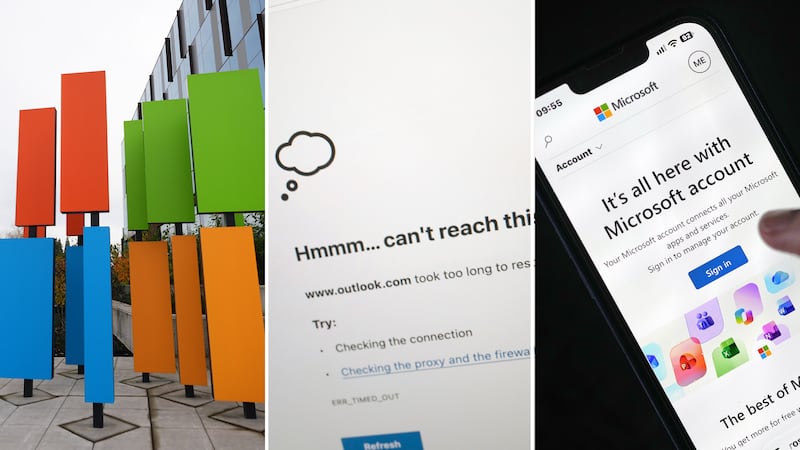
Email bouncebacks and recurring errors in corporate Microsoft apps forced Madison Smith and her colleagues in Vancouver to take an early lunch. But as the outage continued post-lunch on Thursday, the mechanical engineer-in-training says she had to start texting her clients and take the day a bit slower. “It just made me re-prioritize what I was focusing on,” Smith said in a phone interview on Friday. But in some way, she said the outage had a “hidden bonus,” as the office turned more vibrant with chatter as people stepped away from their screens. “People were a little more present, you know,” she said. “Some of my colleagues were cleaning up their offices and doing more manual work that they had just been putting aside.” Scores of Microsoft users worldwide were sharing similar tales online Thursday and early Friday as the outage of the popular workplace software brought offices to a standstill. The outage, which is now broadly restored, affected a range of Microsoft 365 services, including Outlook, Teams and AI assistant Copilot. In a post on X, Microsoft said the company is seeing “broad recovery and stability” across its services and is continuing to restore them gradually. The company cited a network capacity upgrade as the reason for the global disruption. “This was a technical issue not related to cyber or AI agents,” the post said on Friday. It’s not known how many users were affected, but Microsoft said in January that it had more than 450 million paid Microsoft 365 commercial subscriptions. Steve Giguere, principal AI security advocate at Check Point Software, found out about the disruption during a call with a Microsoft employee. “It was literally a joke on the call,” Giguere recalled. “I said, ‘Oh right, my Outlook is not working at the moment, so I can’t send you this piece of detail you need,’ and he went: ‘We know.’” That confirmed for Giguere that it was a bigger issue. Soon, official discussions moved to WhatsApp and Slack, keeping internal communications going. Giguere said many of Check Point’s clients also use Microsoft 365 so talks began on how the outage would affect them as well and how to prevent any cybersecurity threats. The outage, Giguere said, “was extremely disruptive for us at Check Point, because we move at breakneck speed in technology.” But he said there’s a lot to learn from such disruptions for businesses. “It’s just the fact that we are sometimes a little bit too reliant on our core hyperscaler, whether that be Microsoft or something else,” he said. “We need to understand that we need to have redundancy in our applications.” By redundancy, Giguere meant having independent communication systems to carry on business as usual. Old-fashioned phone calls came to rescue Juliet Gomina, when she realized her emails were sitting in her mailbox — undelivered. But some of her phone calls were met with surprise on the other end of the line, she said. “Some of the contractors were like, ‘Oh, Juliet, why are you calling? I just sent you an email,’” said Gomina, who co-ordinates work with construction workers in Calgary. “I was like, ‘Oh, your email did not come through, but I need these to be done right now. So that’s why I’m calling you.’” While she stayed glued to her desk the whole day, the outage eventually slowed her down. “Sometimes I would stay back in the office during my lunch. But yesterday, I had to take a walk to the riverside, just to pass time.” This report by Ritika Dubey of The Canadian Press was first published Nov. 13, 2026.