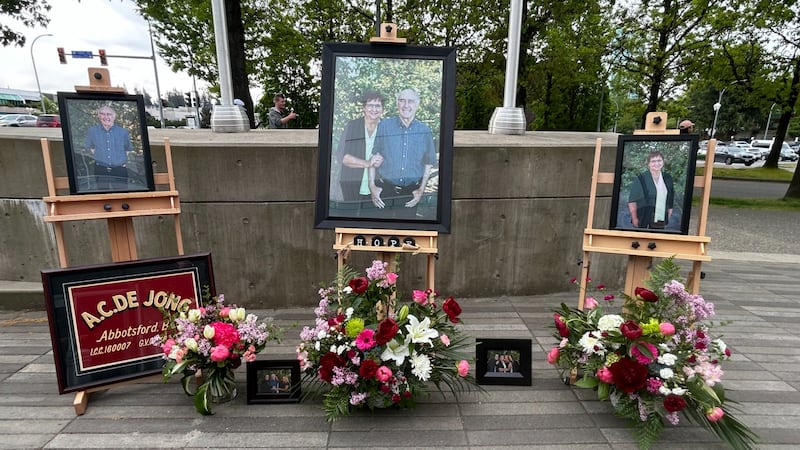
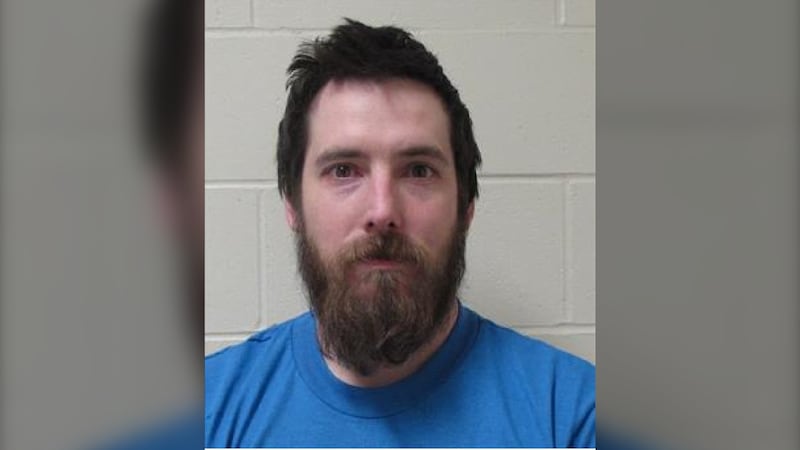
A B.C. Supreme Court judge sent shockwaves through the legal community with a decision announced last month in a double murder trial – and Friday she released the reasons for that decision. Family and friends of Arnold and Joanne De Jong arrived at the Abbotsford Law Courts on Oct. 19 anticipating sentencing for the three men convicted of murdering the senior couple. Instead, they learned the sentence would be delayed as the judge ruled a mandatory 25-year period of parole ineligibility for the killers is unconstitutional. “It knocked us off our feet, basically,” the De Jongs’ daughter Sandra Barthel told CTV News. “It kind of felt like a first-degree murder conviction was something we wanted … but it felt like that didn’t even hold fast anymore. They may as well have pled guilty to manslaughter.” Earlier this year, Justice Brenda Brown convicted Abhijeet Singh, Gurkaran Singh and Khushveer Singh Toor of two counts each of first-degree murder for the brutal slaying of the De Jongs in their Abbotsford home in May of 2022. Under the Criminal Code of Canada, the faint hope clause allows some killers to apply for parole after 15 years, even in cases of mandatory parole ineligibility for longer periods. However, under CCC Sec. 745.6(2), it does not apply to those convicted of multiple murders. The defence argued the exclusion is a violation of Sec. 12 of the Canadian Charter of Rights and Freedoms, which protects against cruel and unusual treatment or punishment, and the judge agreed. Friday, she released the written reasons for that decision. “If Sec. 745.6(2) is struck as unconstitutional, the offenders are not released, they simply have an opportunity to apply to a judge for a hearing before a jury to permit consideration of earlier parole,” Brown wrote. “If these two hurdles are achieved, the Parole Board of Canada still has the ultimate decision as to whether they will receive parole.” She went on to say even if Singh, Singh and Toor are released in the future, they will remain under some form of control for the rest of their lives. Barthel told CTV News her family believes in rehabilitation, but they are also seeking justice—and said if her parents’ killers are allowed to eventually apply for early parole, she doesn’t believe justice will be served. “You took the lives of both of our parents. They were vulnerable. They were in their home. They were sleeping,” she said. “My parents don’t get that additional time back. We don’t get that time back with them. Our kids don’t get their grandparents back. And we’ve been served a life sentence. We don’t have a faint hope clause.” Vancouver criminal lawyer Sarah Leamon is part of Abhijeet Singh’s defence team. “We’re pleased to have received reasons from the court. At this point, we need to take some time to review them and then consider options moving forward. But we are very pleased that we are at least one step closer to a final conclusion in this matter,” Leamon said. The B.C. Prosecution Service said the Crown will challenge the ruling under Sec. 1 of the Charter, which states reasonable limits apply to rights and freedoms. A ruling on those arguments is expected in early 2027, and Singh, Singh and Toor will have a sentencing hearing in February.