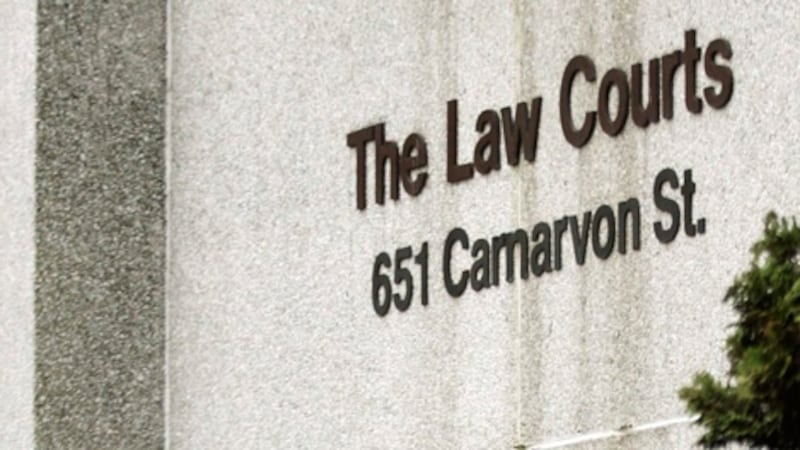
A woman who gave a couple “much of her life savings” to invest in a development in Dubai that never existed has been awarded nearly $1 million in damages in a civil suit, according to a recent judgment. Justice Richard Fowler’s decision was handed down earlier this year and published online Wednesday. Manjeet Kaur Sandhu sued Meera and Kuldeep Virk, alleging the couple engaged in a “fraudulent scheme” to bilk her out of $600,000 with the promise of a 10 per cent annual return on her investment in the non-existent development, according to the judgment. “Ms. Sandhu has clearly been significantly traumatized by the extent of the Virks’ deception of her,” the judge wrote. “I am certain that Ms. Sandhu feels humiliated that she allowed the Virks to deceive her and effectively steal $600,000 of her money. The Virks, particularly (Meera) Virk, relying on claims of being a religiously and spiritually upstanding person, abused Ms. Sandhu’s trust.” The lawsuit also named a number of other defendants alleged to have been involved in the scheme who settled with Sandhu before the case went to trial. The trial went ahead without the Virks’ participation after the judge determined they had been given ample opportunity to attend court to defend themselves but had “simply checked out of this proceeding.” What the court heard Sandhu told the court she met the couple through her brother-in-law, who was a friend of Meera’s. The first payment Sandhu made was in February of 2016. “Ms. Sandhu spoke to (Meera) Virk by telephone and was convinced by her claims of devotion to her Sikh faith, to invest $200,000 in a soon‑to‑be‑completed construction project in Dubai,” the decision said, adding that Sandhu was told her investment would be “secured by a second mortgage against a property.” A week later, Meera contacted Sanhu saying the development project was close to being finished, but more money was needed. A second bank draft for $200,000 was purchased and handed over, according to the decision. “According to Ms. Sandhu, (Meera) Virk presented very well. She drove a good car and was well‑dressed, which Ms. Sandhu found reassuring,” the judge wrote. “Even more reassuring were (Meera) Virk’s promises made before the Sikh religious book, Guru Granth Sahib, that all of Ms. Sandhu’s money would be safe.” Sandhu was provided with a promissory note, saying she would be repaid within four months with the agreed-upon 10 per cent interest, the decision said. Three months later – after being again told the project was nearing completion but short of funding – Sandhu provided another $100,000, the court heard. “(Meera) Virk again expounded upon her probity, religious adherence, and business acumen,” according to the decision. Another three months passed without contact, until Meera again told Sandhu more money was needed. Another $100,000 was handed over and two more promissory notes were provided, the judgment said. “Over the next months, Ms. Sandhu became increasingly anxious despite (Meera) Virk’s continued reassurances that her money would be repaid. Ms. Sandhu would call M. Virk regularly and be convinced not to worry. However, eventually M. Virk stopped returning calls,” the court heard. Nine months after the last $100,000 was handed over, Meera visited Sandhu at her home. At this point it was May of 2017, more than a year after the first payment. “The reassurances continued. Ms. Sandhu was told not to worry. Her money was not going anywhere. Everything was fine. She would be repaid,” the decision said. Two more years would pass before Sandhu filed her notice of civil claim, having received none of her money back and none of the promised interest. “Ms. Sandhu was beginning to experience ‘pain and depression.’ She described not being able to sleep and was extremely anxious about losing all this money. She had to sell her house and buy something smaller,” the judge wrote, summarizing Sandhu’s testimony. “She blames herself and thinks about being ‘ripped off’ every day. Ms. Sandhu is devoutly religious and is particularly troubled by (Meera) Virk’s reliance on faith to convince Ms. Sandhu to invest her money with the Virks.” The couple has never been charged, prosecuted or convicted in relation to this matter, the decision said. Damages awarded Fowler found the Virks liable for breaching the loan agreement and for civil fraud, entitling Sandhu to damages equivalent to $600,000 plus interest at 10 per cent per year. That amount worked out to $1,141,397.26, the decision said, but the award was reduced by $330,000 to account for the settlement paid by the other defendents in the case bringing the total down to $811,397.26 Sandhu also claimed aggravated damages, which the judgment explained are compensation for “intangible injury, for example humiliation, anguish, and damaged self‑esteem caused by the defendants’ conduct.” Fowler awarded $75,000 in aggravated damages in the case, detailing the effects of the Virks’ actions. “The impact of such brazen and continuing dishonesty by (Meera) Virk, interwoven with references to their shared religious faith, was inevitably going to cause significant intangible injury to Ms. Sandhu,” the judge wrote. “Her distress and humiliation were palpable as she gave evidence. The Virks’ conduct continued for over a year; promises and assurances repeatedly made and repeatedly broken. This is not a case of one or two false statements or one or two assurances or reassurances, but rather a case involving repeated and enduring dishonesty.” Sandhu was also awarded $90,000 in punitive damages, with the judge citing the need to denounce and deter the Virks’ conduct. “The plaintiff was extremely vulnerable. The Virks appear to have been highly skilled at exploiting that vulnerability. Although the police were notified, no charges were ever filed. The Virks’ conduct has therefore gone unpunished,” Fowler wrote, adding there was a need for “retribution” in the case. In total, Sandhu was awarded $976,397.26 in damages. She was also awarded costs in the amount of $20,000.