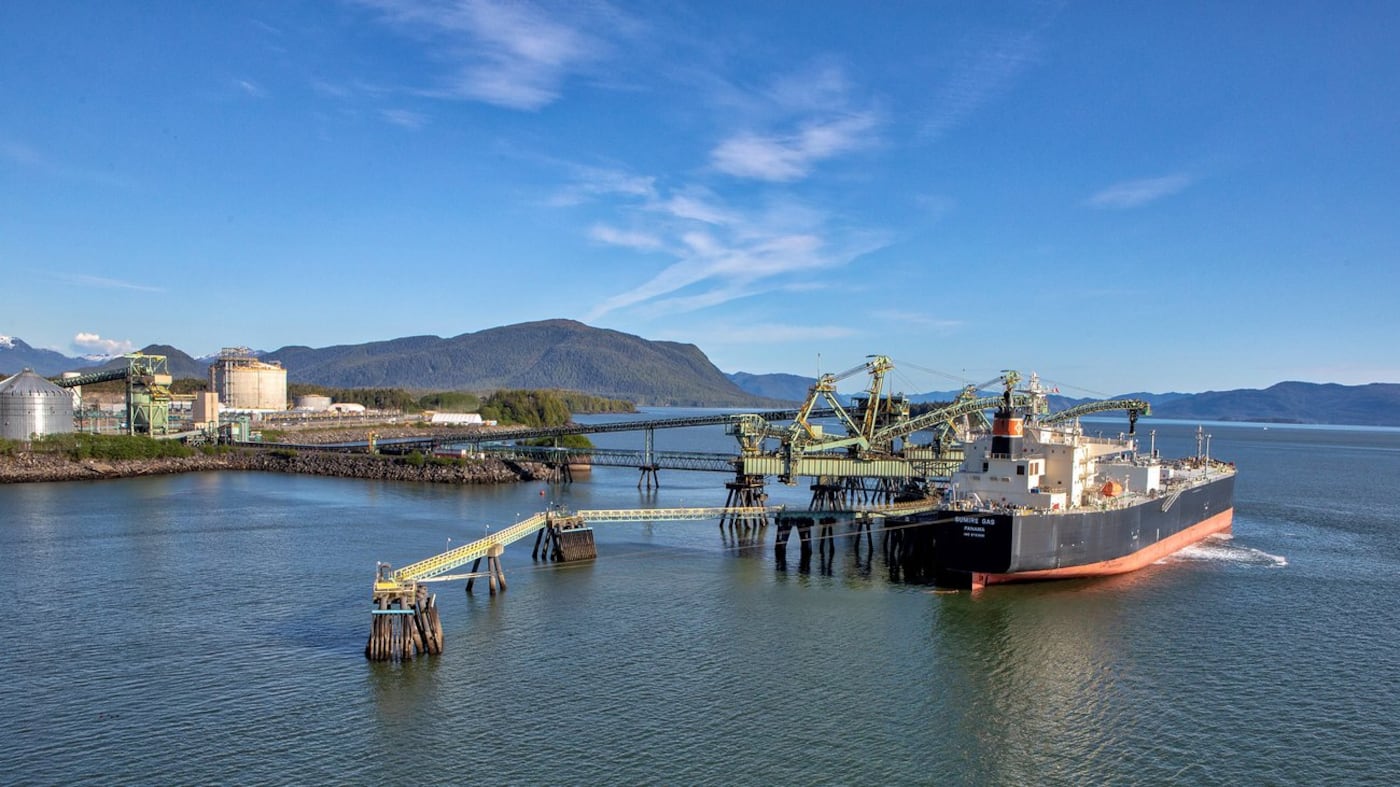
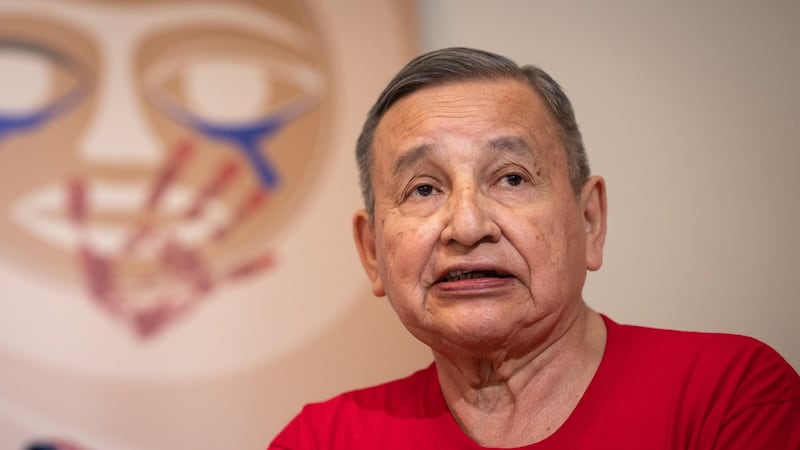
A British Columbia First Nation is withdrawing its support for a $1.35-billion liquefied gas export terminal, arguing that its consent for the project was “unlawfully obtained.” Chief Robert Nelson says the Metlakatla First Nation has told the provincial and federal regulators that it will “oppose all future authorizations and permits required for the operation” of the Ridley Island Energy Export Facility (REEF), which is currently under construction near Prince Rupert. The export terminal, a joint venture between Calgary’s AltaGas and Netherlands-based Vopak, will ship liquefied propane and butane to Asia when it begins operating later this year. But the First Nation says it can no longer support the project after learning of what it calls an undisclosed “export monopoly” agreement between the companies and the Prince Rupert Port Authority (PRPA), where the project is located. The port authority granted exclusive rights to export liquefied petroleum gas to Vopak in 2015. The Dutch company subsequently entered into the joint venture with AltaGas. The Metlakatla First Nation says the agreement gives the companies the power to “arbitrarily veto” any other project that proposes to export energy through the port. The nation says it discovered the agreement in 2023, when the port authority rejected an application from Trigon Pacific Terminals Limited, a bulk energy exporter that is partly owned by the Metlakatla, to ship liquefied petroleum gas from the port. In a statement Wednesday, the Metlakatla chief councillor said the nation “would have strongly opposed” the Ridley Island project had it known about the exclusivity agreement beforehand. “If we had learned about the export monopoly during the REEF consultation process, we would not have consented to the REEF project,” Nelson said, arguing the exclusivity deal is hindering Canadian investment in the energy sector. Metlakatla lawsuit against port authority A spokesperson for the Prince Rupert Port Authority did not dispute the nation’s characterization of the agreement as a “veto” that grants AltaGas and Vopak an “export monopoly,” when reached for comment Wednesday. Spokesperson James Cain said the port agreed to provide the Ridley Island Energy Export Facility with “time-limited exclusive rights” to export liquefied petroleum gas to ensure its economic stability. “The provision of exclusive rights for specific cargoes enables the certainty required to advance large capital projects, secure investment in vital trade infrastructure, and fulfill PRPA’s mandate of enabling Canadian trade,” Cain said in an emailed statement. In 2024, the Metlakatla First Nation filed a civil suit against the port authority over the exclusivity rights, seeking damages for alleged misrepresentation, breach of duty to consult and unjust enrichment. In response, the port authority sought to have the case struck down on jurisdictional grounds, but was unsuccessful when the B.C. Supreme Court dismissed the application last week, allowing the lawsuit to proceed. The port authority declined to comment on the case specifically Wednesday, saying in the statement that it “respects the judicial process and is fully participating in the legal proceedings.” The Metlakatla says the exclusivity deal denies Canadian energy exporters access to markets in Asia, forcing producers to instead sell their products into the U.S. at a discount. “We regret being forced into a position of confrontation with proponents and regulators instead of working collaboratively to build projects,” Nelson said. “In defending our rights, we are also advocating for Canadian jobs and investment. Moreover, the export monopoly violates acceptable standards for transparent business practices in one of Canada’s most important trade gateways.” ‘Undermine the rule of law’ In a statement responding to the Metlakatla, AltaGas executive vice-president and president of midstream Randy Toone described the company as “deeply disappointed” by the First Nation’s negative characterization of the relationship between the two entities. Toone said the nation’s claim that it had withdrawn consent for REEF “is not factually or legally accurate,” noting that the nation did not file challenges to the approval of the project “within the statutory time frame required.” “If a project could receive full consent and regulatory approval—only to have that consent withdrawn years later with government support allowing that change—it would fundamentally undermine the rule of law and would severely damage Canada’s investment climate across industries,” Toone said. “Long-term capital depends on stability, predictability, and confidence that once regulatory approval is granted, it will be respected. This certainty was central to our decision to invest in Prince Rupert and continues to underpin our long-term commitment to energy development in the area.” Toone argued that REEF will provide “more than 70 Canadian producers and aggregators” access to Asian markets, and said the project has mutual benefit agreements with all six First Nations in the region, including the Metlakatla. “As always, we remain open to conversations and good faith negotiations with the Metlakatla First Nation,” Toone’s statement concluded.