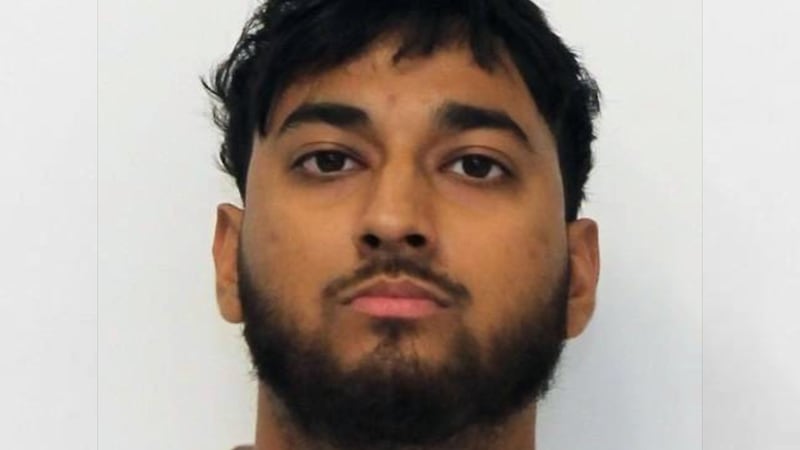
A B.C. real estate developer who spent several years in prison in the U.S. has been fined $75,000 for his “predatory and deceptive” conduct in marketing a Langley condo development. The administrative penalties against Mark Chandler and his numbered company represent the maximum allowed under the version of the Real Estate Development Marketing Act that was in effect at the time of Chandler’s fraud, the B.C. Financial Services Authority stressed in a news release announcing the penalties earlier this month. Chandler was fined $25,000 personally, and his company was fined $50,000. The penalties stem from the Murrayville House condo development, a 92-unit project on 221A Street near 52 Avenue in Langley Township, which was placed in receivership in 2017. The court-appointed receiver determined that the developer—a numbered company whose sole director was Chandler—had entered into 151 pre-sale contracts for 91 units in the building, with some units sold two or three times and one unit sold on four occasions, according to court documents from 2018. The BCFSA’s predecessor, the Real Estate Council of B.C., issued a cease marketing order against Chandler in 2017 and a hearing on the allegations was scheduled for 2019. That hearing never took place, however, because Chandler was extradited to the U.S. to serve a six-year sentence on unrelated charges. Those charges, according to an extradition decision issued by B.C. courts in 2019, were for fraud related to a purported condo development in Los Angeles. Chandler was deported from the U.S. in February 2025 and served with a new hearing notice from the BCFSA on the day he returned to Canada, the regulator said. The hearing in the case took place in September of last year, and Chandler did not participate or send a legal representative, according to the BCFSA. After proceeding with the hearing in Chandler’s absence, the regulator found the company liable for various contraventions of the REDMA, with Chandler himself authorizing, permitting or acquiescing to the misconduct as the company’s director. The BCFSA said its investigation found that Chandler’s company received more than $10 million in deposits that it did not deliver to a lawyer, notary or other permitted person to hold in trust, as required under the REDMA. Instead, much of that money was “improperly used for purposes outside the development, including Chandler’s own purposes,” according to the BCFSA release. “Chandler’s actions were predatory and deceptive, causing tremendous financial hardship and distress for the consumers he misled,” said Jon Vandall, the BCFSA’s senior vice-president of financial professionals, in the release. “His actions, and those of his associates, drew attention to whether the legislative framework governing the real estate and real estate development sectors were adequate in protecting consumers. As a result, swift amendments were made to increase penalties to be more proportional to potential misconduct.” While Chandler and his company could only be subject to the old maximums, those found to have committed similar misconduct today would be subject to penalties of up to $250,000 for an individual and up to $500,000 for a corporation. The BCFSA also ordered Chandler and his company to jointly pay $66,498.86 in investigative expenses. Four others disciplined In addition to Chandler, two other real estate licensees were ordered to pay penalties in connection to the scheme, and two unlicensed individuals entered consent order agreements with the BCFSA. The consent orders were made public in March 2025. Vasant Pragjibhai Patel and Chattar Singh Flora agreed to pay a combined $110,000 to the BCFSA for providing unlicensed real estate services. The regulator issued its decision on the two licensees in September 2025. According to the BCFSA, Gurpreet Singh Chhina and Rashpal Singh Kambo recommended to their clients nine Murrayville House condo units that Chandler had already pre-sold between June and September 2016. The pair knew the units in question had already been sold, and collected deposits from second purchasers on behalf of Chandler and Patel, an accountant who worked with Chandler. Flora was an associate of Patel. Chhina and Kambo collected more than $2 million from the second purchasers, which they provided to Patel, who was not licensed to receive real estate deposits, the BCFSA said. In exchange, Patel paid the two men $113,500 in referral fees. The BCFSA suspended each man’s licence for one year and issued a $10,000 discipline penalty to each one. This too was the maximum penalty available to the regulator under the Real Estate Services Act at the time the misconduct occurred. “Chhina and Kambo were both aware the units they were selling had already been sold, and in doing so put their clients at significant risk,” said Vandall. “Their actions demonstrate a flagrant disregard for consumers’ best interests, which is not just unethical, it’s unacceptable.”