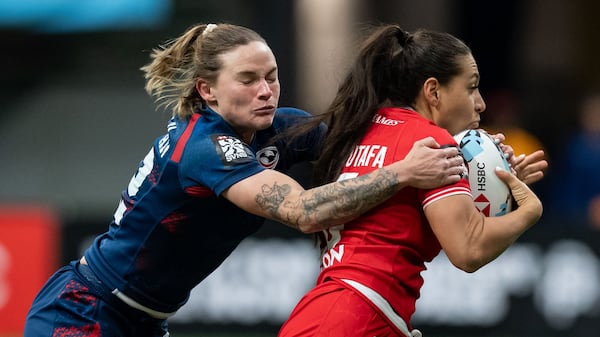
A new report suggests that Ontario saw an almost 10 per cent drop in sports-related brain injuries following the introduction of Rowan’s Law, legislation named in honour of Ottawa teen and rugby player Rowan Stringer who died from Second Impact Syndrome in 2013. The study, which was released Wednesday, found that between 2018 and 2019, Ontario saw a nine per cent drop in sports-related traumatic injuries. “Although our study wasn’t designed to investigate the impact of this public health policy change, the… reduction in sports related traumatic brain injuries resulting in hospital care between 2016-2017 and 2018-2019, coinciding with the introduction of Rowan’s Law is noteworthy and definitely warrants further investigation,” Dr. Jesse Young, a researcher with the Centre for Addiction and Mental Health (CAMH) and lead author of the study, said in a news release issued Wednesday. The study was commissioned by the Concussion Legacy Foundation Canada (CLFC) in partnership with CAMH and received funding from the Ontario’s Ministry of Sport. According to the report, sports and recreational-related brain injuries are “significantly more prevalent” than previously thought. The data shows that about 37 per cent of brain injuries reported between 2010 and 2019 in Ontario hospitals were related to sports and recreational activities, a figure that is more than triple previous estimates of just 12 per cent. Speaking to CP24 on Wednesday, Tim Fleiszer, a former CFL player and executive director of the CLFC, called the data showing a reduction in sports-related brain injuries “encouraging.” “Now Dr. Jesse Young, who is lead author on this work, would adamantly say we need to be careful in that we don’t necessarily know that this was caused by the introduction of Rowan’s Law but it does appear that the law is working,” Fleiszer said. The legislation, which was introduced in 2018, sets out a framework for how coaches, parents, team trainers, and athletes should respond if a brain injury is suspected during sports or recreational activities. “Having a law, and Ontario has demonstrated this, really suggests a structured approach to handling the problem, which we know is far more pervasive than anybody originally realized,” Fleiszer said. “If there is a player who is suspected of having a brain injury, you need to remove that player from play immediately and make sure they are checked by a health-care professional before they return. This is the information that would have saved Rowan Stringer’s life.” Fleiszer noted that Canada has been slow to move on legislating this issue. “For context, all 50 states in the U.S. have passed some form of concussion legislation,” he said. “Ontario has absolutely been the leader in Canada on this.” He said he is optimistic other provinces and territories will get on board. “Today in Ontario is Rowan’s Law Day and so children across the province are getting this information as a result of Rowan’s Law,” Fleiszer said. “We hope that this moves across the country with all of the other provinces and territories because it is absolutely needed in terms of protecting our kids’ brains.”