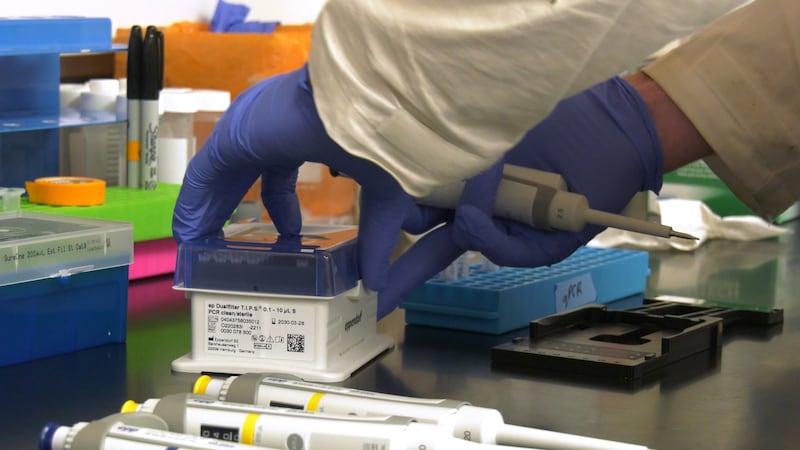
The numbers are becoming increasingly difficult to ignore at Goldstream River, where returning salmon populations have fallen dramatically, raising concerns about the future of one of Vancouver Island’s best-known salmon streams. Don Lowen, secretary of the board of directors for the Goldstream Volunteer Salmon Enhancement Association (GVSEA), estimates only about 250 coho salmon returned to Goldstream this fall. He puts the chum salmon return at approximately 3,200 to 3,400 fish. Jay Jennings, president and CEO of the Goldstream Hatchery, estimates the chum return is closer to 2,000. But the consequences extend well beyond the number of fish making it back to spawn. Fisheries and Oceans Canada says Pacific salmon play an important role in connecting ocean and freshwater ecosystems, carrying nutrients inland when they return to spawn and die. Those nutrients support freshwater organisms and surrounding wildlife, including species that depend on salmon as a food source. A sustained decline in returning salmon could therefore have consequences throughout the watershed, not just for the fish themselves. Hatchery turns to another creek for help Now, volunteers are going to extraordinary lengths to keep the populations going, while warning that without significant habitat restoration, the future of the runs remains uncertain. “This year, for some reason, the coho run didn’t materialize in any sense,” Jennings says. The hatchery has been collecting adult salmon since early November to secure enough eggs for its next generation of fish. The goal, according to Jennings, is to produce approximately 160,000 young coho for release next year. But with so few returning adults, the hatchery has had to look outside the watershed for help. Jennings says the hatchery had hoped to secure approximately 210 adult coho for its broodstock program, but the unusually poor return meant it couldn’t meet that target from Goldstream alone. With permission from Fisheries and Oceans Canada, the hatchery supplemented its coho supply with approximately 80 fish from Shawnigan Creek, where the population was originally established using Goldstream salmon decades ago. The connection between the two waterways is significant. The Shawnigan coho population was established using young salmon from the Goldstream Hatchery in the late 1970s, creating a close genetic connection between the runs. “Because they were originally seeded from our stock, the genetics are very close,” Jennings explains. “It’s worth it because they really want to keep the Goldstream run viable.” The transfer has allowed the hatchery to meet its coho broodstock requirements, but the situation is considerably worse for chum salmon, another Pacific salmon species that returns to freshwater to spawn. Jennings says the hatchery had hoped to collect enough chum to produce approximately 200,000 eggs. Instead, he estimates it will end up with only about 2,500. “That’s basically a little over one per cent of our goal,” he says. Salmon returns far below historical peaks Lowen describes this year’s overall return as potentially the poorest on record. The numbers are a far cry from the river’s past. Lowen recalls years when 25,000 to 30,000 chum would return to Goldstream. Jennings says the river once saw peak chum returns of approximately 35,000 to 40,000 fish. When it comes to coho, Jennings recalls 1991 as the worst year he has seen, when he believes only about 50 fish returned. He cautions that counting methods were less sophisticated at the time. He says the decline has become particularly noticeable since the major atmospheric river events of 2021. “The poor old fish are under a lot of stresses,” he says. Development and flooding take a toll on habitat Many of those stresses are happening right here in the watershed. Jennings points to more than a century of human impacts, beginning with a dam that interrupted the movement of gravel downstream. That gravel is essential for salmon to build their spawning nests and lay their eggs. He says major flooding events in 2021 washed away much of the remaining spawning gravel, leaving fewer suitable places for fish to reproduce. Development in Langford has also changed how quickly the river responds to rainfall. Jennings describes Goldstream as “quite flashy,” meaning water levels can rise faster after heavy rain than they once did. Instead of gradually building and receding over several days, the river can surge within 24 hours, creating stronger currents that wash away more material and make conditions increasingly difficult for salmon. “When it gets flowing that much faster, it takes more stuff away,” he says. The journey upstream has become another challenge. Jennings says logjams, debris and beaver dams have created obstacles for returning adults. Volunteers have spent time removing smaller blockages, while local First Nations have helped modify beaver dams to create channels that allow fish to pass. He says much of that work has been done piece by piece because there hasn’t been enough funding to address the problems across the watershed. There may also be additional pressures in the inlet. Jennings says fishing pressure could be contributing to the decline, although the hatchery has no proof of unauthorized fishing activity. Volunteers look to restoration for hope For Lowen, the situation is disappointing, but it has also reinforced the importance of looking beyond the hatchery. “I’ve been involved with it long enough to know that you can only do what you can do,” he says. The volunteer association is increasingly focused on habitation renewal, recognizing that producing more young salmon is only part of the equation. “We’re more and more involved with habitat restoration now,” Lowen says. “That kind of work is expensive. It’s time-consuming. But it’s important.” The decline is also affecting the community programs built around Goldstream’s salmon. Lowen says the hatchery normally supplies 15 school programs with approximately 100 eggs each, allowing students to raise young salmon before releasing them into local streams. With the chum shortage, some schools won’t be able to participate as they normally would. Lowen says others may be able to raise coho instead, depending on transportation and Fisheries and Oceans Canada requirements. Jennings says the hatchery has also been unable to provide salmon for the First Nations elders program this year, the first time he can remember that happening during his time with the organization. Despite the discouraging numbers, both men believe recovery is possible. Jennings is developing plans to restore sections of the river, including a proposed side channel that would create additional spawning and rearing habitat for wild salmon. He estimates approximately $300,000 could be spent on priority restoration work over the next two years, with more than $1 million needed over five to 10 years to address the broader damage. The hatchery hopes to secure funding from federal and provincial governments, the Pacific Salmon Foundation and private donors. “We can make it better,” Jennings says. Lowen says volunteers will continue doing what they can but acknowledges that restoring a salmon population ultimately means restoring the natural environment it depends on. “We can do our best to repair the watershed. We can do our best to teach children how the real world works. And we can do our best to augment numbers with our broodstock recovery plan,” he says. “But the rest of it is just having faith that nature will figure it out.” And perhaps the biggest measure of success would be the day the hatchery is no longer needed. “In a perfect world, 25 years from now, the hatchery would have no need to do any strategic enhancement,” Lowen says. He adds the volunteers would gladly celebrate the day they could close that chapter. “They’d be more than happy to do that. I think it would be quite a party.” For now, the challenge is keeping the salmon coming back while giving the river itself a chance to recover. With files from CTV News’ Brendan Strain