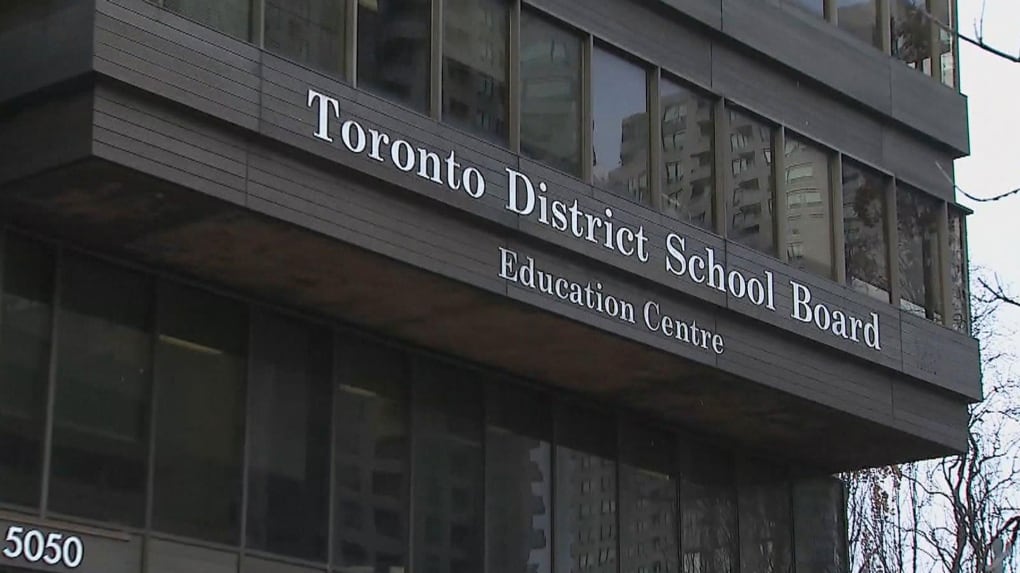
A divisional court has ruled the Toronto District School Board (TDSB) had no authority to disband a parent council and call for a new election, stating that the role of school councils is to act at arm’s length of the school board. The case was launched after a board superintendent disbanded the parent council at Rawlinson Community School in 2024 and called for a new election, as they expressed concern about the “integrity” of the council’s election and felt “ultimately responsible” for the election to be fair and transparent. This move, however, was deemed by a divisional court as “unreasonable” and “made without jurisdiction”—a decision that could set a wide-reaching precedent for other parent councils across the province. “There’s been a sort of an understanding by the board that it can do whatever it wants, and that parent councils are sort of like the chess club or the ski club, and that when push comes to shove, the school board has almost unlimited authority to decide what to do and how to do it,” Mark Freiman, co-counsel for the parents who launched this case, told CTV News Toronto. “This is a definitive ruling that’s not the case. Parents councils are autonomous, and their role is to act almost as a check on the board in the areas that the legislation has given them certain powers, such as to make suggestions, (and) to make recommendations.” Like how Freiman noted, the divisional court decision defined the role of school councils as existing to improve student achievement and bolstering accountability of the education system to parents by making recommendations to the school principal. Gili Zemer, the former treasurer of the Rawlinson parent council that was disbanded, said they were a group of volunteer parents who love the school and their community. “We put a lot of time and effort to contribute to school initiatives, like we are the ones involved with pizza lunches, organizing parent events and fundraisers,” Zemer said. The TDSB argued, however, that school councils are merely a “resource” for them, something the board can allocate. Zemer recounted the council being compared to a “baseball diamond” or a “body shop.” “To which the judge said, ‘You do know these are people whose whole purpose is to have a relationship that isn’t subservient to the board,’” Zemer said. “To say that is similar to a baseball diamond or a building is really missing the point of the regulation.” The divisional court filings reveal the TDSB tried to argue that superintendents have the responsibility to oversee the operation of school councils and provide them with support, as per the Parent and Community Involvement Operational Procedure. Under the provisions of the Education Act, however, the court noted there is “no basis for this policy to be broadly interpreted to control the activities of the school council,” especially as there is nothing in the legislation that grants them that authority. On top of that, the court said “monitoring” and “problem-solving intervention” do not grant the superintendent authority to decide school council disputes, including whether an election was validly held. “Following the recent litigation related to Rawlinson School Council, the court’s decision has provided clarification on school council election procedures, including additional guidance for managing potential conflicts,” TDSB’s Emma Moynihan said in a statement. “With the 2025-26 council now elected, our focus is on moving forward collaboratively to support students, staff, and families in the year ahead.” ‘More than a slap in the face’ Council elections were held in September of last year, with the school’s principal somewhat helming the electoral process by notifying parents of when elections would be taking place, which included emailing them outdated bylaws that failed to mention whether members can be nominated from the floor—a practice the 2023 bylaws banned. The principal provided paper copies of the 2023 bylaws on election night, “rather than send another email to parents,” the ruling says. While two people tried to stand for election from the floor (and were ultimately denied), no disputes were made and nobody objected to the fairness of the election. “We were elected last year, in September, fairly elected to be members of the parent council,” Zemer said, noting there was an officer for the Parent, Caregiver and Community Engagement Office (PCCEO) in attendance on election night who did not raise any concern or objection. “We held parent council meetings in October and November, and in both of those meetings, no objections were raised by the school community about the election.” It was only after a school council budget meeting, where some parents contacted the superintendent with complaints, that an internal meeting was held with the school’s principal and a couple of members of the PCCEO to discuss the “integrity” of the election. This meeting led to the superintendent’s decision to disband the council, which was done in December 2024. “We are Toronto, our school is truly a very diverse community, vocal, and passionate parents who have diverse views, and of course, we’re not going to agree on everything,” Zemer said. “But that wasn’t the point of this case, the point of the case is that the TDSB acted unreasonably, and they came back and essentially disbanded our council because they didn’t want to deal with any of the issues.” Nina Shipillo, a former Rawlinson parent council voting member, said the superintendent’s move blindsided them—“it almost felt like a bad joke”—and despite trying to engage in some form of conflict resolution by sending letters to the board and attempting to pursue mediation, she says they were ultimately pushed into a corner and carry on with judicial review of what happened. “We are all volunteering our time to support our kids and so for this effort to be met with such extreme disregard, disrespect and even inconsistency and to their own rules and procedures from a public institution, was more than just a slap in the face,” Shipillo said. “It was something that hit us very deeply.” ‘A very important ruling’ Freiman says the former Rawlinson council members did something a group of parents have never done before. “Rather than saying, ‘Oh, what the heck, it’s only a parent’s council and who are we to stand up to the school board?’ They did what others I know have wanted to do, but just haven’t been able to get together,” Freiman said. “They got a very important ruling that will stand others in a very good stead—both in terms of relationships with the school board but in a wider basis, wherever a government body asserts authority that really can’t show that it has, or that it’s been granted. This is going to be a very important precedent.” The Ministry of Education tells CTV News Toronto that it is currently reviewing the ruling. This decision comes at a time when the province is considering major changes to the school board governance, which has left parents this year without elected trustees to speak to.