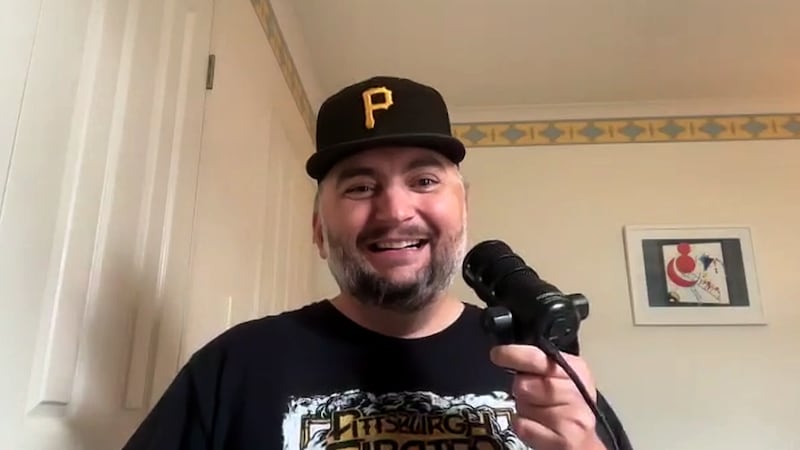
Warning: Excerpt contains graphic language In the days after five former members of Canada’s 2018 world junior hockey team were charged with sexual assault in early 2024, I agreed to write a book about the troubled culture of hockey in our country because, after years reporting on some of the darkest stories in sports, I needed to understand how a game Canadians love could go so wrong, and how it can be made right. I’ve sat with survivors, read court transcripts deep into the night, and walked out of rinks feeling gutted by what young athletes have endured in a culture that too often has protected the powerful and ignored the vulnerable. As a journalist and a father, I couldn’t shake a simple question: How can the elite minor and junior hockey systems do a better job encouraging boys to become the best version of themselves as they grow into young men? For a long time, the story felt one-sided, scandal after scandal, failure after failure. But then I began to meet people who were quietly working to change hockey from the inside: Coaches, educators, and a few unlikely voices who believed accountability and compassion could exist alongside grit and performance. One of them was Luke Bentvelzen, an Australian who can barely skate but has earned the trust of a junior locker room. His work reminded me why I began this project in the first place, not to bury the game, but to help imagine a better version of it. In this excerpt below, we hear from Bentvelzen “one of a number of people who are quietly advocating for change in the culture of hockey.” Luke Bentvelzen, a burly six-foot-three Australian, is an agent of change and a source of hope for hockey’s future. During the hockey season, Bentvelzen can be found many days at the Peterborough Memorial Centre, where he spends time with young hockey stars who play for the Ontario Hockey League’s Peterborough Petes. Bentvelzen isn’t a lifelong devotee of hockey. In fact, he can barely skate. “I can’t even lift the puck off the ice,” he said, laughing, when we spoke for the first time in September 2024. And yet this self-described outsider has found himself at the centre of one of the most storied junior hockey programs in Canada. He doesn’t teach skating or on-ice strategy. Bentvelzen’s task is more complicated, less glamorous, but perhaps more important. Bentvelzen is one of a number of people who are quietly advocating for change in the culture of hockey. It’s an effort that’s happening at the major-junior level, as well as in some lower-level junior teams that don’t have the notoriety of the three Canadian Hockey League organizations. Since the 2021–22 season, Bentvelzen has been responsible for working with the Petes to implement the OHL Onside program, a league-mandated initiative that was launched in 2016, not long after the OHL suspended Peterborough Petes forward Greg Betzold and Belleville Bulls forward Jake Marchment for fifteen games apiece, after someone posted screenshots on social media showing the vile language the players had used with and about young women on the dating app Tinder. (When a woman wrote to Marchment that she would not have sex with him, he responded, “Babe, I play in the O and got drafted to the NHL ya I get turned down so much . . . Lolz you ugly cunt.”) The OHL Onside program—in which the league has partnered with the Ontario Coalition of Rape Crisis Centres, the Kawartha Sexual Assault Centre and the Sexual Assault Support Centre of Waterloo Region—aims to curb bad behaviour both in and outside the locker room. Bentvelzen spends time with Petes players throughout the season, speaking with them about accountability, trust and respect. “When I walked into that locker room the first time,” Bentvelzen recalled, “I could tell they didn’t quite know what to make of me. I’m this rugby guy from Australia talking to a bunch of seventeen-year-old hockey stars about leadership and integrity. It’s not the kind of thing they expect.” Indeed, his presence was a stark contrast to the approach many hockey teams have taken with players in the past. What Bentvelzen brings isn’t a traditional message of discipline and toughness. Instead, it is something far more nuanced: the belief that inclusivity, compassion and personal reflection can enhance team performance and build stronger, more responsible young men both on and off the ice. Bentvelzen grew up in Townsville, a small, sun-baked city in the northeastern part of Australia, where rugby is a way of life. “It’s more of a religion than a sport,” he said, drawing a comparison to the way Canadians revere hockey. From a young age, he was enveloped in the hyper-competitive world of the game, where he experienced first-hand the toxic elements of locker room culture, such as misogyny and homophobia, that often went unaddressed. At sixteen, Bentvelzen graduated high school and joined the Royal Australian Navy, where he received an education not just in military tactics but also in leadership. It was there that he began to reflect on the idea of inclusive leadership—how creating environments that embrace diversity and compassion can lead to better outcomes, both in individual performance and in personal growth. But life took an unexpected turn when an incident cut short his naval career. He won’t discuss his transgression, but Bentvelzen was discharged and found himself at a crossroads. Not long after that, he found his way into the world of professional rugby, a dream he had had since childhood. He played for teams in the states of Queensland and New South Wales, and in the town of Picton, New Zealand. It was in those locker rooms that he began to see troubling patterns: the way young men bonded over degrading hazing ceremonies and how they talked about women. “There’s this veneer of toughness that we build up in sports,” Bentvelzen said, “but underneath, there’s all this vulnerability that no one knows how to express.” In 2014, Bentvelzen, then twenty-four, immigrated to Canada— his wife, Angélique, is Canadian—and found himself in British Columbia. But during the pandemic, he and his wife moved to Peterborough, and his interest in leadership and inclusion led him to work with the Kawartha Sexual Assault Centre, where he began developing programs for young men. It wasn’t long before his work caught the attention of local hockey leaders. Bentvelzen began working with the Petes in 2021 and was asked to help redesign Onside, a league program whose success was inconsistent. Many teams in the OHL treated Onside as an annoying obligation—a one-time, 90-to-120-minute session with PowerPoint slides and a guest speaker that players sat through and promptly forgot. Some teams regarded the program as a box to check. Several sources have told me that in some cities, OHL teams hadn’t even been holding sessions with their players. “This is a program where the teams have a lot of autonomy in how they want to run [things],” Dina Haddish, the members’ coordinator for the Ontario Coalition of Rape Crisis Centres, told me. “I think there’s an onus on people in leadership roles in hockey culture to recognize the need for this [training] and to respond accordingly. Obviously, there’s only so much you can do with a single session. The aim is about trust building, and you can’t do that in one session. Folks start to open up and then the training is done.” Bentvelzen agreed. “It’s frustrating,” he admitted. “There’s so much potential here, but it requires buy-in from the top down. If the coaches and management don’t believe in it, the players won’t either.” In Peterborough, though, the Petes appear to have bought in. Bentvelzen told me that general manager Mike Oke met with him five times before bringing him on board, emphasizing that the team wanted someone who could go beyond the script. Rather than a single one-time session, Bentvelzen has been given unfettered, unlimited access to Petes players. “They didn’t want someone who would just lecture the boys about what they were doing wrong,” Bentvelzen recalled. “They wanted someone who could connect with them, who could make the conversation about growth and performance, not punishment.” Rather than simply telling the players what not to do in their relationships with one another and with women in the community, Bentvelzen sought to engage them in conversations about why they behaved the way they did. He asked them who their role models were, what kind of men they wanted to be, and how those values translated into their actions on and off the ice. “The thing that I really noticed was these players are still children,” Bentvelzen explained. “They are seventeen-year-olds, and even the guys who are twenty are still growing and still learning about who they are as people. I was like, ‘Oh, yeah, there is a lot of immaturity here that needs to be fostered in an appropriate way.’” For his first few months with the Petes, Bentvelzen observed more than he spoke. He spent time in the locker room listening to conversations, watching how players interacted with one another. “A lot of these guys don’t realize that the things they say and do are a result of the environment they’ve been socialized in,” he said. “They’re not bad people, but they’ve been taught some pretty harmful ideas about masculinity and power.” Bentvelzen noticed how some veterans would dominate the space, making subtle jabs at younger players, how conversations about girls could veer into disrespectful territory, and how the pressure to conform—to be one of the boys—was palpable. The team captains, many of whom were only a few years older than the rookies, held immense sway over the group. Yet Bentvelzen caught glimpses of the humanity that players tried hard to mask. “It’s easy to judge from the outside,” he said. “But when you get into that room, you realize that these are just young kids trying to navigate a world that’s telling them to be something they’re not sure they want to be.” Listening to Bentvelzen made me think about my own experiences as a father and a coach. I reflected on the years I had spent coaching youth hockey and baseball in Toronto. I felt like the coaches whom I worked alongside had communicated the importance of good sportsmanship and had done a good job being role models for young players. But looking back, I think that not talking with my players about important issues like consent had been a missed opportunity, and it struck me that that has remained something many kids are left to figure out on their own. As I was reporting for this book, I asked a number of friends about the conversations they had had with their sons about the treatment of women and consent. None had discussed the issues with them. A few told me they assumed and hoped it was a subject teachers would cover at school. I stumbled on a 2013 study that documented the ways in which men and women differ in their understanding of consent. Published in The Journal of Sex Research, it reported that 61 percent of men said they relied on non-verbal cues such as body language to indicate if a woman was consenting to a sexual act. The same study reported that only 10 percent of women said they actually gave consent via body language. (Most said they waited to be asked.) The 2021–22 season would go down as one of the most successful in the Petes’ history. The team, once struggling, rallied late in the year, made a deep run into the playoffs and eventually won the OHL championship. “What I saw happen that year was a group of young men learning how to communicate with each other in a way that went beyond hockey,” Bentvelzen said. “They learned how to trust each other, not just on the ice, but as people. There’s this idea in sports that if you’re not constantly proving your toughness, you’re weak. But what I’ve found is that the more you create space for vulnerability, the stronger a team becomes.” However, the culture of junior hockey, as with that of many sports, is slow to change, and the forces pushing back are powerful. “When I think of hockey culture, I think ‘misdirected’ is the first word that comes to mind,” Bentvelzen told me. “There’s such an emphasis for players [to make] the next team that I don’t think the sport supports the holistic development of a team culture. Hockey is far more individual than people want to think.” At the same time, Bentvelzen said he’s noticed how much conformity is a part of the game. “Most teams have a logo on the carpet in their dressing rooms and the players know they can’t walk on it, but when you ask them why, they don’t know. They have no idea.” It’s the same with hazing, he added. “You ask the players what the intent is, why it happens, and they say either they don’t know or that it happened to them. I think a big part of hockey culture’s problems is that a lot of people are in positions of power because they played the game.” I asked Bentvelzen what he discussed with players during his initial pre-season meeting. During an afternoon in September 2024, he spent some time showing me his two-hour presentation and slideshow. Bentvelzen said he talks with players about what it means to be a man, about those qualities and behaviours that players associate with masculinity and those that they do not. He asks them about the strongest man in their lives and shares the story of his own father, Bart, who suffered a traumatic brain injury during the Persian Gulf War while serving in the Australian military and then had to relearn how to walk and talk and remember the people in his life. “He was not a great father and struggled after the injury to understand why his wife and his daughter hated him,” Bentvelzen told me. “But he took that accountability. He said, ‘If people treat me this way, I must have done something wrong,’ when he could have just gone, ‘Fuck, not my problem. I don’t remember.’ But he faced up and wanted to do better. Ultimately, it didn’t fix anything, but it was a journey that I thought was really important for him.” Bentvelzen’s slideshow depicts a series of harmful behaviours, and he asks players to discuss the seriousness of what they see on the screen. One slide that comes early in the presentation says, “Yelling at your partner for talking to someone else at a party.” Another says, “Telling a guy that he throws like a girl.” “These are at the lower end of the spectrum, but they are still hurtful and I explain why,” Bentvelzen told me. The early slides also help to loosen players up for a more substantive discussion as the issues get more serious. One slide further into the presentation reads, “Repeatedly asking a girl out after she says no.” Bentvelzen said he asks players if this constitutes illegal behaviour and said most players answer no. He explains to the young men that, while that’s usually true, continuing to do so could constitute criminal harassment, depending on the circumstances. A subsequent subject is how to handle it when someone wants to be referred to by pronouns such as “they” or “them.” “This is always a contentious one,” Bentvelzen said. “Some players are like, ‘Why do I have to use someone’s pronouns?’ I answer them, ‘If I refuse to call you by your nickname and I use your middle name or your given name, which you don’t like, would you be okay with that? Do you think that’s respectful?’ I explain to them that [using preferred pronouns] is exactly the same thing.” The practice of sharing nude photos of girls via cellphones is also addressed. A number of junior players have told me it’s common for young women to send them such photos and that they’re often shared among teammates. “We talk about whether it’s harmful to share such a picture with their friends,” he said. “And we speak about the fact that it is illegal and that it’s wrong . . . Are they sharing it because they want to make a connection with their buddies? Do they need to invade someone’s privacy and share a nude to do that?” Bentvelzen told me that he has had conversations with players about social media influencer Andrew Tate, the British-American former kickboxer who has gained a following of millions on social media with videos glorifying wealth and a particularly virulent brand of male chauvinism. In 2021, Tate was barred from many mainstream social media sites, including TikTok, YouTube and Facebook, for making misogynistic comments. He has suggested that women who are raped should bear some responsibility, that women “belong” to men and need men’s direction to get by in the world. He has also portrayed men as victims of feminism and false rape accusations. Several sexual assault program facilitators told me a number of players have told them that they admire Tate and share many of his views. “The internet feeds [young men] this stuff,” Bentvelzen said. “They see these guys who tell them that being a man means being dominant, being aggressive. And when you’re seventeen or eighteen and trying to figure out who you are, it’s easy to get sucked into that. [Tate] talks about resilience, about being strong. But the problem is that he twists those ideas into something toxic. What I try to do is untangle that for the players—help them see that being strong doesn’t mean stepping on others.” In his role, Bentvelzen has been exposed to the darker side of junior hockey. In February 2024, a billet mother for the Peterborough Petes was arrested and charged with sexual exploitation for making sexually explicit material available to a person under eighteen years of age. Two sources told me the woman had had an inappropriate relationship with a Petes player. The incident shook the team and the community, and Bentvelzen told me he discussed the scandal with players and used the sensitive subject to have difficult conversations about the abuse of power and trust. “It’s not something anyone wants to talk about,” he said. “But if we don’t address it head-on, we’re just perpetuating the same problems.” In the aftermath of such incidents, Bentvelzen said, he seeks not to provide answers but to create a space where players can ask questions, express their confusion, and begin to understand the broader implications of such occurrences. It is messy, uncomfortable work, but it is necessary. “There’s this idea that hockey players are invincible,” he said. “But they’re not. They’re human, and they’re going to make mistakes. The question is whether we’re giving them the tools to learn from those mistakes.” Bentvelzen said he’s seen progress in the three years he has worked with the Petes. He went on to share a story about Jonathan Melee, a forward with the team who was named captain in January 2024. “Jonathan is a man of few words. When I call on him to tell his teammates a story about a masculine role model that he finds strong, this kid who wouldn’t really speak at all when I met him three years ago now stands up and shares. And his male role models are not guys who beat the wheels off someone or someone who gets the most chicks.” Bentvelzen recounted the time Melee stood in front of his teammates and described looking up to Shawn Spearing, who had been the Petes captain during their OHL championship season in 2021. “Shawn lost his father during that season, and Jonathan told a beautiful story about how resilient and how dedicated Shawn was through that time, and how he was able to use humour to get through a pretty dark point in his life, to be able to provide the spark for the team,” Bentvelzen said. He was silent for a tick. “The thing that I’m most proud of,” he said, “is seeing these guys reflect on who they are and who they want to be. They’re starting to understand that being a good teammate isn’t just about what you do on the ice. It’s about how you treat people, how you show up in the world.” Excerpted from We Breed Lions by Rick Westhead Copyright © 2025 Rick Westhead Published by Random House Canada