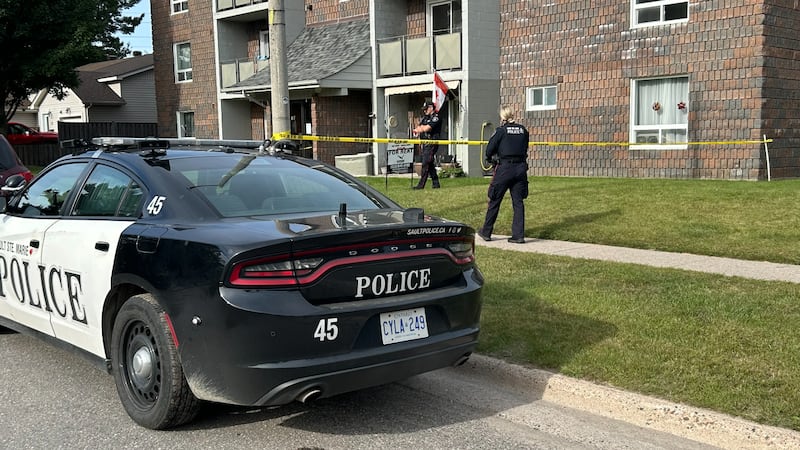
Both the Crown and defence of the Misha Pavelick trial submitted what they believe are the facts about the case in accordance with the jury’s decision. Pavelick’s killer was found guilty of second-degree murder by a 12-member jury in November 2025. On Thursday, Crown prosecutor Adam Breker stated his submission found that it was unequivocally established that the killer stabbed the 19-year-old Pavelick at a party in a campground near Regina Beach on May 21, 2006. Breker added the man, who is 37 now but was 17 at the time, did so with the specific intent required for murder. Since he was a youth at the time, Pavelick’s killer cannot be named under the Youth Criminal Justice Act, although the Crown has moved that he should be sentenced as an adult. “Violence ensued between Mr. Pavelick and a group of what I’d probably refer to as uninvited guests which included (the killer),” he said. The group also included Andrew Perkins, who was dating Pavelick’s ex-girlfriend at the time. Tensions between the two eventually led to a scuffle in which Pavelick hit Perkins with a bottle and the two ended up fighting on the ground. The event was characterized as an altercation involving multiple people. Both Pavelick and Perkins got up from the ground, and Breker said there was likely a break in the action before the eventual stabbing, saying a decision was made by the group to go after Pavelick again. Breker admitted it was not well-established whether the break was long enough to mean the altercation could be considered as two different events or not. “There is no doubt the jury concluded [the man found guilty] stabbed Pavelick, however the chaos surrounding the brawl provides some context,” said defence lawyer Andrew Hitchcock. Hitchcock argued even if there was a break, it wasn’t a long one. He also said factors like age, alcohol consumption by all involved and the general chaos of the situation would somewhat lessen the moral culpability of the man found guilty, especially if there was just one continuous fight instead of two. He added a break in the action must be proven beyond a reasonable doubt if it’s to be used as a deciding factor in the severity of the crime. Breker said Pavelick’s killer was the driver among the uninvited group at the party, and that while there might have been some consumption of alcohol, there was no evidence presented of ‘gross’ or ‘extreme’ intoxication on his part. Breker stated the killer’s state of mind didn’t seem to be a particular point of emphasis in the jury’s decision, however, Hitchcock said the killer’s consumption of alcohol was mentioned by witnesses. Justice Catherine Dawson adjourned court until June 15, when it is expected to rule on whether the killer will be sentenced as an adult.