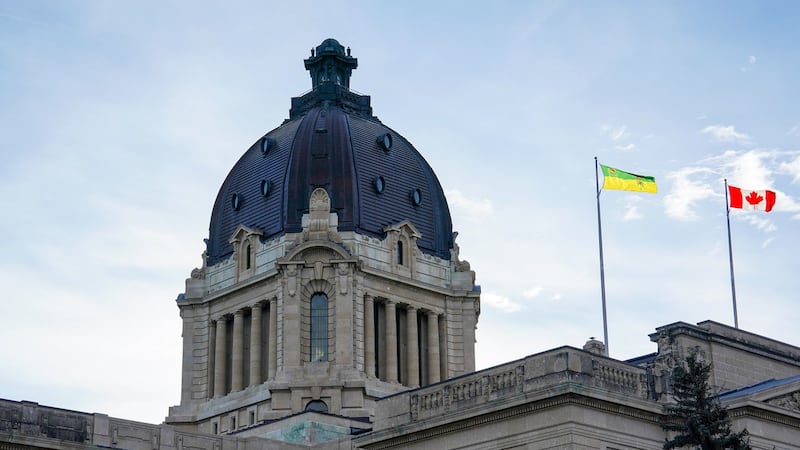
Tuesday was the last leg of the ‘Walk to Regina,’ an annual event which aims to raise awareness about crystal meth and fentanyl overdoses and deaths on First Nations communities across the province. The long walk, which is in its fourth year, started last Monday at Muskoday First Nation and ended on the steps of the Legislative building. The journey’s last leg started Tuesday morning at the Northgate Mall and ventured south down Albert Street to its final destination. Many vehicles showed their support for the small contingent of Muskoday First Nation walkers by honking their horns. The founder of the walk, Betty Perosper, started the walk with a vision in mind. “She had a dream, she needed to do something,” said Walk to Regina co-organizer Erica Hennie. “So, we were coworkers, and she came and asked me if I’d like to help her with a walk. So, we sat together and we started planning our walk from Muskoday to Regina.” Muskoday First Nation Chief Ron Bear was a participant in the walk. He told CTV News that other First Nations communities like James Smith Cree Nation, Kawacatoose First Nation and Piapot First Nation, are calling on the government at the federal and provincial levels to enact change. Bear wants to see more treatment centres in First Nations communities and harsher penalties for offenders who distribute and traffic drugs like crystal meth and fentanyl. “It’s just devastating to hear that either somebody has passed away or they overdosed and then that costs lots of money for the health care system to try and look after that situation.” Those who made the long walk across the province to raise awareness, say the drug epidemic in Saskatchewan has a trickle-down effect that extends from the user to their family, friends, and community members. “A lot of parents are grieving their children right now because they don’t know if they’re going to get a call that their child is gone, or if they’re not going to know if their child had an overdose. And this is what we’re trying to bring awareness for; we’re trying to save some lives.” In a statement, the Ministry of Health said they share the desire of Saskatchewan’s first Nations and Métis leadership to expand access to addictions treatment in the province. The statement added that the government continues to add new treatment spaces as part of their Action Plan for Mental Health and Addictions. “The plan commits to the addition of 500 new addictions treatment spaces which will more than double the total number of publicly funded addictions treatment spaces available in our province,” the statement read. “Three hundred seventy of these spaces are already operational, including those done in partnership with Poundmaker’s Lodge in North Battleford, the Onion Lake Cree Nation and Muskwa Lake Wellness Camp. We expect the remaining spaces to be operational by March 2027.”