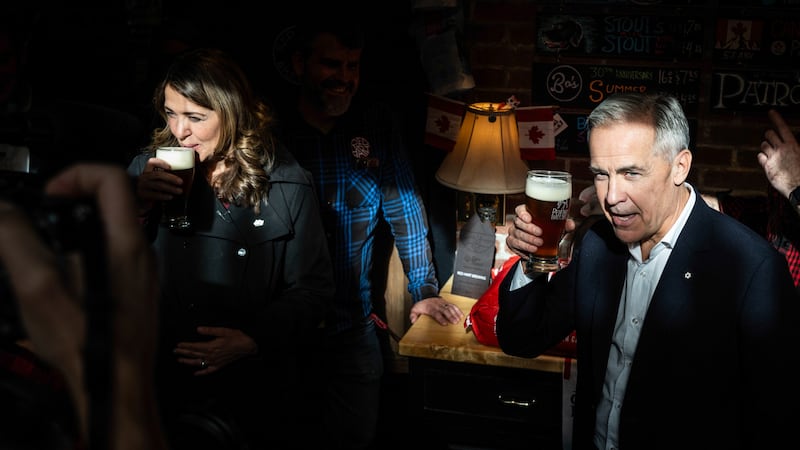
The federal Liberals will reveal the victor in the battle to lead the party in a matter of days, and in the final stretch, the fight on social media is intensifying. With just three days to go—and a couple of days after U.S. President Donald Trump imposed tariffs on Canadian imports—each candidate is making a final push to position themselves as the best person to lead the party and the country. Since Prime Minister Justin Trudeau announced his resignation on Jan. 6, Liberal leadership hopefuls have actively courted supporters online. Using platforms like X (formerly Twitter), Facebook, and Instagram to amplify their messages was critical in shaping public perception and mobilizing support beyond tried and true methods such as door-knocking, television ads, and rallies. A CTV News social media investigation examined digital activity from candidates since the Liberal leadership race began. Who’s in the lead? While all candidates used social media to bolster their campaigns, Mark Carney emerged as the clear digital front-runner. His campaign maintained consistently high engagement across platforms, particularly on X, where his economic policy posts received substantial retweets and discussions. The former governor of the Bank of Canada’s campaign messaging focused heavily on the economy, stability and leadership, with over 971 posts across the three platforms observed. His top words include “build,” “economy,” “change,” and “together.” On Facebook, where older demographics engage more, he leads in engagement per post. He garnered over 844,958 likes, 535,559 comments, and 52,201 shares. Former deputy prime minister Chrystia Freeland’s campaign has leaned into themes of resilience and opposition to right-wing populism, frequently mentioning U.S. President Donald Trump. Freeland’s top-performing words include “fight,” “Trump,” “vote,” and “commit.” On X, she had the highest number of posts (500) but lagged behind her fellow contenders in engagement. She also led with the highest number of posts on Instagram but received nowhere near the view counts of Carney (306,776 vs. 2,059,377). Former cabinet minister Karina Gould performed well on Facebook, leveraging grassroots engagement, but lacked the cross-platform reach and viral traction that propelled Carney to the forefront. Her top words include “plan,” “support,” “generation,” and “future.” While her messaging focuses on progressive policies, it has not driven high engagement. Meanwhile, former MP and businessman Frank Baylis carved out a niche audience focused on diversity and inclusion, but his overall engagement levels were lower than the top contenders. Like much of social media today, bot accounts, or automated programs, are a concern. These are used to influence conversation through likes and even comments. This analysis does not consider these bots and solely looks at the activity around the candidates. Contenders on social media CTV News analyzed each candidate’s social media strategy using a machine learning technique, used to group similar pieces of text based on their content. Here’s what CTV News found for each candidate’s distinct digital persona shaped by their topic cluster analysis. Influence of U.S. politics Trump’s decision to impose tariffs on Canadian imports added a new dimension to the candidates’ campaigns. This external pressure prompted candidates to address U.S.-Canada relations directly in their messaging and debates. During debates held in Montreal last week, the candidates discussed their strategies for handling Trump’s tariff threats. Carney emphasized leveraging his experience with financial crises and proposed dollar-for-dollar tariffs in response. Freeland highlighted her role in negotiating the USMCA and suggested retaliatory tariffs on specific U.S. goods. Baylis proposed collaborating with Mexico to form a unified strategy against U.S. tariffs. At the same time, Gould advocated for a “Team Canada” approach, aiming to engage American businesses and citizens about the impact of tariffs. This mirrored strategies employed on social media as U.S. politics became a dominant theme in candidates’ social media messaging: These discussions underscored the candidates’ recognition of U.S. policies’ profound impact on Canada’s economy and political landscape. (CTV News) Attention from federal opposition The U.S. president was not the only political figure that candidates also focused their attention on. Conservative leader Pierre Poilievre was mentioned 77 times across three monitored social media platforms, with most mentions occurring around the debates. The bulk of activity centred around the candidates debates at the end of February. By contrast, Poilievre mentioned candidates 126 times, but his focus was limited. He initially highlighted both Carney and Freeland before narrowing in on Carney as the race progressed. Gould was mentioned once, while Baylis received no attention. Which platform held the most power? Not all social media platforms played an equal role during the Liberal leadership race. X remained a hub for breaking news and political discourse, while Facebook was a key platform for engaging older demographics. Instagram, meanwhile, became increasingly important for reaching younger voters through visual storytelling. Impact of digital strategy on Canadian elections This was not the first time social media played a decisive role in Canadian politics. Trudeau’s 2015 campaign was widely recognized for its innovative digital strategy, leveraging Facebook and X to connect with voters in ways his rivals did not. With the Liberal leadership decision about to be reached on March 9, the candidates have ramped up their online presence in the final days, refining their messages and doubling down on engagement tactics. While social media alone will not determine the next Liberal leader, it provides a revealing glimpse into who effectively resonated with voters. Whether digital traction will translate into real-world wins will be determined by Liberal Party voters. With additional data analysis from Valérie Brunet