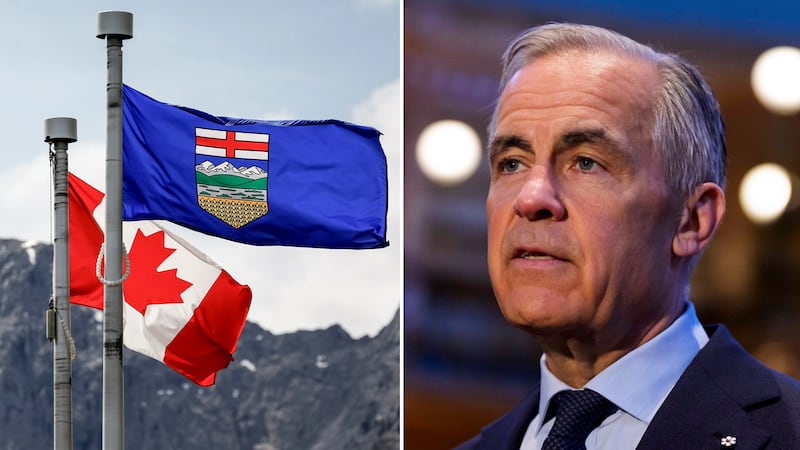
The government’s plan to reduce the size of the public service through attrition is “highly unlikely” to be enough to meet the fiscal targets it outlined in the election, according to interim parliamentary budget officer (PBO) Jason Jacques. “For the order of magnitude that you’re looking at, it would be highly unlikely that you’d be able to close a deficit or reach a number that big without the path going through personnel costs, so without some sort of reduction or substantial changes in the composition of the public service,” Jacques said in an interview on CTV Power Play with Vassy Kapelos on Tuesday. Despite warnings from experts that the federal government will have to make deep cuts to the public service if it hopes to meet its promises to reduce operational spending, the prime minister most recently insisted the plan is to rely on retirements and resignations. Speaking to reporters at a housing announcement in Ottawa on Sunday, Mark Carney said the size of the federal public service will “happen naturally through attrition.” “There’s a certain age cohort in the public sector,” he said. “People leave employment, whether it’s in the public or private sector for a variety of reasons. Attractive opportunities outside, retirement on the other side. So, we’ll be managing through that.” The Liberal election platform pledged to protect public programs like child care, dental care and pharmacare, while also eliminating $15 billion a year by 2028 to bring revenues in line with operational spending. Carney had also pledged to cap and not cut the public service in that same platform. The federal government is set to table its budget — the first since Carney became prime minister — on Nov. 4. Jacques said while the federal government has indicated it plans to change the way it presents the budget overall, it has yet to clarify its definitions of operating versus capital. “So we’re kind of shadow boxing with definitions,” Jacques said. “They say they’re going to close the operating budget, or close the deficit in the operating budget. To determine whether that’s reasonable or not, somebody actually has to define what the operating budget is.” The interim PBO added that relying on attrition makes it “really complicated,” because it removes the government’s ability to choose which departments or agencies are contracting at what rates. He used the example of the food inspection agency compared to more bureaucratic roles. If food inspection agents are overwhelmingly approaching retirement age, but bureaucratic positions are filled with younger people, the government risks losing personnel in a department where they would need to be replaced to uphold service standards. “That’s the risk with attrition, it just becomes really complicated hitting your targets and also managing the public service,” Jacques said. “They’re all linked to a specific program,” he also said. “And if you’re focused on simply reducing the people that you’ve hired, and you haven’t taken a long, hard look at the programs that are actually being implemented, and set priorities, potentially you’re focusing on the wrong things, and you’re making things more challenging for yourself.” Jacques, in his interview, also discussed the upcoming budget and Canada’s fiscal outlook. He called the Nov. budget “easily one of the most important” in more than 25 years, when factoring the ongoing trade war with the United States and the level of uncertainty that brings. You can watch interim parliamentary budget officer Jason Jacques’ full interview on CTV Question Period with Vassy Kapelos in the video player at the top of this article. With files from CTV News’ supervising producer Stephanie Ha