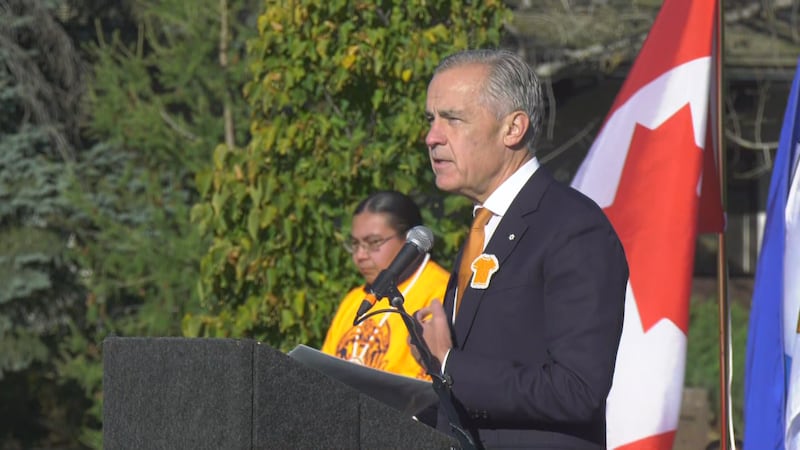
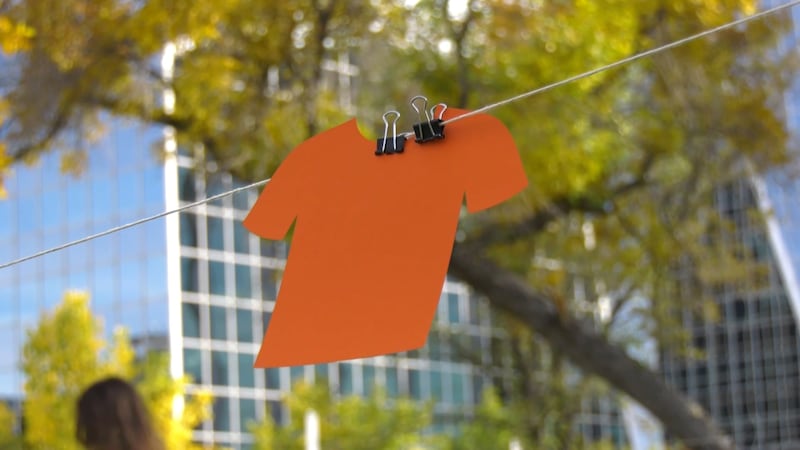
Thousands of people walk past the buildings in Ottawa’s downtown and along Sparks Street every day, often unaware of the history held within their walls. On the National Day for Truth and Reconciliation on Wednesday, a walking tour through the heart of the capital invited participants to stop, listen and learn about the decisions, people and institutions tied to Canada’s residential school system. The tour was hosted by the Assembly of Seven Generations in collaboration with the First Nations Child and Family Caring Society. For tour guide Montana Cardinal, the day is one of both reflection and resilience. “It feels very much like it has somehow changed from being a day of mourning to also a day of celebration and honour,” Cardinal said. “I come from generations of residential school survivors, and a lot of my life has been spent trying to put those pieces of culture, identity and history together.” Along the route, participants learned how seemingly ordinary downtown buildings are connected to some of the country’s most consequential moments in the history of residential schools and reconciliation. According to the National Centre for Truth and Reconciliation, more than 150,000 children attended residential schools, and many never made it home. The tour included a stop at the building where the Truth and Reconciliation Commission released its 94 Calls to Action in 2015, concluding in its report that the country’s residential school system was a policy of “cultural genocide.” Participants also heard the story and saw the former office of Dr. Peter Henderson Bryce, a chief medical officer, who raised concerns about conditions and high death rates among Indigenous children in residential schools more than a century ago. “My great grandfather was Dr. Peter Henderson Bryce. He was asked to go out and look at residential schools and evaluate them or report on them from a medical and scientific point of view, but when he came back his results were so alarming… and he got fired for it,” said his great-granddaughter, Margaret Bryce. “But here we are more than a hundred years later still discussing these issues.” For some taking part, it’s history they’re only now discovering. “It really hits you how recent this was and how these inequalities and the lack of openness about what’s happening still today, I find that quite shocking,” said participant Jane Coates from the UK. But for Cardinal, the day is about more than what was lost. “It can be focused on the light, and the light is the resilience of survivors and that we’re still here and our cultures are still surviving,” she said.