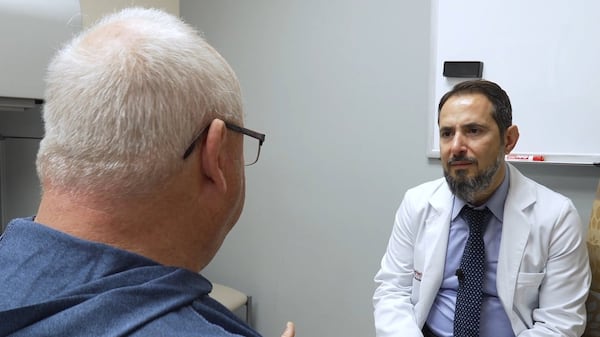
The City of Ottawa is looking to create a primary care recruitment ambassador and implement a recruitment strategy to help attract new doctors and address a shortage of approximately 270 practicing family care providers in the capital. A report for the finance and corporate services committee meeting on Oct. 14 outlines a 10-point strategy to recruit and retain primary care providers. “In Ottawa, at least 165,362 residents were without a provider in 2022, a number that has risen, with marginalized groups disproportionately affected, says the report, submitted by the general manager of the Strategic Initiatives Department. “While health care is provincially managed, access to primary care affects Ottawa’s livability, economic growth, and ability to attract new residents.” The report says existing provincial policies “disadvantage Ottawa” by barring international medical graduates from practicing here for five years and by limiting physician partnerships beyond five kilometres. The Ontario government requires international medical graduates that participate in the Ontario residency program to sign a return-of-service agreement that specifically prevents them from practicing medicine in Ottawa and the Toronto area for five years. The proposed primary care provider recruitment and retention strategy outlines 10 action points to “strengthen Ottawa’s position to attract and retrain primary care providers,” says the report. Staff say funding is available within existing resources to support the creation of a Primary Care Recruitment and Retention Ambassador for a two-year pilot project. The ambassador would have an annual budget of $40,000 to join the Eastern Ontario Physician Recruitment Alliance and implement other parts of the recruitment plan. “Health care isn’t a municipal responsibility. But a growing number of Ottawa residents don’t have a family doctor. So, we have to be part of the solution,” Mayor Mark Sutcliffe said on X. “After consulting with experts and primary care providers, we’ve launched the Primary Care Action Plan, to attract more family doctors and nurse practitioners to Ottawa.” The report notes many municipalities are increasing or onboarding recruitment programs to “capitalize on the upcoming increase in supply of primary care providers.” The City of Kingston launched a physician recruitment program in 2022, which included a $100,000 incentive to eligible family doctors as well as relocation and career support for incoming physicians and their families. A report for Kingston City Council said the recruitment incentive program attracted 25 family physicians to the city. Council approved $3 million to spend on the program. The report for Ottawa’s finance and corporate services committee notes rural and remote communities have “relied heavily on financial incentives to attract physicians to their communities,” and notes medium-sized municipalities are also “taking up the practice of providing signing bonuses and other financial rewards” to doctors willing to relocate. “Incentive programs operated by municipal governments are not without controversy, as it pits municipalities against each other and the municipality offering the most money usually wins,” staff said. “The use of incentives is a practical approach for small, rural and remote communities that require only a few providers and would not see a natural migration of sufficient physicians to their community.” Staff note the Ontario Municipal Act, 2001, prohibits providing funding or other advantages to select business owners over other business owners. “As physicians and owners of for-profit clinics, primary care providers represent a business and are therefore prohibited from receiving a bonus of any kind from the municipality if that same bonus is not offered to all similar businesses,” staff said. “The City of Ottawa would be in contravention of the Ontario Municipal Act, 2001 if select for-profit business owners or individual physicians were provided with a financial incentive or reduced or free public land/clinic space, while others were not.” Working with University of Ottawa Staff say the City of Ottawa is in discussions with the University of Ottawa’s Department of Family Medicine to identify opportunities to “assist in the replacement of resident teaching facilities” that are reaching the end of life or have outgrown their clinic space. “One of the Department’s current teaching sites will no longer be functional by 2028, and if no replacement is found, would leave 50 resident physicians without a place to complete their educational requirements,” staff said. “The loss of facilities to house the teaching clinic would not only significantly reduce the number of patients currently receiving care through the Department of Family Medicine; it would also reduce the number of physician graduates, some of whom choose to remain in our community and set up comprehensive family medicine practices.” Coun. Stéphanie Plante says she hopes more graduates stay in Ottawa. “It’s really important that the University of Ottawa Faculty of Medicine be a key partner in this. We know that they graduate between 60 and 70 family doctors a year and not a lot of them are staying in the nation’s capital. They are moving away… I would like to see how better we can leverage that relationship,” she said. Residents are hopeful it will lead to results. Julie Womack hasn’t had a family doctor since hers retired during the COVID-19 pandemic. She’s been diagnosed with breast cancer and says trying to see a doctor can be challenging. “If we had a family doctor, that would be awesome. To find a family doctor that’ll take myself and my children is hard to find,” she said. “And some doctors will see adults, but only if they’re healthy. They won’t see them if they’ve got multiple issues.” With files from CTV News Ottawa’s Kimberley Fowler