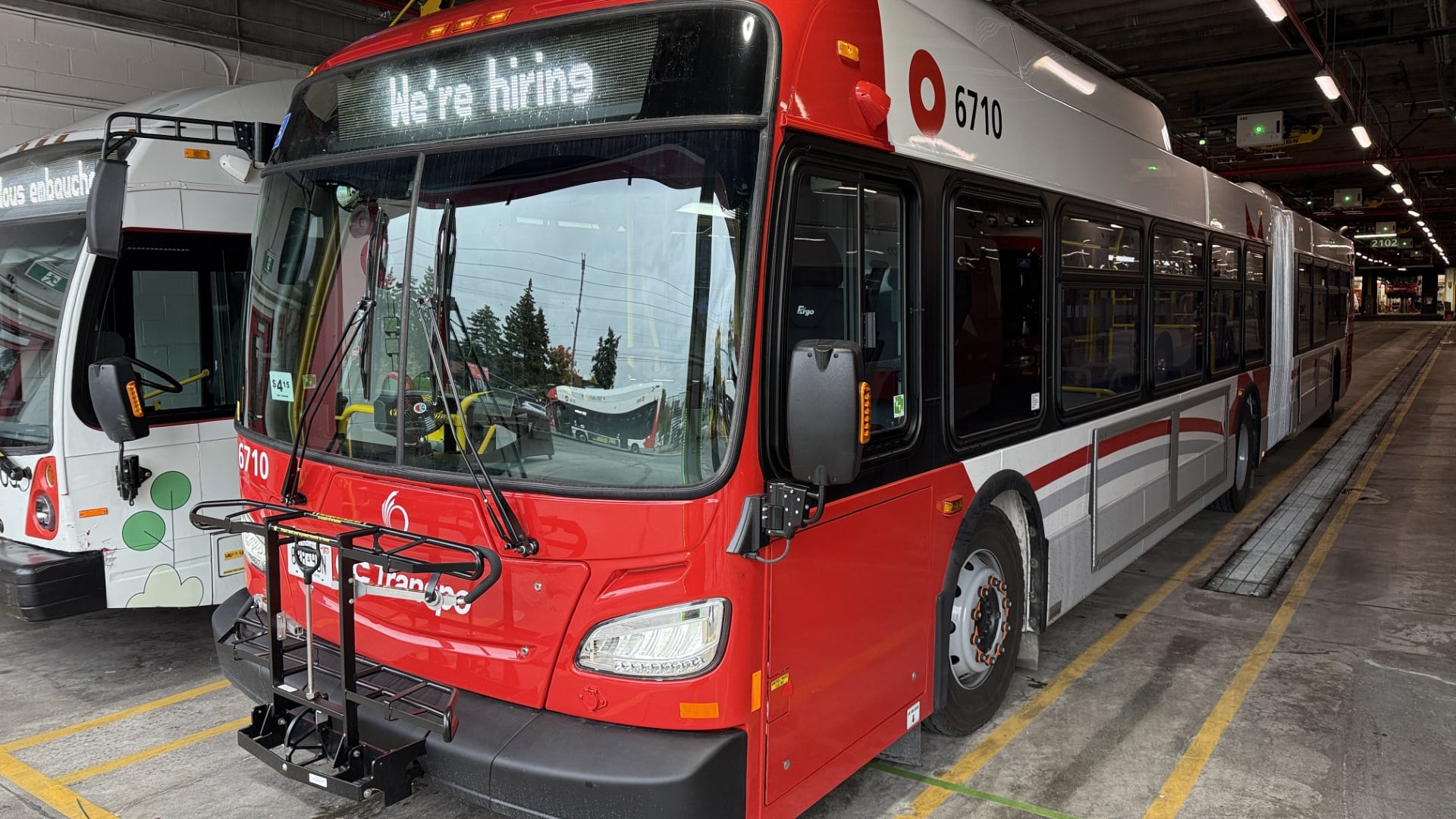
OC Transpo will test drive winter tires on 20 articulated buses this winter as part of its plan to keep commuters moving through freezing rain and snowstorms over the next few months. Transit Services general manager Rick Leary says the treads on the new tires are “designs for better traction in snow and slush.” “As the pilot buses operate on day-to-day service over the winter months, we can evaluate performance across a range of routes and conditions to determine if there are measurable benefits compared to the current tires,” Leary said in a memo to council. “Our findings will help us determine if more testing is needed or if the new tires should expand across our entire fleet.” The transit committee was told in September that OC Transpo will continue using a tire that meets the “three-peak mountain snowflake standards.” Articulated buses have typically performed poorly in heavy snow compared to other buses in the OC Transpo fleet, with buses becoming stuck on city streets during heavy snowfall events. OC Transpo says it may deploy 40-foot buses to replace some articulated buses when road conditions are challenging, with Leary saying the shorter buses “demonstrate better traction.” Leary outlined OC Transpo’s winter readiness preparations for council ahead of the first blast of winter weather this week. Leary says OC Transpo is phasing out the “dedicated Severe Storm Schedule” that the transit service introduced in 2022, which called for some routes to be cancelled when over 31 cm of snow is in the forecast. “This year, OC Transpo is transitioning to a more responsive approach to adjusting service in severe weather,” Leary said. “This forecast threshold has been met once since its introduction, resulting in a single implementation of the plan over four years.” O-Train winter preparations OC Transpo and Rideau Transit Maintenance are installing heat tracing equipment on sections of O-Train Line 1 to address freezing rain on the line. Last March, O-Train service was disrupted after freezing rain caused damage to the overhead wires between uOttawa and Hurdman. Leary says work is underway to install heat tracing equipment between uOttawa and Hurdman stations. “This upgrade to the overhead catenary system provides an extra layer of protection for the wires that power the train, preventing ice build-up that can lead to damage and service disruptions,” Leary said in the memo to council. “Installation and testing of the new heat tracing system is underway now and may require some minor adjustments to service over the next week at times when ridership is lower, like evenings and weekends.” Leary says other routine winter preparation activities for O-Train Line 1 include: