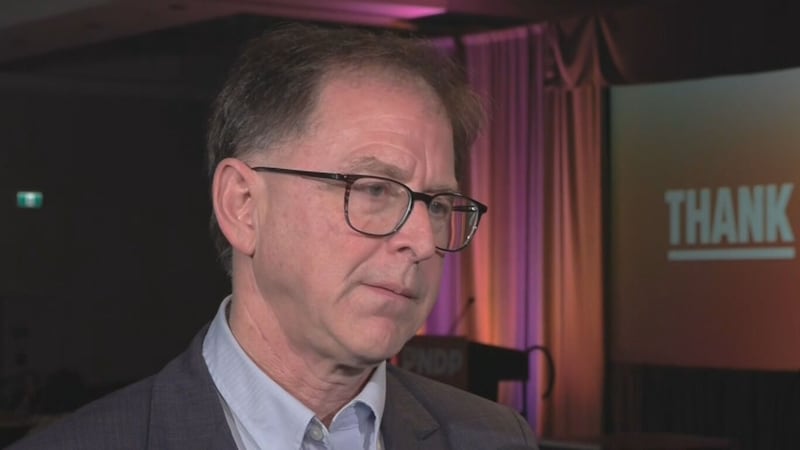
Alex Lawson is vowing to throw out the City of Ottawa’s three-item garbage limit, allow residents to place six items of garbage at the curb every two weeks and build a waste-to-energy plant if elected mayor this fall. The mayoral candidate unveiled his plan to deal with Ottawa’s household waste Thursday morning, promising to restore the six-item garbage limit in the first 100 days of his mandate and directing staff to treat waste-to-energy as the “working assumption” to deal with Ottawa’s garbage in the future. The City of Ottawa implemented the three-item garbage limit on Sept. 30, 2024, as part of a plan to extend the life of the Trail Road Landfill. Under the plan, households are limited to a maximum of three items of garbage every two weeks, with residents required to purchase yellow bags for any items over the limit. In June, city staff said 98.5 per cent of households were complying with the three-item limit, and approximately 89 per cent of households put out two or fewer garbage items every two weeks. Lawson says, if elected mayor, he will bring back the six-item limit. “Six items every two weeks covers the week after Christmas, the birthday party, the spring clean-out and the missed collection day without a trip to the store,” Lawson’s policy said. “The yellow bags stay on the shelf for the rare week a household goes past six, but the city stops selling rationing to families as a policy. Green bin, blue bin, black bin and leaf and yard waste continue exactly as they are, with no limit. Diversion is a good program and this plan keeps it. What ends is the rationing.” Lawson says within 30 days of taking office, he will introduce a motion directing staff to move forward with planning and building a waste-to-energy plant at the landfill the city purchased on Boundary Road earlier this year. He notes the city’s own study of what to do with Ottawa’s garbage in the future ranked a waste-to-energy plant as the highest-ranked option. “The plant burns what is left after diversion and turns it into electricity for the Ontario grid. What comes out the bottom is ash, about a fifth of the weight that went in,” Lawson’s policy said. “Denmark puts 99 percent of its bottom ash into road base; the Netherlands has committed to reusing all of it. Ottawa’s plan tests the same thing in the city’s own road base and concrete, and whatever cannot be reused goes into the landfill next door. Either way, the 30-year landfill Ottawa just bought stops being a 30-year landfill.” The city purchased the Capital Region Resource Recovery Centre on Boundary Road in January for $95 million. Staff say the city is exploring a number of options for the 192-hectare land, which is approved to accept 450,000 tonnes of waste a year. “In 2023 the City told residents to ration their garbage because we were running out of room. Then it spent $95 million buying a landfill so we won’t run out of room,” Lawson said in a statement. “Both of those can’t be true at the same time. Ottawa is not out of room. We paid $95 million to not be out of room.” A 2025 report by the city identified a waste-to-energy incinerator as one of the best options to deal with Ottawa’s future garbage but warned it would cost between $497 million and $862 million to build and there is a complex regulatory approval process. Lawson is also promising to negotiate a “host community agreement” with Carlsbad Springs before construction starts on a new waste-to-energy facility at the Boundary Road landfill. He is also proposing keeping the Trail Road landfill open until the new waste-to-energy plant opens. The Trail Road Landfill is expected to reach capacity in 2035. In June, staff said the landfill had approximately 9.3 years of capacity available, “based on the assumption that waste disposal continues at the same average rate.”