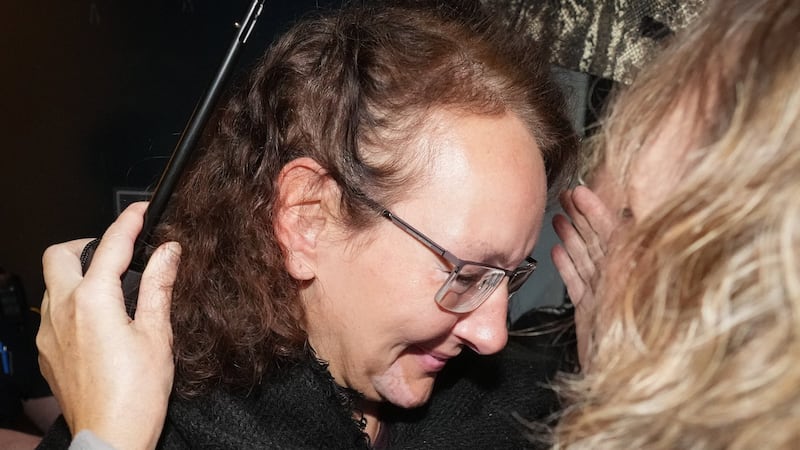
Zahra Norouziardaki says seeking care for endometriosis in Quebec has been a demoralizing experience, with long waits and doctors repeatedly dismissing her pain. Norouziardaki, who lives in Senneville on the West Island of Montreal, has lived with excruciating pain from endometriosis for nearly her entire life. It was only last year, following a hysterectomy and nearly a decade of trying to get answers, that she finally received a diagnosis of the gynecological condition. During that time, she consulted multiple specialists, underwent numerous scans, and tried various medications for the pain. Norouziardaki, 40, was experiencing severe pelvic pain that radiated throughout her body, vaginal bleeding, and digestive problems. But as she navigated the health-care system in search of a diagnosis, she said doctors repeatedly minimized her symptoms. “They would tell me it’s normal, but it wasn’t normal. I could barely move,” Norouziardaki told CTV News. “I was frustrated and anxious. Doctors would think I’m depressed, but I was not depressed; I was living in a lot of pain.” She said the hysterectomy made her pain worse. She no longer works as dental hygienist, sleeps approximately three hours a night, and remains isolated at home. She now relies on a cane to get around. She also wears a knee brace because she can no longer bear weight on her right knee. She said years of abdominal organ displacement caused by endometriosis affected her body’s weight distribution and placed excessive pressure on her knee. To relieve some of the pain, she lies on the floor for nearly four hours at a time with a heating pad on her abdomen and pelvic area. But she says the pain never goes away. Prevalence of endometriosis Norouziardaki’s case has prompted a women’s health group, the Réseau québécois d’action pour la santé des femmes (RQASF), to submit an open letter to Quebec’s Health Minister Marie-Karlynn Laflamme. The letter, co-signed by 66 other women’s advocacy groups, calls on the province to prioritize women living with endometriosis and ensure they receive timely access to surgery and care. “It is not merely ‘very painful periods,’ but a chronic disease that can affect the ovaries, intestines, bladder, ureters, and lungs; cause adhesions between organs; and lead to sometimes irreversible damage and extreme, debilitating pain,” the letter reads. “Despite these risks, women still wait years before receiving a diagnosis, and then months—or even additional years—before gaining access to specialized surgical treatment in Quebec.” Endometriosis is a gynecological condition in which tissue like the endometrium — which lines the uterus and sheds each month during a menstrual cycle — grows abnormally elsewhere in the body. Symptoms can include chronic pelvic pain, heavy bleeding, and it can impact many organ systems in the body, making everyday activities difficult. The condition affects approximately one in 10 women in Canada. According to the RQASF, endometriosis affects about 500,000 women in Quebec. In Canada, it can take an average of five to 10 years, sometimes longer, to get diagnosed. The delay is partly due to the complexity of identifying the disease, since each case presents differently. A lack of education on menstrual health is another reason why it can take so long to obtain an endometriosis diagnosis, and this often leads to symptoms being minimized or dismissed. ‘I want to die’ Norouziardaki is scheduled to undergo a surgical excision to remove endometriosis lesions that have grown outside the uterus. On June 23, her surgery was classified as a P3 priority, meaning it must be performed within 90 days. However, the RQASF says a medical note Norouziardaki received indicated she could face a one-year wait because of ministry and operating room constraints. More than 140 days later, she is still waiting for surgery. Quebec’s Health Ministry told CTV News it recognizes the impact that endometriosis can have on quality of life, as well as the challenges patients face in accessing a diagnosis and care in the province. “Priorities for consultation with a specialist, as well as surgical priorities, are determined based on the clinical evaluation conducted by the treating provider. The decision to proceed with surgery is made jointly with the patient, based on her clinical situation and needs,” the ministry wrote in a statement. “When surgery is necessary, the necessary expertise is available throughout Quebec. Wait times to see a gynecologist vary depending on the patient’s priority level, as do wait times for surgery.” Norouziardaki says the pain sometimes becomes so unbearable that she has visited the emergency department multiple times begging for surgery. She says doctors have told her they cannot perform the procedure because of the constraints within the health-care system. She also says she was told surgery could not be performed because her colon had not ruptured, and she was not experiencing ovarian torsion. “In other words, my surgery could not be performed because my condition was not yet considered life-threatening,” Norouziardaki said. “I explained that waiting until my colon ruptures could result in sepsis, and ultimately, my death. After I said that, the response was silence. I should not have to reach the point of a life-threatening emergency before receiving medical care.” She says she has been prescribed strong pain medication but has been told that surgery is the only solution to address the underlying cause of her pain. “I’m not taken seriously, and I’m not alone. There are a lot of other women like me. It seems that our pain is not important or that we’re making it up,” Norouziardaki said. “If the surgery doesn’t happen in two, three months, I would apply to medical assistance in dying (MAID). I want to die. I don’t want to live this way. It’s not a life.”