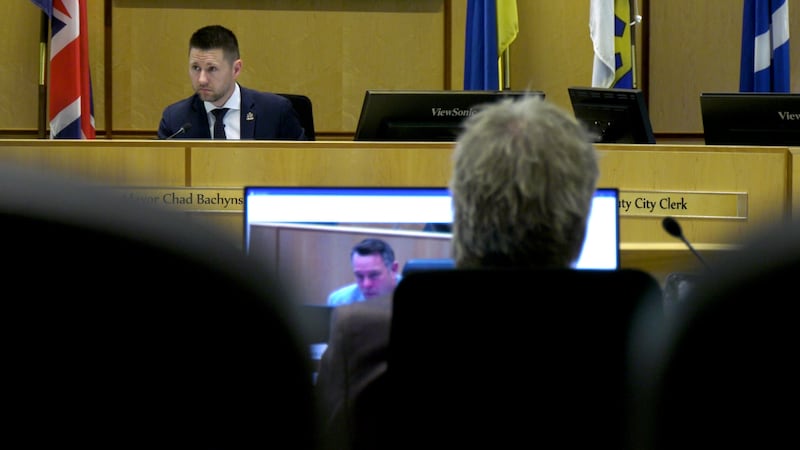
There’s no date for when the province’s new rules for councillor conduct come into effect and its lack of clarity has raised concerns among advocates — and questions about what local powers will stay in place. Bill 9, known as the Municipal Accountability Act, passed last month and includes the framework for a standardized code of conduct for municipal councils and the ability to remove a member for discreditable conduct. The bill received royal assent this past week but when the new rules come into force remains unknown. The lack of a firm date was highlighted by Ottawa’s Integrity Commissioner and City Clerk in a joint memo to Council on May 29. Municipal Affairs Minister Rob Flack’s office could not provide a date or timeline for when the rules take effect. The province said it’s working to develop the standardized code of conduct referred to in the legislation. The memo reported three suggestions passed by city council last year were not included in the final bill, including clarity on the ability to add to the new rules. “The legislation as passed contains no provision specifically allowing municipalities to tailor any new standard code of conduct,” it reads. “It is unclear whether the regulations will allow flexibility for municipalities to add elements to a standard code.” The second suggestion was to lower the threshold to remove a councillor to two-thirds or three-quarters of votes from council, but the unanimous vote requirement remains. If that unanimous vote fails, Ottawa also asked for the new bill to allow lesser punishments in the form of reprimands or pay suspension, but the bill explicitly prohibits it. Integrity Commissioner Karen Shepherd confirmed her office has not received a date for when the new rules come into effect and until then, will continue to work under the current local framework. Shepherd also provided a written submission on Bill 9 to the Standing Committee on Heritage, Infrastructure and Cultural Policy, during the committee’s review of the bill. Flack’s office was asked for comment on why City Council’s suggestions were not included in the final bill. A spokesperson said in a statement, “Changes reflect requests from municipalities, Ontario’s Big City Mayors and the Association of Municipalities of Ontario, helping to strengthen municipal governance and accountability.” ‘Paper Tiger legislation’: Chiarelli accuser on Bill 9 The bill comes partially in response to findings from multiple Ottawa integrity commissioners that former city councillor Rick Chiarelli harassed and bullied female staff and acted inappropriately towards women who worked in his office or interviewed for jobs. Chiarelli remained in office after three separate reports from two different integrity commissioners found he engaged in inappropriate behaviour. Nancy Cairns and Stephanie Dobbs filed complaints against Chiarelli and have advocated for changes since. Both testified at the provincial standing committee during Bill 9’s review. They said none of their recommendations were acted upon. Dobbs said the entire government bill and process “reeked of disingenuousness.” “It’s frankly insulting that absolutely no changes were made — not just from what Stephanie and I were suggesting but from so many other stakeholders across the province,” Cairns said. “Nothing changed.” Among their biggest recommendations was to lower or remove the need for a council vote to eject a councillor after documented misconduct. Such a vote would only happen after both Ottawa’s and Ontario’s Integrity Commissioner recommend removal after separate investigations. “I specifically asked them where did this 100 per cent threshold come from because… I’ve yet to hear an example of anything that requires a 100 per cent threshold,” Dobbs said, adding she doesn’t believe Council should be involved at all. “They were not elected to be judge and jury of their peers and they also were not elected to make decisions about the future of that councillor’s constituents.” Without Council approval, the standard to remove a Councillor from office remains a criminal conviction and jail time, a standard Cairns feels is too high for publicly elected officials. “Somebody working at McDonald’s could get fired very easily for far less than that. The injustice of it is rage inducing,” she said. “It’s just paper tiger legislation where it’s meant to look like it’s scary and imposing and powerful but it’s nothing and very difficult to enforce,” Dobbs said. Local powers remain unclear When the new rules do come into effect, the bill makes current local rules null and void. Both women are concerned by a lack of clarity, along with the bill’s prohibition on lesser local penalties if a unanimous council vote is not met. “And if anything it could be dangerous,” Dobbs said. “If you get an all or nothing where you either get a removal or they get no consequences — that’s a major issue, which again was pointed out.” Both Cairns and Dobbs said that dynamic could leave complainants more exposed than before. The province said Councils currently have the ability to address less egregious violations of a Code of Conduct already, but didn’t provide clarity on if those tools will remain or what local powers will remain in more serious cases. Cairns called the legislation “an attack on transparency and accountability,” two issues she said should be non-partisan. She feels the bill was part of a government pattern on those issues and pointed to changes to local school board governance and freedom of information laws as part of that pattern. “I’m very tired of the premier of Oz who says pay no attention to the man behind the curtain,” Dobbs said. The joint memo to council said the Integrity Commissioner and Clerk continue to monitor any developments on Bill 9, “particularly its coming into force and the creation of regulations.” Those developments would be reported back to Council.