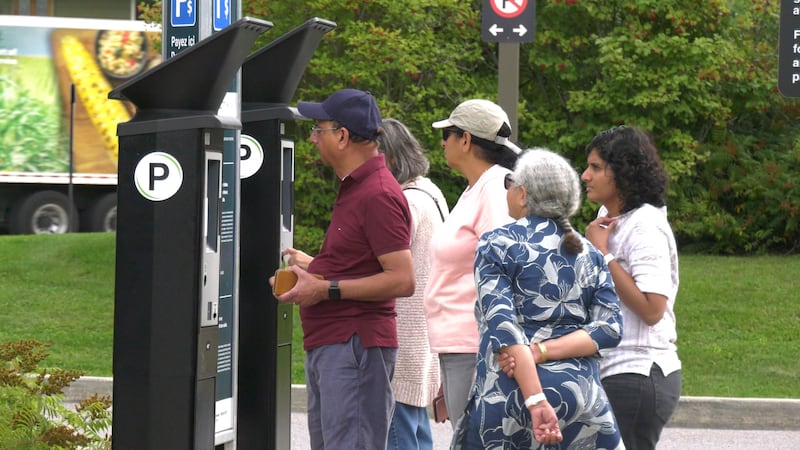
A prime stretch of real estate along Carling Avenue may soon be transformed into a major four-tower development, adding hundreds of dwellings, retail space and what residents say is a long-missing amenity: a grocery store. The proposed project at 299 Carling Avenue, between Lebreton and Bell Streets, just steps from Preston Street and Little Italy, would deliver around 750 residential units along with a large mix of commercial and retail space if approved. For nearby resident Dante Ruiz, the biggest draw is simple. “That would be awesome having a grocery store in the area, it would be fantastic frankly, because we have nothing nearby,” says Ruiz. “It’s big for us, we don’t have a car, so going to get groceries is kind of a big trip, all the way to Bank Street for us.” Another resident, Luanne Gauthier, says the neighbourhood has grown, but key services have not been keeping pace. “There’s a lot of pubs and restaurants, but convenience stores are lacking and grocery stores are lacking for sure,” she says. “I have to drive to the grocery store to get stuff… I miss being able to walk to a Farm Boy.” The development site sits near transit, parks, and the future Civic Campus of The Ottawa Hospital, something the developer says heavily influenced the plan. Turn Group CEO Ash Mahmoud says the project is designed to fill both residential, retail and service gaps in the area. “One of the biggest things which popped up immediately was a grocery store,” says Mahmoud. Mahmoud says the group reached a memorandum of understanding with an Ontario grocery retailer on Tuesday to create a 25,000 square foot grocery store. Mahmoud also says about 60,000 square feet of the project will be dedicated to medical services, ranging from family doctors and pharmacies to specialists and diagnostic services. “We have a full comprehensive medical clinic concept,” he says. “It makes sense being close to the new Civic Hospital. Doctors like to be near hospitals, and this model is well known globally.” Ottawa Councillor Jeff Leiper says the project reflects the long-term evolution of the neighbourhood as density and population increases. “Over the course of the next few decades, you can anticipate several thousand people are going to move into residential developments in this area,” says Leiper. “And you’re going to need commercial amenities to support that grocery store, for example, is something that residents of that area have been looking for. But clothing stores, coffee shops and a full range of retail uses isn’t necessarily here today, so by zoning for mixed use, residential and commercial uses, we can build a more complete community.” The project remains in early stages and still requires approval from City Council. No timeline has been set for construction. If approved, the development would replace a surface parking lot, mostly used by nearby federal workers.