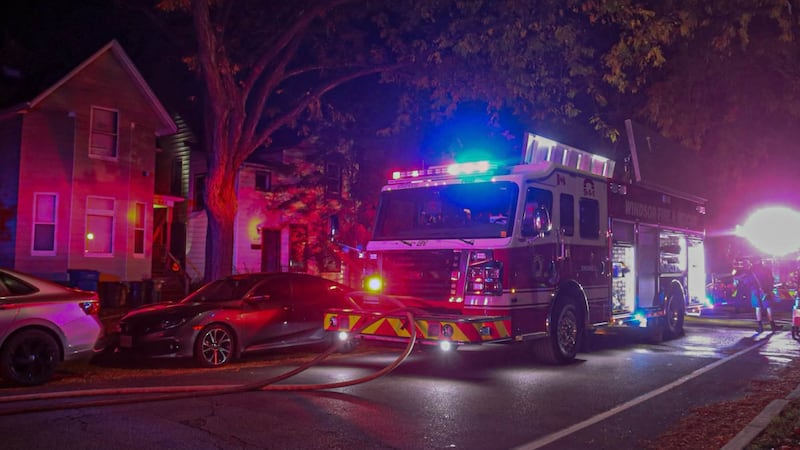
Ottawa residents will be paying more for property taxes, public transit, water and garbage fees and recreational activities next year. City Council approved the 2026 City of Ottawa budget Wednesday by a vote of 21 to 4. The budget includes a 3.75 per cent property tax increase, a 2.5 per cent increase in transit fares, and increase for water and stormwater rates, garbage fees and the cost for recreational programs. The 2026 budget includes the $5.2 billion operating budget and $1.92 billion capital project. CTVNewsOttawa.ca looks at what you need to know about the 2026 City of Ottawa budget. Tax increase The 2026 City of Ottawa includes for a 3.75 per cent property tax increase, which would add $166 to the average property tax bill. According to the city, an average home assessed at $415,000 would pay $56 more for city services, $36 more for police and $74 extra for transit in 2026. Water, garbage fees increasing It will cost more to turn on the taps and flush the toilet next year. The Long-Range Financial Plan for Water, Wastewater and Stormwater calls for a 4.5 per cent increase for rate-supported water and wastewater services next year. The estimated single family connected home will pay an extra $47.30 in 2026. The solid waste services fee will increase $2 a month on the tax bill, for a total of $24 extra on the bill in 2026. The average property taxpayer will pay $267 for solid waste services in 2026. Emergency services The 2026 City of Ottawa budget includes funding for the following: There is also funding in the budget to spend $3.6 million to replace breathing devices for firefighters and $1.48 million for new emergency services personnel vehicles. The Ottawa Police Service says its 2026 budget includes funding for a new District Policing Model with new boundaries to align resources, funding for body-worn cameras for officers and using AI transcription to “improve efficiency and documentation.” Roads and infrastructure The City of Ottawa says the 2026 budget includes $135 million for roadway resurfacing and preservation, and $25.4 million for sidewalk rehabilitation. Funding in the budget includes. Winter operations Ottawa will be spending more green to clear the snow in 2026. The 2026 budget increases the winter operations budget by $3 million to $103.4 million. The budget includes $78 million for winter maintenance of roadways and $16.9 million for winter maintenance of sidewalks and pathways. The City of Ottawa has over 12,750 lane kilometres of roads, 2,600 kilometres of sidewalks and pathways and 60 kilometres of winter maintained cycling lanes. There were 93 winter events during the 2024-25 winter. Pothole patrol The City of Ottawa plans to spend $12.6 million to fill potholes across the city. As of early November, the city had filled 257,843 potholes in 2025. a total of 268,110 potholes were repaired in 2024 and 222,256 potholes in 2023. The 2025 budget includes $12.3 million on pothole repairs. Community and social services, recreation, culture and parks The Community Services budget includes the following investments. OC Transpo Transit riders are facing a 2.5 per cent hike in transit fares in 2026. The EquiPass and Community monthly passes will remain the same as 2025 rates. Staff say the $906 million operating budget for transit includes opening the O-Train Line 1 East Extension at Trim Road, “maintaining O-Train services at current levels and maintaining current bus service levels with increased reliability.” There is a $46 million placeholder in the 2026 Transit Services budget for funding from the Ontario government, but no funding has been committed. Council approved a motion during the final budget debate to increase the frequency of O-Train Line 1. Starting in April, trains will run every six minutes on weekdays from 9 a.m. to 3 p.m., and every 7.5 minutes on weekday evenings from 6 p.m. to 7:30 p.m. OC Transpo will also extend the transfer window from 90 minutes to 105 minutes between 3 p.m. and 6 p.m. on weekends, beginning on Canada Day. Recreation fees The 2026 City of Ottawa budget increases recreation fees by three per cent in 2026. Here is a look at some of the rate increases: Fees for Lansdowne, museums, museum admission, Nepean Sportsplex will also increase three per cent. Parking permits There will be no change in the maximum parking rates for on-street parking spots at metres in 2026. Motorists will be paying more for on-street parking permits in 2026. Staff are have the authority to increase in the maximum hourly rate for municipal parking lots in the City of Ottawa. According to the 2026 budget, the maximum hourly off-street rate in all lots for a maximum of 30 minutes will be $8 ($6.50 in 2025), while the maximum daily rate will jump $1 to $26. First Aid Courses The cost of first aid courses will increase 3.3 per cent in 2026, according to the budget. Ottawa police fees The Ottawa Police Service will increase fees for police record checks and motor vehicle collision reports. Here is a look at some of the fee increases: Short-term rentals The operators of short-term rentals will be paying more for a licence in 2026. The budget includes an 8.3 per cent increase in the application/renewal processing fee to $65, and the two-year host permit fee will jump $2 to $58. Business licencing The 2026 City of Ottawa budget increases business licencing fees in Ottawa next year. The application processing fee will increase $5 to $65. Licencing fees will increase between 3 per cent and 12 per cent. Patio permit fees Restaurants and cafes will be paying more for outdoor patios in 2026. The budget increases the permit processing fee $3 to $79 in 2026. The cost of an outdoor patio will increase to $16.49 per sq. m. from $15.91 in 2025, while the winter monthly rental rate will increase from $5.13 per sq. m. to $5.31 next year. Municipal Accommodation Tax Visitors staying in hotels will be paying more in 2026 to fund tourism in Ottawa. The 2026 budget proposes increasing the Municipal Accommodation Tax by one per cent to six per cent on Jan. 1, 2026. A total of $2 million will go towards the Lansdowne 2.0 project. The remaining $3 million from the Municipal Accommodation Tax increase will support city tourism priorities. Saying, “I Do” The cost of getting married will increase in the City of Ottawa in 2026. The 2026 budget increases the cost of a marriage license to $192.14, up from $186.55 in 2025. Civil marriages at Ottawa City Hall will increase three per cent. According to the budget, the Option A: Monday to Friday civil marriage during business hours will cost $168 in 2026, up from $163.18 in 2025. The Option B: Friday evening and Saturday afternoons civil marriage will cost $252, up from $244.72 in 2025. The cost of a death registration will jump from $52.28 to $54.