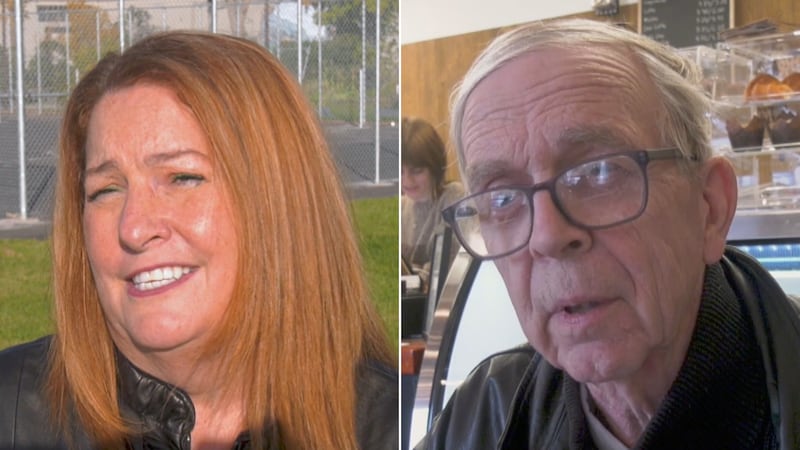
Ottawa Mayor Mark Sutcliffe says the City of Ottawa will proceed with a bid to purchase a private landfill in the city’s east end. The 475-acre Capital Region Resource Recovery Centre, owned by Taggart Miller Environmental Services, is available for sale through a competitive bidding process. After a two-and-a-half hour session behind closed doors due to confidentiality requirements, Sutcliffe said the city’s involvement in the process will continue. “The City of Ottawa will continue its participation in the competitive bidding process related to the acquisition of this landfill; however, given the requirements for confidentiality, details will be reported out once the bidding process is over and the non-disclosure agreement has been lifted,” he said at Wednesday’s city council meeting. There was no vote on the matter when the public meeting resumed Wednesday, and Sutcliffe said no votes were taken in camera, except on procedural matters and directions to staff. Sutcliffe told reporters that council can direct staff during an in-camera session and that it is a council decision whether to proceed with a transaction. City staff describe the potential purchase as a rare opportunity, since it takes 15 years to secure the approvals for the landfill and “given Ontario’s available landfilling space is expected to run out within the next decade.” Sutcliffe said this has been a difficult process for residents and councillors due to the confidentiality requirements and said he looks forward to sharing more information once he is able. “As I mentioned at committee last week, this entire process could have been conducted behind closed doors, but we didn’t feel that was appropriate and we held a public meeting of the finance committee because we wanted to share as much information as possible with residents and provide and opportunity for public engagement and input,” he said. “We went above and beyond what was required so that residents had a chance to share their views and also to hear our views on this important decision.” There is no timeline for when the city might know if its bid has been successful, Sutcliffe said. “That’s at the discretion of the seller. It’s not our process, it’s their process. They’ll decide when they make a decision about the future of that property, they’ll let us know and then we’ll hear about it,” he said. Councillors on the finance and corporate services committee moved several motions on Nov. 21 that would apply if the city is successful with purchasing the property, including reviewing options to establish a community benefit mechanism for residents near the site, engage with an established community liaison committee, publish annual environmental impact reports, undertake and publish a human health risk assessment, and to review and adjust truck routes to minimize impacts on residents. These recommendations were considered in open session and approved. Coun. Isabelle Skalski who represents Osgoode ward, where the landfill will be, says she has concerns over transparency. “I’ve always hated this process. I don’t like the fact that the seller has imposed this kind of strict, confidential process on such an important acquisition for a city,” she said. “Everything about this stinks unfortunately. And that’s what makes it hard for everybody on council. We’re all trying to understand and navigate a process that’s really unique and rare and one that we haven’t really done before. It is the most difficult position for me to be in right now is to not be able to talk to my residents about it.” Here’s what you need to know about the city’s potential bid for a new landfill in the east end. What is the Capital Region Resource Recovery Centre? The Capital Region Resource Recovery Centre (CRRRC) is a 475 acre, fully permitted integrated waste management facility owned by Taggart Miller Environmental Services. It is located on Boundary Road, north of Devine Road and west of Frontier Road. According to staff, the Capital Region Resource Recovery Centre is the only landfill approved in Ontario in over two decades. Staff do say the site plans for the facility are not complete. What is permitted at the Capital Region Resource Recovery Centre? The Capital Region Resource Recovery Centre has approval to accept up to 450,000 tonnes of waste a year and has a lifespan of approximately 30 years. “It is authorized to accept residential, industrial, commercial, and institutional waste, and construction and demolition waste,” staff said. “Site operation approvals include hydrocarbon contaminated soil treatment, surplus soil management, a drop off site for separate materials or separation of materials, anaerobic digestion of organic waste from commercial sources and, leaf and yard waste composting.” Price tag? The City of Ottawa has entered into a non-disclosure agreement to take part in the bidding process, and there is no word on how much the city would bid for the landfill. A staff report in June estimated a new landfill would cost between $439 million to $761 million. Sutcliffe defended the city potentially spending money to purchase the site, saying it’s part of the city’s solid waste strategy. “We are going to be spending money on waste solutions for the next 100 years in Ottawa one way or another. The question is what are we going to be spending that money on?” he said. “We will be spending money on waste management in the future and any potential acquisition that might happen in the future, whether this process or another one, fits within that envelope of money that we are going to be spending on waste management in the future anyway.” Residents react to city potentially buying a dump Brenda Bergeron has lived in Carlsbad Springs for years, and says the entire community is enraged by the prospect of the city buying a landfill. “Pretty much the dump is the main topic around any activity out here lately- all negative,” Bergeron told CTV News Ottawa on Wednesday. “We’ve been fighting it for years, but it looks like we’re going to get it whether we like it or not.” Charlotte Greer is one resident who has fought the project for many years, including as the site went through provincial approvals. She says she does not believe this is environmentally the right spot for the landfill. “I think the city has done a disservice to all the people who participated in their strategic waste management plan. All these people believe that public participation was a major part of their waste management plan,” Greer said. “Here, we had two weeks to try and educate the councillors on why this is not technically the site, not because it’s NIMBY, not because I don’t want it. It’s because, technically, that site is sitting on an aquifer, and that aquifer services all of the wells around here, as well as the farms. And they are going to put in a landfill there now!” Other residents worry that, with an increase to traffic and trucks, the small community feel will be changed. “We don’t want this here, mainly because of our kids. Our families, all the families coming here. They’re growing up in this neighbourhood. We don’t need this. It’s just wrong. It doesn’t belong in a neighborhood,” Sue Hebert said. Suzanne Leroux lives close to where the new landfill will eventually go. “We fear for the runoff, and so we are all clay, so there’s not a lot of absorption. And of course, our house values like anything else,” Leroux said. How would the City of Ottawa pay for the landfill? The City of Ottawa would fund the purchase of the landfill through debt. “The acquisition would be funded by debt and would have an impact on near-term fees but balance out over the long term,” staff said. How did the City of Ottawa get involved in the bidding process? A report for the finance and corporate services committee said the city received a notice of an acquisition opportunity for the landfill in early 2025. According to the City of Ottawa’s Lobbyist Registry, a staffer at Syntax Strategic met with Mayor Mark Sutcliffe and Chief of Staff Mathieu Gravel on April 1 to provide an update regarding the Capital Region Resource Recovery Centre. Staff assembled a team of internal and external experts, including staff from Solid Waste Services, Legal Services and external legal counsel to explore the potential purchase of the landfill. In September, the city was notified its Phase 1 submission had been accepted and the bid proceeded to Phase 2. City council received briefings in-camera about the potential acquisition of the Capital Region Resource Recovery Centre. What happens if the city buys the landfill? “As the site plans are not yet complete, acquisition would allow the city to have direct control over how the site is used in the future, including decisions about waste management technologies, timelines for development, and environmental oversight,” staff said in a report for the committee and council. “The acquisition itself is not a final solution, but a strategic move that creates further possibilities. If the purchase goes ahead, public input and further analysis will help guide how the city develops the site to support its waste management needs.” Will it be anything other than a landfill? No. The Capital Region Resource Recovery Centre has approval to operate as a landfill, despite opposition of nearby residents for years. Mayor Mark Sutcliffe told reporters following Wednesday’s meeting that if the city doesn’t buy the landfill, it will still accept waste. “That site is going to be a landfill. The question is not whether it’s going to be a landfill or not. The question is who’s going to own the landfill, who is going to have control over it and who’s going to look out for the public interest?” he said. “There is not an option where we stay out of this process and nothing happens on this site. The site is going to be sold to somebody and it will be a landfill. The only question is who’s going to own it.” Where does the City of Ottawa’s waste go now? The City of Ottawa currently sends residential waste to the Trail Road Landfill, which is owned by the city. The Trail Road landfill opened in 1980. It’s expected to reach capacity in the next 10 to 15 years. The city launched an Environmental Assessment to expand the Trail Road landfill within its current boundaries, which could provide 15 additional years of landfill life. The Solid Waste Master Plan has implemented several options to extend the life of the landfill, including a new three-item garbage limit for households, the banning of industrial, commercial and institutional waste from the Trail Road dump, and using private landfills. Starting in 2026, the city will send approximately 60,000 tonnes of residential waste a year to private landfills. It costs $12 million a year to operate the Trail Road Landfill. Ottawa’s future garbage needs A report released in June outlined the “best options” to deal with Ottawa’s future garbage when the Trail Road landfill fills up. Staff said a feasibility study recommended two top-ranked options, building a waste-to-energy incineration facility or continuing to dispose of non-diverted waste at the Trail Road landfill until it reaches capacity and then using one or several private landfills in the region. Staff recommend the city conduct an “in-depth evaluation” of three scenarios; the use of private facilities once Trail Road is full, building a waste-to-energy incinerator (WTE) in the City of Ottawa, and also explore building a new municipal landfill because it would be required if the city does proceed with a waste-to-energy incinerator or a mixed waste processing facility. Staff said a waste-to-energy incineration facility would have a capital cost of $497 million to $862 million. It would cost $47 million a year in operating and maintenance costs. A new landfill would cost approximately $439 million to $761 million for capital expenditures and $16.5 million a year in operating and maintenance costs. Ontario’s requirement for a renewable natural gas collection and conditioning system added between $45 million and $60 million in capital costs. Does buying a landfill rule out Ottawa building an incinerator in the future? The short answer is no. Coun. David Brown asked staff if buying the landfill would take an incinerator or other options for Ottawa’s garbage off the table. “It does not take any other options off the table,” Alain Gonthier, Ottawa’s public works general manager told the committee on Nov. 21. Will Ottawa need a landfill if it builds an incinerator? The Waste Management Technologies Feasibility Study presented in June said a new landfill will be required even if Ottawa builds a waste-to-energy incinerator. Staff note an incinerator generates residual waste requiring disposal. With files from CTV News Ottawa’s Leah Larocque