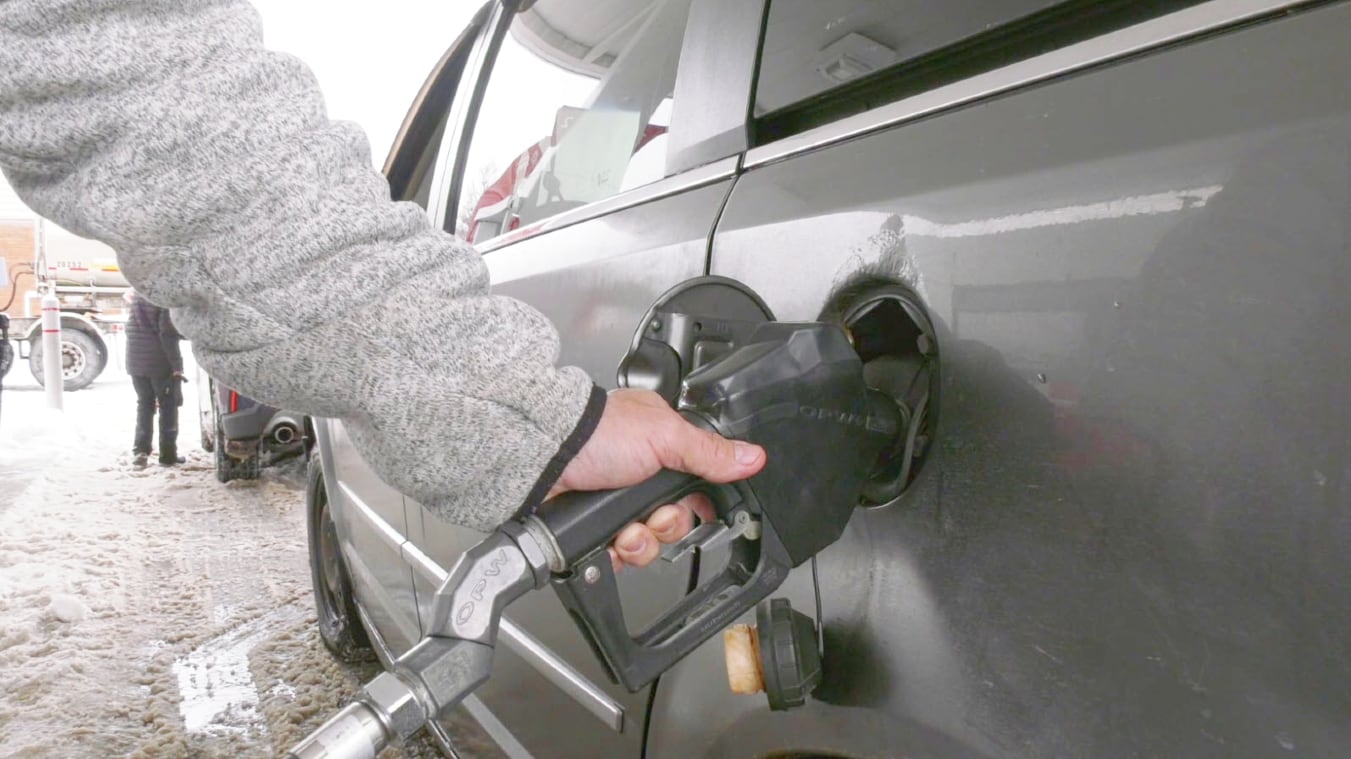
Gas pumps were busy Friday morning in Sudbury, where prices fell two cents overnight. “If I look at Sudbury and I see prices at $1.61 to $165, those prices are well below cost right now,” said Dan McTeague, Canadians for Affordable Energy president and gas analyst. “A litre of gasoline in Toronto is about $1.70, not $1.61. So, there’s a lot of competition.” But the cost of gasoline is still 30-40 cents higher than before the war in Iran, and motorists told CTV News that they’ve been feeling the pressure at the pumps. “It’s been skyrocketing,” one resident said. However, the effects go beyond the daily commute. Gas prices are also impacting small businesses, according to the Canadian Federation of Independent Business. The group said fuel costs have been on the minds of many small- and medium-sized business owners. “Fifty per cent (of our members) say fuel prices once again, are a cause for concern in terms of the costs that their operations have to manage,” said Christina Santini, the federation’s director of national affairs. “It’s part of the supply chain. We’re all going to feel it at some point in time.” Santini said that because small businesses often rely on daily deliveries or service vehicles, they have less room to absorb sudden spikes than larger corporations. “When it comes to higher fuel prices, very, very few sectors are completely immune,” she added. “It hurts pretty much every single citizen. It’s going to hurt many businesses.” Santini said the impact is perhaps most visible in the transportation sector. Cody Ruberto, Uride Founder and CEO, said the increase in gas prices has been challenging for drivers. Tough on drivers “It’s been tough for the drivers, obviously, when there’s a really kind of quick increase,” Ruberto said. “It makes a difference because all the cars are on the road, driving all the time, getting people home safe.” He said Uride has implemented a few measures to help with the costs. “We added a gas surcharge that goes 100 per cent to the drivers,” he said. “So it’s a dollar per trip across all Ontario markets at the moment. And so, that’s something we’re doing right now and we’re closely monitoring.” McTeague said Sudbury’s geographic location adds a cost to every litre of fuel sold in the city. “Fuel has to be brought in from the Toronto region, up here to Sudbury,” he said. “What would usually be a three-cent hit for retailers could be as much as a four or five-cent increase because transport trucks are paying more for diesel to get it here.” McTeague said with the ongoing conflict in the Middle East and the annual industry switch to more expensive “summer-grade” gasoline in April, he said the pressure won’t ease anytime soon. He expects local prices to rise by at least a few more cents this weekend.