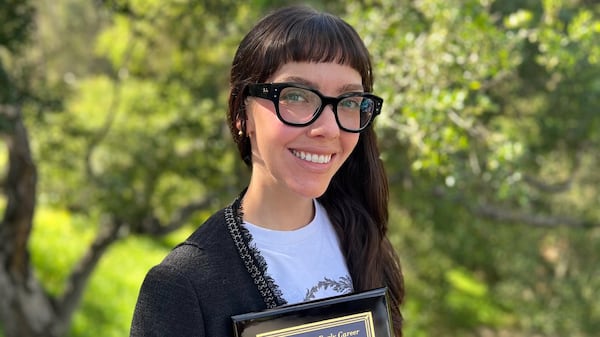
A team developing an aerospace and environmental project based in Montreal is currently working at the Timmins Stratospheric Balloon Base, testing its technology. The SAFARI-APEX project team from Montreal’s École de technologie supérieure has developed a prototype that uses cameras and artificial intelligence to monitor forests from above. The system is designed to spot conditions that could make an area more vulnerable to fire before one actually starts. “We are trying to just map all the forest and with this, we would be able to predict the risk of a fire happening in those areas,” said Serguei Markov, an IT engineer and one of the people behind the project. Markov said the system analyzes factors such as vegetation, soil and humidity -- information that could help focus fire prevention efforts where the risk is highest. “If we see that our risk is really high in this area, we could send a team over there, trying to cut some trees, maybe trying to diversify the type of plantation in those areas,” he said. A prototype, called Borealis, was sent into the atmosphere on a Canadian Space Agency stratospheric balloon in Timmins. The team plans to continue testing the technology, with the goal of getting this vital information to emergency services faster. Alex Vaillancourt, another member of the SAFARI-APEX team, said the project is also about young people taking on a problem that could affect future generations. “We kind of want to put the youth up front for a problem that is concerning us and our children and grandchildren,” Vaillancourt said. “Just to make a difference in what seems to be a super imminent threat.” The team has already won an Innovation in Research Award and was a finalist in the University Programs category of the Space Tech Challenge in California. The team hopes this is just the beginning.