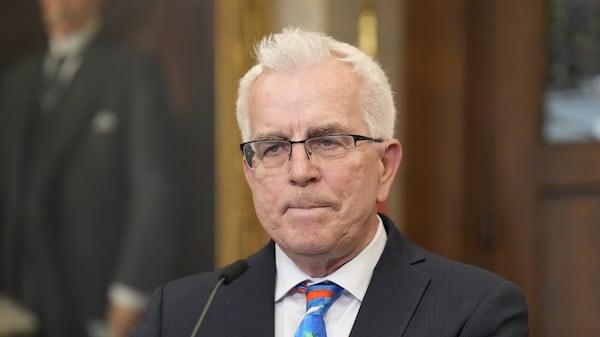
Ontario Transportation Minister Prabmeet Sarkaria was in North Bay, Ont., on Friday morning to highlight efforts being made to improve highways and the passenger rail system. Sarkaria announced that $100 million is being set aside for rail infrastructure upgrades to the Northlander passenger rail train. Work is underway along Northlander’s corridor, including joint elimination, curve adjustments and improvements at rail crossings that will deliver a smoother ride and reduce travel times for passengers. “We wouldn’t have poured hundreds of millions of dollars into this project if we didn’t believe in it,” Sarkaria told reporters Friday. The province has awarded a contract for renovations at the Northlander station in North Bay, as well as Ontario Northland’s motor coach and Bus Parcel Express services. Station upgrades The station will be upgraded to include new digital screens, seating and service counters, as well as washroom and lighting enhancements to improve accessibility and comfort. Similar work is underway at the Cochrane and Englehart stations, with construction expected to be completed in the spring. The Northlander will relaunch in late spring or early summer, operating a 740-km route from Toronto to Timmins, with a rail connection to Cochrane. The original Northlander was discontinued in 2012 under the former Liberal government due to high operating costs and low ridership. “I can remember the day that they announced that the Northlander was going away -- it was sad,” said North Bay Mayor Peter Chirico. The province has not yet announced the official launch date and the cost of tickets. Ontario Northland CEO Chad Evans said ticket prices will be announced along with the train’s launch date. “We’re getting closer. We’re in the testing phase now,” Evans said. “We are focused on affordability and designing a fare strategy.” The first of three train sets arrived in Etobicoke on Jan. 8 and is currently going through tests to ensure all systems function properly. While it was losing money, Sarkaria said it was “not acceptable” for the Northlander to have been scrapped. “Previous governments looked at it as very black and white. Is it making money? It’s not making money. Let’s cancel it,” he said. “We have high hopes for this line. The amount of interest that we’ve already seen on this line will be significant, but we will backstop that.” The return of passenger rail is set to create roughly 80 new full-time jobs. The train is not the only transportation link between the north and south that Sarkari addressed Friday. Last weekend, protests along the highway corridors called for improvements to what are some of the deadliest highways in the province: 11 and 17. “It’s not safe. We have so much traffic,” Maryse D’Amours, highway safety rally organizer, told CTV News on Friday afternoon. “It’s not the same for every town you’re driving.” In response, Sarkari highlighted provincial efforts to improve safety. “By the end of 2025, we conducted over 120,000 inspections,” he said. “That’s up over 40 per cent from a year ago, with a focus on northern Ontario highways.” Touting a $400 million highway infrastructure upgrade package in 2024 and 2025 while increasing the number of transportation officers to 50 to patrol the roadways, Sarkaria said early work on the long-awaited 2+1 highway pilot design will begin this summer to reduce head-on collisions. “We’re putting all of our resources behind (this) and making sure that we get that project off the ground,” he added. The 2+1 pilot project is set in two places on Highway 11: from Sand Dam Road to Ellesmere Road and from Highway 64 north to Jumping Caribou Lake Road. “It’s much cheaper to build and yet also has a very significant safety benefits when you compare it with twinning,” said Mark Wilson a member of a group called Going the Extra Mile for Safety (GEMS). Wilson said the highway safety idea came from European countries like Sweden, which now has about 3,000 kilometres of 2+1 roads and continues to build more. He said studies have proven these roads have reduced fatality rates from 55-80 per cent, while improving travel times. “The model will make a big difference on northern highways,” he said. Sarkaria emphasized that whether it’s the roads or the train, the province knows talk is cheap and action is needed.