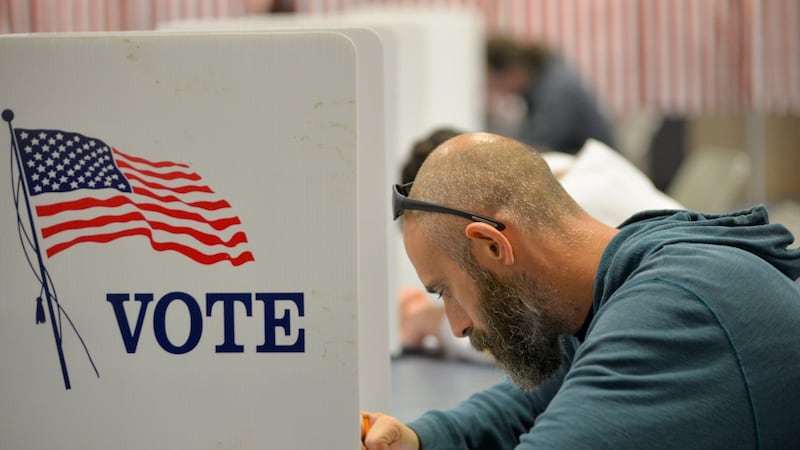
Polls have closed in Quebec, and the Liberals are hoping to gain enough seats in the province to clinch a majority government while the Bloc Quebecois is waiting to see if an eleventh-hour bump in support will be enough to claim the balance of power. The campaign in Quebec has been a tough slog for Bloc Leader Yves-Francois Blanchet, who watched his party lose ground to the Liberals as U.S. President Donald Trump’s threats of tariffs and annexation dominated headlines. Blanchet told reporters Monday after a casting a ballot in Beloeil, Que., that the election has evolved from Trump occupying all the space to worries about Conservative Leader Pierre Poilievre, to doubts about Liberal Leader Mark Carney’s integrity after he failed to disclose that Trump brought up the 51st state idea with him during a call. The Bloc leader said he would be waiting impatiently for the results to see if his party’s objectives were met, though he declined to divulge exactly what those objectives are. Polls closed across most of Quebec at 9:30 p.m. eastern time. But voting ended an hour earlier in the riding of Gaspesie--Les Iles-de-la-Madeleine--Listuguj, where a tight race was shaping up between Bloc candidate Alexis Deschenes, a lawyer and former journalist, and former Liberal minister Diane Lebouthillier. The Gaspesie riding was predicted to be close after it gained part of an adjacent Bloc-held riding during the 2022 electoral redistribution. A cheer went up at the downtown Montreal theatre where the Bloc is holding its election night gathering when early results showed Deschenes leading. He was overtaken by Lebouthillier minutes later, but regained the lead with about 426 votes about one hour after polls closed in that riding. At the Bloc gathering, party supporter Robert Belanger said he was hoping for a minority Conservative government with a strong Bloc contingent. He said he knows the party might lose a few seats, but was hoping it could still win between 25 and 30 in order to defend Quebec values such as language and secularism. Partway through the campaign, the Bloc appeared to be at risk of keeping fewer than the 12 seats it will need to maintain official party status. The Liberals seemed poised to win close to 50 of the province’s 78 seats, despite Carney’s imperfect French, which would be the party’s best showing in decades. “In the first two weeks, there really wasn’t much space for issues specific to Quebec,” said political analyst Antonine Yaccarini. “We saw that the Bloc Quebecois, in particular, was having a lot of difficulty attracting attention because we were only talking about Trump.” But Yaccarini said the two leaders’ debates helped to bring other issues to the fore, and the Bloc seemed to have narrowed the gap a little in the latter stage of the campaign. A Liberal government is the most likely outcome Monday night, Yaccarini said, but a small Bloc resurgence could help make the difference between a majority and a minority. Yaccarini said she’ll be watching many of the Bloc-held seats around the Island of Montreal, which the Liberals are hoping to flip. “Early in the evening, if we see that there are Liberal breakthroughs around Montreal, it could mean that the red wave is very significant,” she said. She added that the Bloc needs to win at least 20 seats -- down from the 33 they currently hold -- to be able to say it was a “decent campaign.” The Liberals also hold 33 seats in Quebec. Poll aggregator 338Canada projects they’re on track to win about 40 ridings in the province, compared to roughly 24 for the Bloc. Yaccarini said the Conservatives could also pick up a few more seats around Quebec City or in the Saguenay region, up from the nine they held at the dissolution of Parliament. The NDP, which has been reduced to a single Montreal seat since 2019, is not projected to make gains in Quebec. This report by The Canadian Press was first published April 28, 2025.