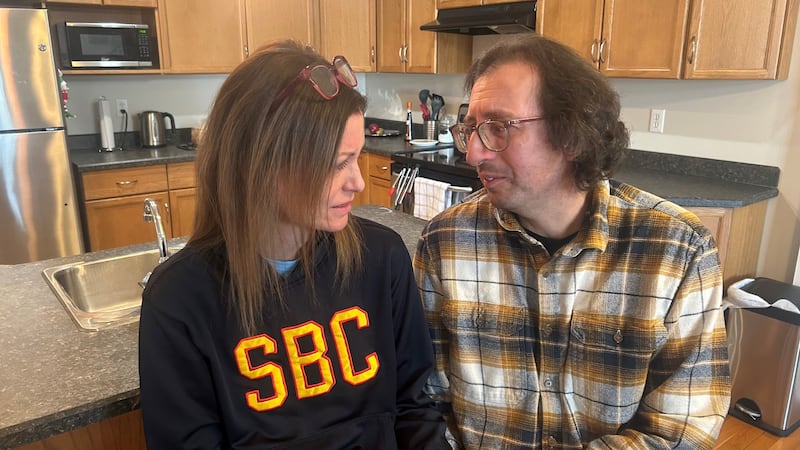
At 4:25 a.m. on Sunday, many Quebecers were awoken to an Amber Alert on their phones about two missing children in Trois-Rivières, Que. The two children were located safe and sound in Saint-Paulin. The alert spurred a debate online about the grading notification noise and whether the ringtone could be updated. ‘Obnoxious’ tone Sûreté du Québec (SQ) Capt. Benoit Richard explains that 24 alerts have been released since 2003, emphasizing that they are only sent when there is a risk of “grave bodily harm.” “We need people to take action when they hear the bells or the ringtone that’s on the phone,” he said. “I know the ringing tone is kind of obnoxious, getting on your nerves and everything, but that’s what we want. We want people to look at their phone, see what’s going on.” Across the country, since 2021, 49 alerts have been issued in Canada, leading to the recovery of 61 children, a success rate of 100 per cent. Richard says the past three alerts, including the one on the weekend, led citizens to contact police, helping officers locate the missing children. Nicole Corrado, who lives in Beaconsfield and is on the autism spectrum with sound sensitivity, says she would like the alert sound re-examined. “When you have a noise that startles people, they can’t actually take in the message,” she said, having been involved with the Missing and Missed Implementation Team in Toronto. “What ended up happening, I was absolutely terrified, half asleep, called my mother, ended up having three seizures in a row. I was very nauseous, was panicking, hyperventilating, and the sound ends up becoming an earworm, so I keep hearing the sound again and again and again and again in my head. I keep replaying it that I cannot read the message.” Other comments online and sent to CTV News have criticized the tone, suggesting it could be dangerous. “I could imagine a person driving that would be very dangerous, because the person could have a crisis while driving it. It could really, really cause harm,” said Corrado. She began a Change.org petition to suggest a change in policy, suggesting a different tone or the ability to opt out of receiving alerts. “I agree 100 per cent with the police that these Amber Alerts are essential and necessary,” she said. “The message itself, the way it’s written, is fine. Sending out the message to everybody’s phone - absolutely, that makes perfect sense. It’s the sound prior to the message that’s not even part of the message that I have an issue with.” Why issue an alert? For an Amber Alert to be issued, Richard explains that three criteria must be met. The abducted person must be under 18 years old, and police need proof that he or she has been abducted. Police also need to suspect that there may be physical harm done to the children. Police need to have enough information regarding the child or children’s description, the vehicle they may be in and information about who may have taken them. “If we don’t have any information regarding the car, or the person, that’s kind of tough,” said Richard. He adds that, since 2003, there were 44 instances when an Amber Alert was considered. In the end, 24 were issued. “If we send out an Amber Alert every time, it would be hell,” he said. “Amber Alert is clear. There’s a kid that’s been abducted, there’s a danger, and we have information that could help us find the person who abducted them.” “So, if it’s 2 a.m., we’re going to send it out at 2 a.m. If it’s at 5 a.m., it’s going to be at 5 a.m.,” he said. He notes the process is similar for a Silver Alert when a senior is missing. Information about the person, their cognitive state and vehicle must be on hand. Richard says that whenever an alert is sent, either as an Amber Alert or a media release on a missing person, the SQ does it “in a meaningful manner.” “When we do it, it’s because we really think that it can help us to locate and to help us find and either bring back those people,” he said. “We need help from everybody, because the time is of the essence.”