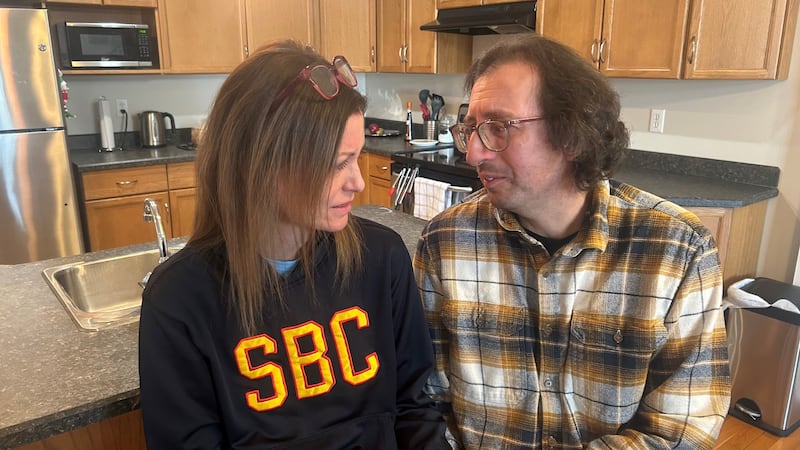
After six suspected femicides were recorded in Quebec in the first six weeks of the year, an organization that represents the province’s women’s shelters says this has been the deadliest start to the year since 2020. The Fédération des maisons d’hébergement pour femmes wrote on social media last week that the killings were not isolated cases, rather they were “the result of systemic violence against women, which we have been denouncing for years.” In the most recent case, 54-year-old Sonia Maricela Gonzalez Vasquez was found dead in her Brossard home on Feb. 2, next to the body of her partner, Marcos Amilcar Diaz Lopez, 56. Longueuil police, who said they’ve been called to the home in the past, said in all likelihood the deaths were the result of a “femicide followed by a suicide.” The tragedy happened two months after assault charges laid against the man in the context of domestic violence were withdrawn, reportedly at his spouse’s request, eliminating the possibility of a trial. The case is just one of many that abruptly end after the complainant decides to abandon the judicial process after it has started — a trend that Quebec prosecutors and advocates who work with domestic violence survivors see very often — and for very valid reasons, they say. Why some women abandon the process Nathalie Trottier, a survivor of domestic violence who turned to women’s shelters eight times before leaving her abusive household in 2012, knows firsthand what it’s like to make such a decision. She did so after filing a criminal complaint against her ex-partner and then being told by the Crown prosecutor at the time that he would likely only be sentenced to community service for his crimes. “I felt like I was being let down in the sense that, for me, [my ex] would be even angrier with me. And my children were also angry that I was filing a complaint against their father … So it was all that fear. That’s why I didn’t go ahead with it,” she said in an interview. Other barriers women face are the fear of retaliation from their aggressor for going through with the charges or the fear of not being believed by the justice system, she said. “I want to say that we have to go for it and see it through to the end because, unfortunately, this woman was murdered. And, unfortunately, sometimes it won’t be this person who gets murdered, but it will be the next partner,” Trottier said. Women also change their minds because of the fear of being unable to find safe and affordable housing, especially when children are involved, or losing custody. “In many cases, victims may be acting under pressure. They may be experiencing threats, manipulation or coercion. Family members may encourage them to withdraw charges, sometimes the in-laws or friends, also, because the relationship with everybody is intertwined when you’re with someone for [a long] time,” said Claudine Thibaudeau, a social worker and clinical coordinator with SOS Violence Conjugale. “Often, the goal of the victim, when they call police, is not to press criminal charges. The goal is so that he stops what he’s doing.” Complainants still offered support after charges withdrawn: DPCP Quebec’s Crown prosecution office, the Directeur des poursuites criminelles et pénales (DPCP), told CTV News that a “significant” proportion of domestic violence cases end up this way but prosecutors can still offer support to survivors. For example, a prosecutor can refer them to CAVAC, a network of victim assistance centres that offers support whether an accused is convicted or not, and connect them with a social-judicial liaison officer to assess their psychosocial needs, or direct them to the Regroupement des maisons pour femmes, a network of women’s shelters. “Our main goal is the victim’s safety, and the kids’ safety, if there are any. So, hopefully, we’ll go through the judicial process. That’s our work and we do believe in the judicial system,” said Maya Ducasse-Hathi, a Crown prosecutor based in Quebec City who has specialized in domestic violence cases for the last 12 years. “It helps the victim even if he or she doesn’t go through with the judicial system, at least there’ll be a safety net, there’ll be support that will be given to the victims. So I don’t believe it’s in vain. We do work with the same goal and that’s to ensure the victim’s safety.” Instead of a trial, survivors also have the option of asking a judge for a peace bond order under section 810.03 of the Criminal Code, Ducasse-Hathi added. If a judge agrees that an intimate partner will commit a crime that puts the partner’s life or their children’s lives in danger, the court can issue an order to keep the peace and abide by certain conditions for one to two years. Would faster trials help? In the case of the most recent suspected femicide, it’s not clear why Gonzalez Vasquez of Brossard wanted the charges against her spouse to be withdrawn. Court records show that he was charged with assaulting her on Dec. 9 and 10, 2024. Diaz Lopez was also charged with uttering threats and criminal harassment in the case. The charges were laid on Dec. 11, 2024, and he remained detained until a judge granted him bail one week later with several conditions. They included wearing a GPS ankle bracelet to track his location, attending court when required, not being within 1,000 metres of his spouse and their children or communicating with them, and not possessing any weapons. He was also ordered to attend anger management therapy at Entraide pour hommes — a non-profit organization that provides support for men experiencing violence or relationship difficulties — and to provide proof of attendance at each court date. On Dec. 18, 2024, two days after he was released, he allegedly violated the condition that prohibited him from being around his spouse. The records show that he was no longer required to wear the ankle bracelet as of May 5, 2025, when some of the bail conditions were relaxed. Another change allowed him to be within 1,000 metres of his spouse only if he had her consent. He was still ordered to continue attending anger management therapy. Then, on Dec. 5, 2025, all of the charges were withdrawn, bringing an end to the trial before it even began. Eight weeks later, Gonzalez Vasquez was killed. The DPCP confirmed to CTV News that her husband did, in fact, complete the therapy, but could not say when that happened. Trottier, who survived 25 years of domestic violence at the hands of her partner and now speaks openly about her experience at conferences, questions whether a speedier trial or less relaxed bail conditions might have saved Gonzalez Vasquez’s life. “It’s shocking to see that he had all these things in place [yet] it still happened,” she said. “So it shows that even if we put a safety net in place, sometimes there are holes in it, and sometimes, unfortunately, we’re going to slip through.” Quebec has expanded a program to operate specialized courts to handle domestic and sexual violence cases, which puts a greater emphasis on the needs of the victim throughout the court journey, provides training for judges and lawyers on the realities of domestic violence, adds safe waiting spaces for victims to avoid interactions with their abuser, and special accommodations for victims to testify remotely. However, the cases themselves are not expedited. That is what Spain did when it passed a law in 2004, creating so-called “quick trials” to handle only these types of crimes with dedicated courts, judges and prosecutors, freeing them from the backlog of cases for general crimes. The new measure means an accused in most cases appears before a judge within 72 hours of their arrest and a trial begins within 15 days of the first court appearance, something Trottier said Canadian lawmakers should consider adopting. “Here [in Quebec], it takes years — one year, two years. It’s long,” Trottier said, adding that the lengthy wait for a trial to start can sometimes convince women from withdrawing their complaint. “Often it’s also because [abusers] will influence the woman to dissuade her from going ahead and convince her to withdraw her complaint. But if we do it within 72 hours, and then the trial within 15 days, he won’t have time. The woman won’t have time to change her mind, and she will really be protected.” A 2021 study found that the Spanish model of intimate partner violence (IPV) courts sped up trials by 69 per cent in jurisdictions where they are used and led to an increase in IPV cases reported to authorities by 28 per cent. Trottier also believes that loosened bail restrictions in the recent Brossard case could have given the complainant the impression that the accused was turning a page, when that might not have been the case. “Did he manage to convince his ex-partner that he had made an effort? That he had gone to therapy, that he had worn the bracelet, and then, look, they took it off me so there’s no more danger. That’s one analysis. That doesn’t mean that’s the case either,” she argued. Thibaudeau also sees benefits in having rapid trials for domestic violence cases, particularly because the consequences would be more immediate for the abuser, which could lower the risk of violence. She also sees how swift justice could give the abuser less time to influence or gaslight the victim and cast doubt in their mind as time passes. “There’s so many things at stake,” she said, “so the more we reduce the opportunities of abusers of using the system, and reaching the victim, and hurting them, and affecting them, the more chances we would have of victims maintaining their complaints.” SUPPORT NETWORK Victims of domestic violence can contact SOS violence conjugale at 1-800-363-9010. Other resources: