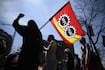
An international tribunal examining Canada’s role in the residential school system and unmarked graves began in Montreal on Monday, with survivors, lawyers and advocates calling for accountability and action. Over the next week, the Permanent Peoples’ Tribunal (PPT) will hear testimony from survivors and expert witnesses while reviewing evidence tied to human rights violations connected to residential schools. Among those expected to testify is Leo Nicholas, a member of the Munsee-Delaware Nation and survivor of the Mohawk Institute Residential School. Nicholas said he was taken from his home at 10 years old and spent six years enduring abuse at the institution. “They said, ‘Nobody’s going to believe you,’” he recalled. “So, I stopped talking about it. I carried it for a long time. I tried to kill myself. I tried to drink myself to death. I tried to deal with it, and I couldn’t.” Despite the trauma, Nicholas said speaking publicly about his experience has become part of reclaiming his voice. “It’s my truth. That’s what matters to me,” he said. “It’s my medicine and a way of healing myself.” The tribunal, which is being held at Montreal’s Daphne Art Centre, does not have the legal authority to force governments to act. Still, organizers and participants argued its findings could carry international influence and add pressure for change. Christa Big Canoe, legal director for Aboriginal Legal Services and lead prosecutor against Canada for the tribunal, said one of the main goals was to reinforce Canada’s obligations under international law. She said organizers were seeking findings that would support reparations and concrete remedies for those most affected by the residential school system. “In Canada, we clearly have law and policy that continues to discriminate against Indigenous people,” Big Canoe said. “We have law and policy that created these spaces where children could be taken, stolen and not returned home.” While Big Canoe acknowledged that some critics question the tribunal’s jurisdiction, she argued its impact should not be dismissed. “They’re in their 57th session. They have legitimacy,” she said. “Often, where the Permanent Peoples’ Tribunal goes, other bodies follow.” She also said the hearings were aimed at increasing public awareness while challenging residential school denialism. “The world is watching,” Big Canoe said. “When people hear the acts and see the evidence, when it’s undeniably in front of them, you combat things like denialism.” The tribunal’s secretary general, Dr. Gianni Tognoni, said the process was intended to push beyond symbolic recognition. “There are no automatic solutions,” Tognoni said. “Condemnation is not the solution. Condemnation is the starting point.” Organizers also highlighted the importance of hosting the hearings at the Daphne Art Centre, an Indigenous-led arts space in Montreal. For the centre’s co-founder Skawennati, the space represents what Indigenous communities have managed to hold onto and foster despite generations of attempted erasure. “We are survivors of an act of genocide, but at the same time, we are strong and resilient,” she said. “It feels really good to be able to show through our art who we are, what we’ve been able to do, and how we’ve managed to keep our culture alive.” she said. “We’re very proud of being Indigenous.” Skawennati added that the continued strength of Indigenous cultures is itself an answer to pressures of assimilation. The hearings are scheduled to continue through Friday.