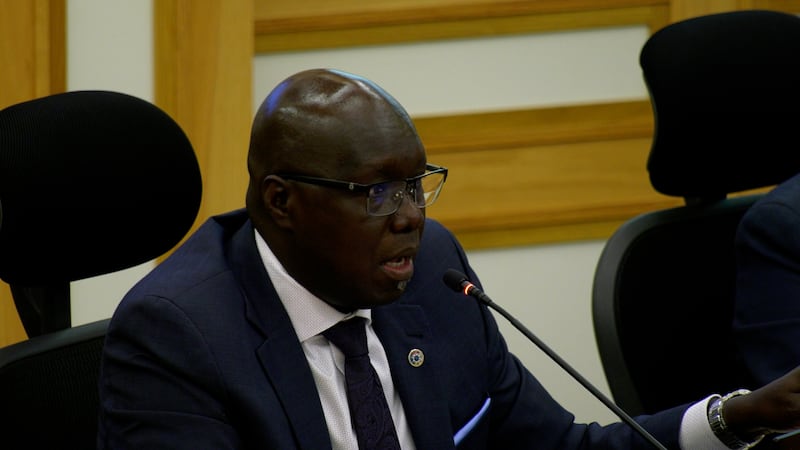
The agency overseeing public transit in the Greater Montreal area says that though the provincial budget offers some relief, it doesn’t do enough to address the network’s mounting financial pressures. In a statement on Wednesday, the Autorité régionale de transport métropolitain (ARTM) said that since the COVID-19 pandemic, transit users have been returning to the network, but it has been uneven across regions and modes of transport. Meanwhile, operating, maintenance and upkeep costs for infrastructure have continued to rise, putting direct pressure on the network’s finances, said the ARTM. Nearly half of Montreal’s metro stations are in an advanced state of disrepair, and transit officials say the budget does little to speed up urgent work. Many transit infrastructures date back to the 1960s and are in concerning condition, said the ARTM. “There are no shortcuts: without sufficient investment, the network deteriorates with very real consequences, both for public finances and for users,” said Gendron. Funding falls short: STM STM president Aref Salem said the funding falls short given rising construction costs. “Unfortunately, yesterday, what we saw in the budget, the next five years, we have almost the same amount as defined last year. And knowing that inflation and construction are growing around eight per cent per year. For sure, the money what we have right now, we can’t do much with it,” said Salem. He added that the STM will struggle to maintain its existing assets at the standard it was aiming for. The ARTM said it is trying to be more efficient to preserve service levels. “Every decision is made with the goal of preserving or improving service while identifying recurring sources of savings,” said ARTM CEO Benoît Gendron. Transit agencies said they are working toward $331.6 million in optimization targets between 2025 and 2028, with $155.6 million in recurring annual savings starting in 2028. Short-term needs won’t be met The ARTM said it welcomes the $500-million boost over the next ten years in the provincial infrastructure plan for asset maintenance, but added that most of the money will not be available until 2030, meaning short-term needs won’t be met. Groups defending commuters say the system can’t wait, as emergency shutdowns grow in frequency. Brian Nash of transit users’ group Trajectoire Québec acknowledged the investment but said it isn’t sufficient. “We’ll take it, but it’s clearly not enough. And when you look at the numbers, actually for the next five years, it’s going to decline,” said Nash. Decades of neglect make it harder to catch up The minister responsible for transport and infrastructure, Jonatan Julien, defended the government’s record, saying the CAQ has invested massively in public transit. He acknowledged, however, that decades of past neglect make it harder to catch up on decaying infrastructure — comparing the situation to buildings, roads, schools and hospitals, saying there wasn’t enough maintenance done in the past but that the province is slowly catching up. The budget also pointed to a roughly $3-billion deficit in the fund that finances transit operations, reinforcing what the ARTM said is an urgent need to rethink how public transit is funded. The agency is also calling on the Canadian and Quebec governments to release federal transit funds for the Greater Montreal region without delay.