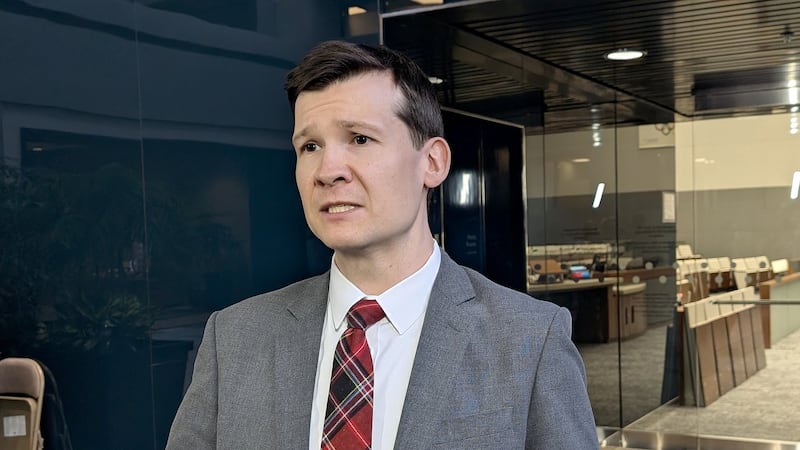
The Quebec government plans to admit nearly 29,000 economic immigrants under the Skilled Worker Selection Program (PSTQ)in 2026. Immigration Minister Jean-François Roberge announced on Friday the broad outlines of this program, which is being presented as an alternative to the Quebec Experience Program (PEQ), abolished by Quebec last November. At a news conference, Roberge confirmed that the QEP was indeed dead and buried, adding that the PSTQ was a “better” program because it allows for the selection of permanent residents rather than processing applications on a “first come, first served” basis. Intended for international students and temporary foreign workers, the PEQ offered a fast track to permanent residence for those who had stayed in Quebec for a minimum of two years and met the language requirements. The program ended on Nov. 19, but Roberge assured that all applications submitted before that date would be processed under the old rules. However, the “PEQ orphans,” those who arrived in Quebec thinking they would use this pathway to immigrate but had not yet met the conditions to submit an application, find themselves caught. They, along with several elected officials and civil actors, are calling for a grandfather clause for these so-called ‘orphans’ who are navigating the uncertainty of their status, a measure that Roberge again ruled out in his announcement. “Technically, 100 per cent of people working in Quebec (...) with temporary status and a certain level of French could protect themselves (with this clause) and apply,” said Roberge. “And it would be first come, first served. There would be no selection among these people,” he added. Refusal perceived as “‘stubbornness’ The minister’s refusal to grant grandfathering rights to those who arrived in Quebec thinking they would obtain permanent residence under the PEQ has been strongly criticized by the opposition, municipal officials, and the manufacturing and commercial sectors. Quebec Liberal Party leadership candidate Charles Milliard accused the CAQ of being “stubborn” rather than “logical” in a statement published on X, adding that “PEQ orphans deserve a viable and humane solution.” Solidarity MNA Guillaume Cliche-Rivard echoed this sentiment, saying that a grandfather clause would be “the bare minimum.” “In the midst of a national crisis over the PEQ, when all stakeholders are asking him to back down and grant a grandfather clause, the Minister of Immigration is stubbornly isolating himself and serving us up the same old story with an announcement that is nothing new and is largely insufficient to reassure anyone,” he said in a statement. The Parti Québécois, meantime, pointed the finger at Roberge’s predecessor on the immigration file, Christine Fréchette. “What we are seeing is a government (...) trying to manage a mess of its own making, and more specifically, of Christine Fréchette’s making when she was Minister of Immigration,” said PQ MNA Alex Boissonneault at a news briefing. “She was the one who removed the PEQ from the permanent thresholds, and there was a loss of control over that program,” he said. Selection criteria To select PSTQ candidates, the government will prioritize people who have obtained a degree in Quebec, those who work in a strategic sector, such as health, education, construction, and engineering, and people who have a “diverse profile.” Roberge specified that applications from individuals living outside the Montreal metropolitan area will also be given priority. Based on these selection criteria, the immigration ministry confirmed that 2,549 invitations will be sent out in January. Invitations will be sent at the end of each month. Among these candidates invited to obtain permanent residence, 64.5 per cent are Quebec graduates, 65.9 per cent reside outside Montreal and Laval, and 32.7 per cent work in a sector considered “strategic.” - By Samira Ait Kaci Ali - This report by The Canadian Press was first published in French on Jan. 30, 2026.