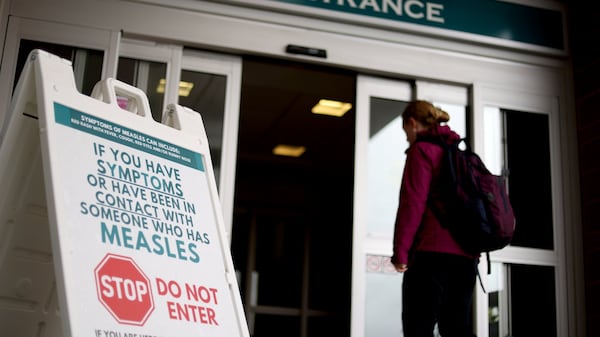
The public is heeding the call for flu vaccinations, even though they are no longer free in Quebec this year. One month into the vaccination campaign against respiratory viruses, more than 1.1 million doses of the flu vaccine have been administered. That’s about 131,000 more doses than at the same point in last year’s campaign, but a figure similar to that of the 2024–2025 winter season. For COVID-19, more than 810,000 doses have been administered one month into the vaccination campaign—nearly 120,000 more doses than last year, but 139,000 fewer doses than in 2024–2025. “The target groups for vaccination are responding well to the call. At this stage, we are exceeding last year’s results. The majority of available appointments are booked,” Santé Québec said in writing in response to questions from The Canadian Press. The flu season is starting early this year, with influenza tests reaching high positivity rates quite early, as early as October. The number of positive influenza tests has recently plateaued: a positivity rate of 12.2 per cent for the week of Nov. 1 and 12.1 per cent for the week of Nov. 8. According to the Quebec Institute of Public Health (INSPQ), however, it cannot be concluded that the flu season has peaked. “It is possible that the positivity rate will stabilize temporarily before rising again, especially considering that we are early in the season. Although unusual, a temporary slowdown in the progression has been observed in the past,” the INSPQ wrote in an email sent to The Canadian Press. Many seniors vaccinated in long-term care facilities With emergency rooms under pressure, will the doses administered so far be sufficient to prevent emergency rooms from becoming overwhelmed during the holiday season? Santé Québec notes that it is too early to “draw a definitive conclusion about the campaign.” “Vaccination in senior living facilities will be completed by the holiday season. These efforts complement other preventive measures already in place, particularly those aimed at infection prevention and control, as well as the appropriate use of self-care and front-line services,” the government agency writes. To date, more than 150,000 doses (influenza and COVID-19) have been administered in Quebec’s private seniors’ residences (RPA). That is nearly 28,000 more doses than last year, 30 days after the start of the respiratory virus vaccination campaign. For the flu alone, nearly 80,000 doses have been administered to RPA residents, compared to 63,000 last year, one month after the start of the vaccination campaign. In long-term care facilities (CHSLDs), the rate has remained similar over the past three years, with approximately 33,000 doses administered to date. Santé Québec estimates that the peak in emergency room occupancy has not yet been reached and that the volume of patients is likely to continue to rise. The government agency recommends that the public—especially those at high risk, such as seniors aged 65 and older and people with chronic conditions—get vaccinated, as this reduces the risk of flu complications and helps prevent hospitalizations. The vaccine is free for these groups. The government aims to vaccinate at least 80 per cent of people in the highest-risk groups against the flu, COVID-19, and respiratory syncytial virus (RSV). The flu vaccine becomes fully effective about two weeks after administration, as the body needs approximately 14 days to produce antibodies. This timeframe is particularly relevant as the holidays approach, when there is increased circulation of respiratory viruses. The Canadian Press’s health coverage is supported by a partnership with the Canadian Medical Association. The Canadian Press is solely responsible for this journalistic content. This report by The Canadian Press was first published in French on Nov. 20, 2026.