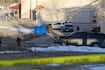
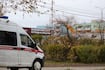
Norad said fighter jets, including CF-18s, escorted two international flights bound for Montreal on Wednesday due to a “security incident” that prompted a police response at the Montréal-Pierre Elliott Trudeau International Airport. The binational organization that monitors and defends airspace in North America told CTV News that CF-18 and F-16 fighter jets, as well as KC-135s aerial refuelling tankers, “monitored the situation until the involved commercial aircraft landed safely at destination.” When the planes landed, Quebec provincial police arrested two male passengers in their 20s and 30s. The men were questioned by investigators and one of them “could face charges related to fraud,” according to Sûreté du Québec (SQ) spokesperson Béatrice Dorsainville. Both men have since been released without charges, police confirmed on Thursday. When CTV News asked for more information about the case, including the nature of the potential fraud allegation, police refused to provide more details late Wednesday night and again on Thursday as the investigation is ongoing. Meanwhile, Norad did not provide any further details. “Norad employs a layered defence network of radars, satellites, and fighter aircraft to determine appropriate responses to air security incidents and ultimately to keep Canada and the United States safe each and every day,” a spokesperson said in an email. Fighter jets escorting plane to Montreal, an unusual occurrence, says expert John Gradek, a McGill University lecturer in supply networks and aviation management, said it is rare for fighter jets to escort planes to Canadian cities like Montreal, adding that it is more common in regions with higher political tensions. He said that for Norad to send fighter jets, the pilot usually must declare an emergency on the plane that requires intervention, such as a mechanical issue or an unknown threat. “He advises air traffic control. There’s a special code. As soon as air traffic control hears that code, they basically refer it to Norad. And Norad basically does the coordination of dispatching military aircraft to escort the aircraft to a safe landing,” Gradek explained in an interview on Thursday. He noted that while the jets cannot intervene inside the aircraft, their presence indicates that authorities are concerned about a situation on the plane. “They’re there to escort the airplane and to make sure the airplane does, in fact, reach its scheduled, its planned destination. It came from 9/11, and really, 9/11 was the tipping point in terms of how you look at aircraft and secure aircraft,” he said. “Now, when you have a captain of an aircraft identifying a potential issue on board the airplane, the response is very rapid, and they take no chances. They basically make sure that the airplane stays on course and stays away from any potential deviation from its path.” Gradek said he believes this incident is a sign of the times and reflects a more nervous world with heightened aviation security. “In my opinion, we’ll see more of it as time goes on, as the conflicts we have around the world start to get more and more rampant, and geopolitical issues start to cross boundaries, including air.” “People should not be afraid when they see these. These are our risk management practices that the industry and the military have planned for. Have trained for. Crews are trained, Air Force pilots are trained.” One runway closed at Montreal airport The Montreal airport also said that the discovery of a suspicious suitcase on one of the landing flights led to the closure of one of the two runways. The incident prompted NAV Canada to limit the number of incoming flights “due to a potential security situation at the airport,” a spokesperson said. Later in the afternoon, Eric Forest, an airport spokesperson, told CTV News that the potential threat in the suspicious package turned out to be unfounded and that operations returned to normal. “The investigation is still ongoing, but there is currently no threat to the safety of the traveling public at YUL,” Forest said, adding that the incident caused some delays for domestic and international flights. FAA grounded all flights to Montreal As the incident unfolded, the Federal Aviation Administration (FAA) grounded all flights to the Montreal international airport “due to bomb threat,” a notice on its website stated on Wednesday. The ground stop was issued at 3:02 p.m. but was lifted shortly before 5 p.m., when the mention of the alleged bomb threat was removed. Montreal police say they responded to the airport and assisted Quebec provincial police, which has taken the lead on the investigation. The airport urged passengers to check their flight schedules before heading to Trudeau airport due to possible delays. With files from CTV News’ Matt Grillo