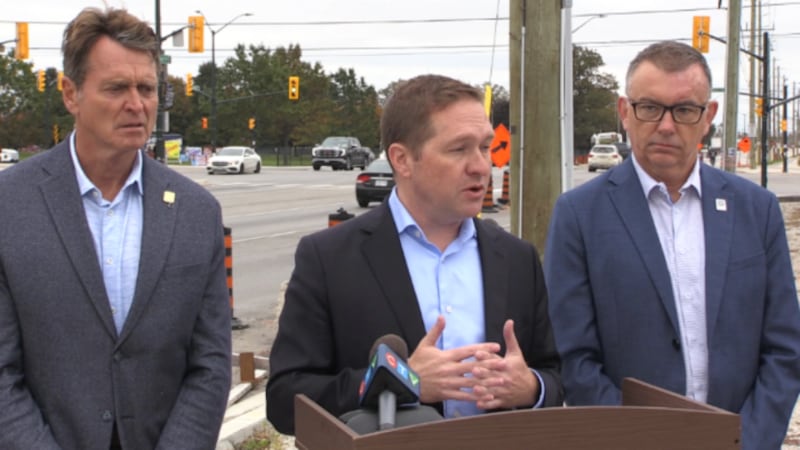
Tariffs levied by the United States on some Canadian products increased the cost of each new bus purchased by London Transit by about $50,000 this year. On Monday, the London Transit Commission (LTC) discussed unanticipated budget pressures stemming from changing trade policies in the U.S., and the ongoing conflict with Iran. “We are monitoring the situation, trying to be prudent and fiscally responsible, but recognizing we do need some service enhancements,” LTC Chair Coun. Skylar Franke tells CTV News. In 2026, London Transit purchased 17 new buses to replace old vehicles being removed from service, plus 12 buses for service improvements. The cost of each bus was budgeted to be about $1 million, but U.S. tariffs added $50,000 to the cost of each one, bringing the total spend for the 29 buses up almost $1.5 million.” “Under the contract that we have with New Flyer, the buses are built partially in Canada, partially in the U.S.,” explains London Transit’s General Manager Kelly Paleczny. “As a result, those tariffs are calculated the day the frame crosses the border.” The new tariffs are being included in future capital budgeting, including 24 buses that will be purchased in 2027. However, Paleczny suggests changes are coming to where buses are assembled. “New Flyer has built a facility in Winnipeg so that they can now fully build a bus in Canada versus back-and-forth across the border,” Paleczny explains. “(It’s) in response to the Canadian demand and the need to mitigate those tariffs.” Franke points out that only two companies build buses in Canada, “If we’re taking a made in Canada approach, what does that look like for the (manufacturing) of busses? Right now there’s very few places we can purchase busses from.” Meanwhile, the commission supported submitting a business case to the 2027 Municipal Budget requesting an additional $2 million to cover higher diesel costs related to the U.S. conflict with Iran, and to make some recent service improvements permanent. Members also unanimously backed lobbying efforts seeking financial relief from the provincial and federal governments for public transit systems experiencing budget pressure from international issues outside their control. Franke explains, “The transit commission, as well as staff, are going to be advocating to upper levels of government to try and figure out what they can do to assist us with trade wars and geopolitical international issues.”