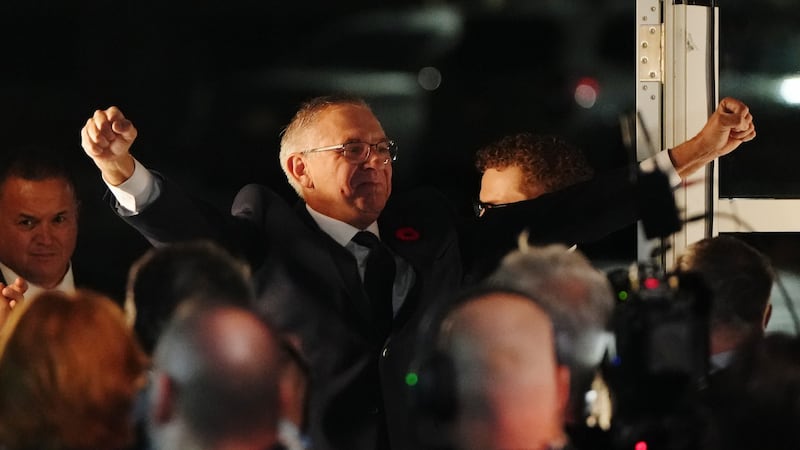
Tom Cull and his partner Miriam Love have gone to great lengths to protect the Thames River. “We have this gem of a river that runs through our city. It’s one of the most biodiverse rivers in Canada and it has tons of wildlife,” said Cull, the founder of Antler River Rally, a grassroots organization aimed at river cleanup and protection. Now after 14 years, and more than 150 cleanups, the pair are turning their organization Antler River Rally (ARR) to the London Environmental Network (LEN). “They’re going to keep the name and they’re going to keep the cleanup schedule, so that work will live on,” said Cull. “We’ve taken the group, and built it and created a name for it, and now it’s maybe ready for a new iteration and ready for new leadership and for new ideas.” Cull adds his work with the river is not done. “If water has taught me anything, it’s about flow and it’s about change and about movement. So I think it’s okay.” LEN is a charitable organization which offers programs and climate action opportunities. ARR has been part of LEN for the past 13 years. “Antler River Rally has built a strong foundation of community action and environmental stewardship. As a longstanding community partner, the LEN is excited and honoured to carry on its impact and build on that momentum through our network,” Kaitlin Creighton, Director of Sustainability at the LEN said in a release. After the pandemic, ARR has been coordinating between 18-20 cleanups per year. The fact that the work will continue is great news for the dozens of volunteers who show up to help clean the river and its banks. “We’ve been partners with the London Environmental Network already for so many years, but they are always looking for new volunteers and to support organizations in the city doing good work,” said volunteer Brendon Samuels. “I’m really interested in the intersections between environmental problems and social problems in our city. We see that a confluence in the river and a lot of the garbage that we pick up is stemming from these bigger challenges like homelessness. I’ve also got to meet really cool people and be part of a community that cares about the river.” During their final pickup as ARR this weekend, they came away with dozens of bags of garbage, sharps containers full of needles as well as tires and large plastic items. “We find a lot of tires, auto parts and bike parts in the river,” says Cull. “Someone donated us a grappling hook a couple of years ago and it’s been really helpful for fishing stuff out. Unfortunately, some people think of the river as a dumping site. We’ve seen people back their car up to a ravine and just throw their garbage.” Cull will still take part in the future cleanups, he just won’t be the one handing out the picker-uppers, tongs, garbage bags or sharps containers. He will help with the transition in the coming weeks. “We’ve been coming and doing this work for 14 years and picking up this garbage and that’s a kind of downstream solution is picking the garbage out of the river,” said Cull, who works at the Upper Thames River Conservation Authority. “Now I’m starting to think more and more about how do we turn that tap off of garbage that’s ending up in these places. So, bigger policy pieces are the things I think that I’m as in interested in now.” Garbage in the river constantly harm wildlife, such as items that catch Blue Heron, or Osprey or birds, geese and ducks. “This stuff like twine or clothing or fishing line,” said Cull. “That’s what I love about the hands-on nature of this work is everything that we pull out is preventing a risk of harm to animals.” The years of volunteering for ARR has been eye opening for Samuels. “We consume so much in our society, and we produce a lot of waste that gets sort of externalized,” he said. “You take it to the curb, it disappears, and then it no longer exists. Actually, a lot of that garbage tends to spill over and end up in places that we don’t want it to be like the river. This is a way of giving back and taking some responsibility and also building more mindful habits about consumption.”