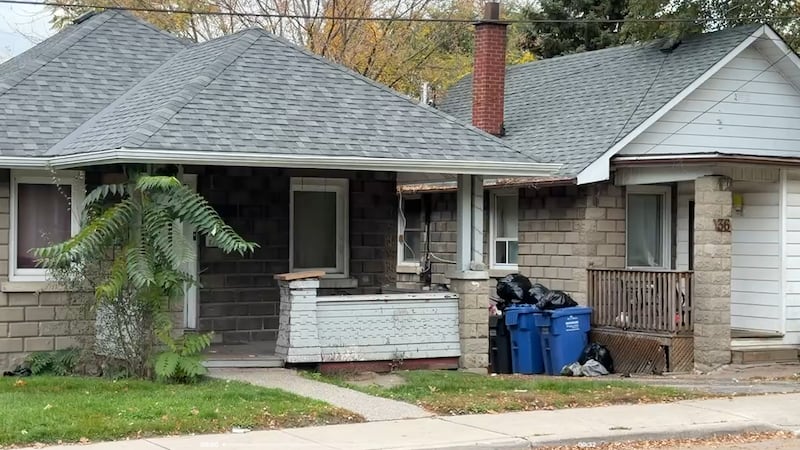
A controversial proposal by city staff to address basement flooding and sewage overflows into the Thames River might be halted by local politicians because of the significant costs. On Monday, the Infrastructure and Corporate Services Committee (ICSC) discussed the recommended long-term strategy in London’s Pollution Prevention and Control Plan Update Study that would require the purchasers of homes built before 1985 to ensure the weeping tile drainage system around the foundation is disconnected from the municipal sanitary sewer system. City staff estimate 50,000 houses would eventually be forced to disconnecting their weeping tile systems and install a sump pump at a cost between $5,000 and $10,000. Prior to 1985, it was common for homes to be constructed with drainage systems that direct stormwater into the sewers. During severe storms, the excess water can cause basement flooding and municipal sewage treatment plants to overflow into the river. Noting that a point-of-purchase mandate would be the first in Ontario, city staff emphasized that they would undertake more consultation and study prior to reporting back to council. “It’s not an implementation plan, with specific costs or dates,” explained Kyle Chambers, division manager, sewage engineering. “Rather, the opportunity for staff to investigate the pros and cons.” But Mayor Josh Morgan believes there would be mostly “cons” for the affected households, and a challenge to the municipality’s finances if subsidies were offered. “You’re talking about 50,000 people almost spending what they would spend entirely on property taxes in a year, just to create this one change,” Morgan told colleagues on the committee. Coun. Hadleigh McAlister acknowledged most of the households in his ward would be impacted. “I don’t want to penalize some of the properties, the older properties, where they do have a lot of financial challenges,” he said. But Coun. Skylar Franke emphasized that the status quo has ongoing costs to all residents. In 2021, a staff report about “unwanted water” estimated it cost London $1.4 million each year to pump and treat stormwater that entered sewers. “We’re already spending tens-of-millions of dollars building infrastructure to try and address this issue, but it’s also not necessarily even addressing the basement flooding,” Franke said. Currently, a voluntary program includes financial subsidies from city hall, but it only averages 73 disconnections per year (2020 - 2025). The mayor pointed to the massive financial cost if the city were to subsidize the mandated disconnections every time one of the 50,000 homes was purchased. “I just can’t make the math work in my own head to make this a program that’s either worth having the homeowner invest in, or us investing in, given the other priorities we have as a city,” Morgan said. The committee voted against (2-4) recommending city staff further investigate a mandatory Point-of-Purchase weeping tile disconnection program. A subsequent motion advancing London’s Pollution Prevention and Control Plan Update Study to a 30-day review period was unanimously supported. Council will make a final decision March 31.