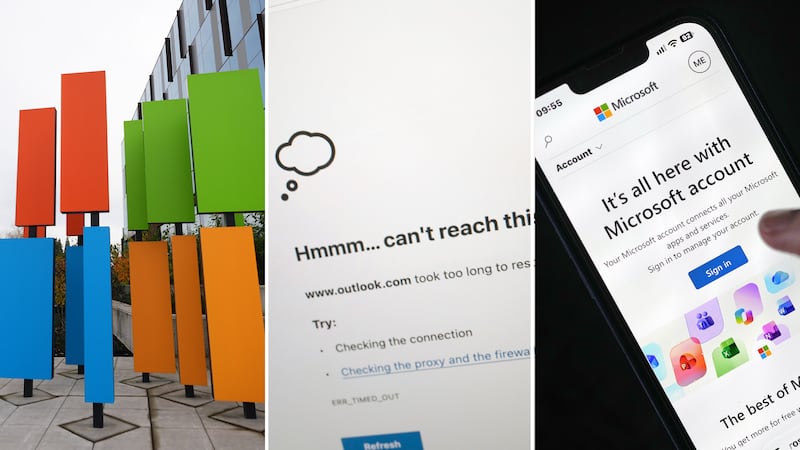
A major technology outage that affected tens of thousands of people has highlighted the importance of having backup system in place. The issues with Microsoft products began on Wednesday afternoon, and included popular applications such as email software Microsoft Outlook. The problems impacted offices, hospitals and transportation companies. An expert at the University of Waterloo pointed out the unexpected loss of access exposed the potential dangers of relying on only one service provider. “This situation really does show that we’re reliant, largely, on one or a few very large providers of email services and draws your attention to the resiliency and the dependency that we have and the impact when they go down,” Peter Carr, associate professor in the department of management services at the University of Waterloo, said. He noted that many people have more than one email account, but most users haven’t integrated those accounts in such a way that one account could function as a backup for the other. Some people were able to continue with their workday on Wednesday with only minimal disruptions, but others said the outage ground their productivity to a halt. Some municipal offices in Waterloo Region were impacted, including the City of Kitchener and Region of Waterloo. While email systems were unavailable, many companies urged customers to pick up a phone and give them a call, but Carr said that solution isn’t necessarily feasible either. “The way our services are organized now, they’re not equipped to be able to cope with a large-scale switch from email to phone,” he explained. On Friday, the City of Kitchener confirmed email-dependent systems had been restored, but the Region of Waterloo warned some services may be delayed due to the outage. The European model Carr said some governments in Europe have decided to use smaller, more diversified service providers. “We may well see more interest here in that with our closer relationship with the European community and their focus on safer and more resilient use of technology,” Carr explained. “In France and Germany, for example, the governments there have emphasized government service use of alternative email providers that are not big U.S. companies, but are perhaps European providers or smaller providers that are thought to provide more diversity.” There are some complications to consider before making a switch. “Switching to smaller providers is a hard thing to do because people are used to using the big provider services. Smaller providers don’t always have the range of capability or integration with the other things that we do. So, it’s not necessarily the easiest option,” he warned.