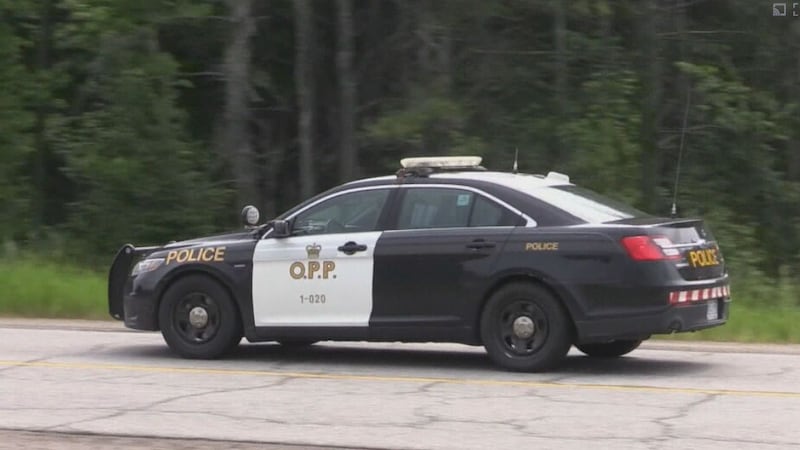
Cameras capable of reading licence plates will soon be installed along provincial highways in Waterloo Region. The Waterloo Regional Police Service (WRPS) announced Wednesday it has reached an agreement with the Ontario Ministry of Transportation (MTO) to set up closed-circuit television (CCTV) cameras equipped with Automated Licence Plate Recognition (ALPR) technology on provincial highways. The partnership is the first of its kind in Ontario, according to police and the province. The cameras are intended to help police detect and investigate serious criminal activity, including stolen vehicle cases and activity connected to organized crime. Police already using ALPR across Waterloo region WRPS currently has 15 CCTV cameras equipped with ALPR operating in Kitchener, Waterloo, Cambridge and North Dumfries. Between Jan. 1 and Sept. 11, 2026, the police service said its in-cruiser ALPR system generated 7,749 alerts. Those included plates connected to stolen vehicles, stolen licence plates, wanted people and active investigations. Police said those alerts contributed to 94 arrests, 77 charges and the recovery of 75 vehicles. Chief Mark Crowell said the technology is particularly useful in a region connected to major transportation routes. “A lot of organized crime groups, they don’t just start and stop in Waterloo region,” he said. “They are coming in and out of our jurisdiction all the time.” The new agreement will allow police to monitor provincial highways that run through Waterloo Region but fall outside the jurisdiction of regional roads. Highway 401 focus Police said Highway 401 is a key concern because of its connection to communities across Ontario and beyond. Crowell described the highway as one of North America’s major transportation corridors and said police have seen organized crime groups use it to move drugs, firearms, stolen vehicles and other criminal proceeds across municipal and provincial borders. However, the exact locations of the new cameras have not yet been determined. “We’ll be starting with one location, piloting it there, with plans to expand from that point,” Deputy Chief Jen Davis said. Police and the MTO were scheduled to begin discussions about the implementation phase Wednesday. There is currently no timeline for when the first highway camera will be up and running. Privacy concerns addressed WRPS said the program is being developed with privacy and accountability requirements in mind. The service said it consulted with Ontario’s Information and Privacy Commissioner during the development of its broader CCTV program and completed a Privacy Impact Assessment. Police said information collected through the system will be handled in accordance with applicable laws, including the Criminal Code, the Canadian Charter of Rights and Freedoms and Ontario’s Municipal Freedom of Information and Protection of Privacy Act. Footage will only be accessed for legitimate law-enforcement purposes, according to police. Video that is not needed for an investigation will be automatically deleted after 30 days. The exact number and locations of the highway cameras will be made public once the system is operational. Province previously provided $100,000 The new highway partnership builds on a $100,000 investment the Ontario government provided to WRPS in 2025 through its Guns, Gangs, and Violence Reduction Strategy. That funding helped establish the regional CCTV program, which launched in June 2026. Police said they hope to eventually connect their ALPR capabilities with other policing partners across the province. “We will be working with all of our policing partners in time to link those capabilities across the province, not just within Southern Ontario, but throughout all of the corridors,” Crowell said.