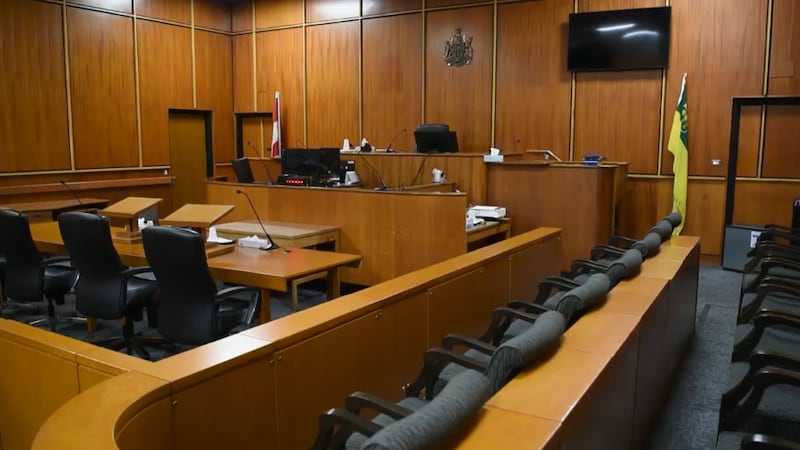
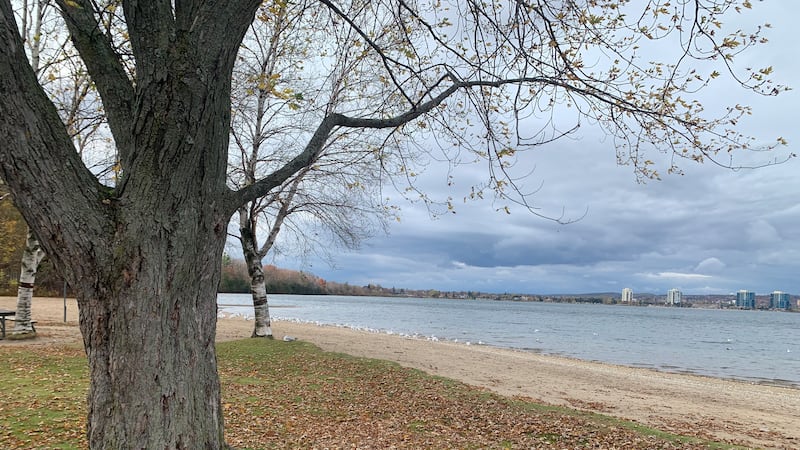
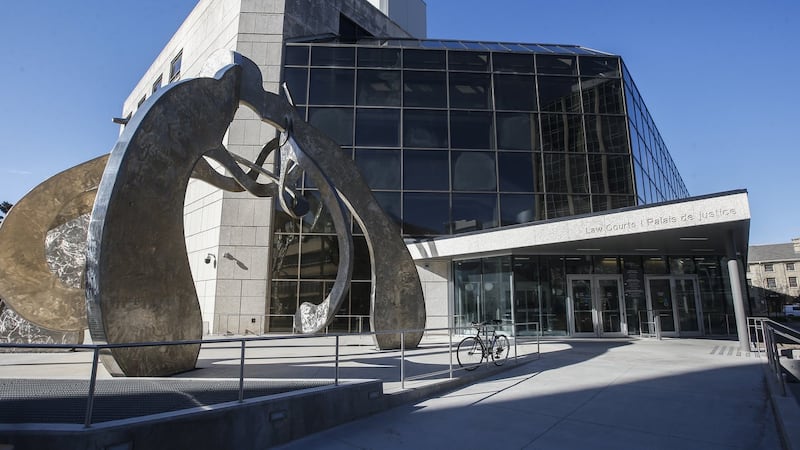
WARNING: This story contains details involving the sexual abuse of children. Closing arguments have begun at the trial of a man accused of three sexual assaults against children in the early 1990s. Richard Neil has pleaded not guilty to 17 charges in connection with attacks in Kitchener, Brampton and Oakville. Neil was arrested in March 2024. His trial at the Brampton courthouse began a month ago. Court has heard that all three incidents occurred in parks, and that the young victims were tied up, sexually assaulted and forced to drink urine. The first attack took place in Kitchener’s Idlewood Park in August 1992. An eight-year-old boy told police he was lured into the woods by a man offering to show him some bicycles before attacking him. In September 1994, a 10-year-old boy was walking along a lake in Brampton’s Norton Place Park when he came across a man who claimed to be looking for a lost wallet containing $900. The man then assaulted the boy. The final attack occurred in Oakville’s Wildwood Park against a 15-year-old girl who was walking her dog. She told police she was stopped by a man who used a gun to force her into the forest, where he then attacked her. Her assault was the longest; she was gone for more than five hours. Jurors have heard statements the victims gave to police in the aftermath of the attacks, as well as testimony from bystanders, investigating police officers, and DNA and fingerprint experts. Neil’s lawyer, Leo Adler, reiterated to jurors Thursday that Neil, now 67, does not dispute that the attacks happened or that all three involved the same perpetrator. “The issue is, who’s the person? And it’s not Richard Neil,” Adler said. Adler reminded jurors that the burden of proof rests on the Crown, and that the standard is beyond a reasonable doubt. In his closing address, Adler said there were inconsistencies and problems with the evidence presented by the Crown. Adler argued the descriptions given by the children did not always align with photos the jury saw of Neil in the 1990s. Adler also noted that while Neil admits to having a urine fetish, Neil claims it was developed around 2012 and was only practiced with consenting adult males inside homes. Adler further argued that errors were made in fingerprint analysis, and that DNA evidence that led to Neil’s arrest cannot be relied upon. He noted that the fact Neil has a brother was not initialy considered when calculating the likelihood that Neil could be excluded as the source of DNA found at the scenes. Crown prosecutor Monica MacKenzie followed with her address to the jury, saying DNA evidence is the most significant proof presented at trial. MacKenzie said an expert from the Centre of Forensic Sciences testified that testing showed it was 20 quadrillion times more likely that Neil was the source of sperm found at the three scenes than an unknown or unrelated person. MacKenzie noted the expert further testified that even if the existence of Neil’s brother was factored in, it was still one million times more likely that Neil was the source of the DNA than someone else. “Whatever way you approach the statistics in this case, they are exceptionally damaging to Mr. Neil’s assertion that police arrested the wrong guy,” MacKenzie said. MacKenzie pointed to evidence that Neil’s fingerprints were found on several items at the Oakville scene, and said the descriptions of the attacker given by the victims match what Neil looked like at the time. She also pointed to what she called Neil’s “highly distinctive urine fetish” as additional evidence. “When you put them all together, overwhelming is not even the word to describe it,” MacKenzie told jurors. “There is no reasonable doubt and no reasonable alternative explanation for how all of this evidence could have come together.” The Crown is scheduled to complete its closing address Friday afternoon. The judge will then issue instructions to the jury before deliberations begin.