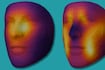
Did you know your brain has a glow? Researchers at Wilfrid Laurier University in Waterloo, Ont. have built a helmet that measures light emissions from cancerous brain cells to diagnose the disease in its earliest stages. Nirosha Murugan, research chair in the Faculty of Science, is targeting the roots of glioblastoma, a deadly brain cancer that originates when glial cells, which are meant to support neurons, start dividing abnormally and grow into a tumour that kills neurons. “The general gap that we have in cancer detection is that we’re completely reliant on biomolecules, genes and physical constructs,” Murugan said in an interview with CTV News. With cancer detection top of mind, her team of researchers landed on using the light that our cells emit as a helpful tool. “If we’re trying to look for a way to non-invasively detect brain cancer with one of the most common aggressive forms is glioblastoma, we kind of need to tease apart the signals,” explained Murugan, who is also an assistant professor of health sciences at the university. “Our goal is to understand what causes glial cells to lose their identity and behave abnormally, while also exploring ways to preserve the remaining neurons, as they are irreplaceable.” Using ultra-sensitive detectors to pick up individual photons, sensors in the helmet record the electrical and photonic landscape of the brain. “You put gel into each of these 19 electrodes,” Jordan Meikle, a health sciences MSc candidate, said while demonstrating how the helmet works. “It just sits snugly on top,” explained Victoria Hossack, a health sciences postdoctoral fellow, as she placed it on health sciences student Avery Morrison. The trouble with current cancer detection technology is that it requires an accumulation of cancer tissue, captured by imaging or biomarkers, which may be hard to access or too far along once found. “What we mean by ‘early’ is when that single cell starts to make a decision to go from its healthy state to something that we consider ‘not normal,’” Murugan said. Catching it at the single-cell level could lead to earlier diagnosis and a lower risk of mortality. Other uses for the helmet Murugan is currently working with a medical oncologist to track patients undergoing chemotherapy. Using the helmet, they aim to identify signs of “chemo brain,” or cognitive impairments following chemotherapy. Doctors struggle to identify which patients will suffer cognitive impairments following chemotherapy. Common symptoms include memory loss, depression, delayed cognitive processing and behavioural changes, including aggression. “Loved ones often notice big emotional changes in the patient, but not suddenly: they happen very gradually over time,” Murugan said. “What’s happening is that the chemotherapy drugs we use to kill cancer also kill other cells, including the neurons in our brains. Established neural networks begin to decay and we see a change in behaviour because of it.” If that proves to be successful, the magnetic fields may also have the ability to halt progression of psychiatric illnesses. “I think our technology has the potential to be on the preventative side,” said Murugan. It’s a no-brainer, in her eyes, when it comes to pushing forward cancer research and overall wellness. Learn more about the research here. - With files from Wilfrid Laurier University