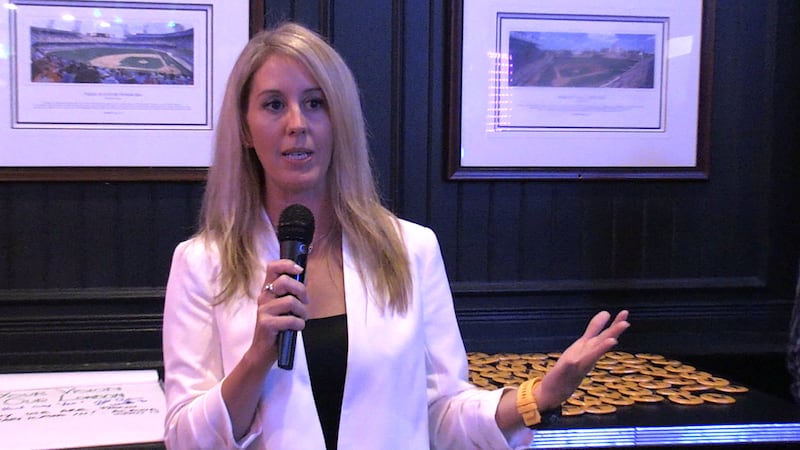
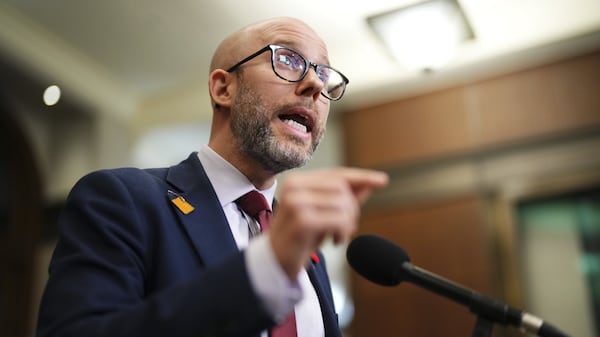
Edmonton police say they are in support of the city’s move to reinstate photo radar at problem intersections after the most traffic deaths in 10 years. Sgt. Robert Davies, with the Edmonton Police Service’s (EPS) specialized traffic section, said officers have seen an uptick in aggressive driving as well as excessive speeding. “It says that we’re missing that component, and that people have noticed there isn’t automated speed enforcement in the city, and I don’t think it’s a stretch to say that people’s driving is becoming more aggressive,” said Davies. While speeding has become the norm on major thoroughfares like Anthony Henday Drive, Yellowhead Trail or Whitemud Drive, the sergeant said speeding has trickled into regular and residential streets. “If people are aware that there’s a chance that they’re going to get a ticket, I would like to think that most people are going to change their behaviour, change their driving patterns when they’re driving in an area susceptible to automated enforcement,” he said. Mayor Andrew Knack echoed the sergeant’s comment, saying people’s poor driving habits are causing real harm to people. “Unfortunately, it feels like because of the lack of consequences, people are choosing to drive more dangerously on our streets,” Knack said. This year, 31 people, including 11 pedestrians, have died in crashes, the highest number of fatalities in a decade. Since photo radar was banned, EPS and city peace officers have been attempting to ramp up enforcement efforts, but there are safety concerns, especially in high-traffic areas like the Henday where vehicles are travelling at higher speeds. “It isn’t the safest place for us to conduct enforcement, but we’re going to do it. It is our job,” said Davies. “But automated enforcement was a partner, and it did assist us in that fashion.” The city was also forced to wind down its contracted mobile enforcement program, which was recognizable by the bright yellow “Drive Safe” vehicles, in the province’s sweep of photo radar. There are more than 80 intersections in Edmonton equipped with automated traffic enforcement devices. Since the province put a ban on photo radar effective at the beginning of 2025, the cameras have been used to collect data while still enforcing red-light runs. Jessica Lamarre, director of safe mobility with the city, said there have always been requirements for photo radar cameras at intersections. “Even before this year’s changes, there were significant requirements in place to establish an automated enforcement location within our municipality,” said Lamarre. “So when we take a look at the criteria the province has laid out, many of our sites met and continue to meet the new criteria that they have through this version of the guideline.” The city has put forward 10 intersections for the Alberta government’s consideration. Lamarre said she has yet to hear back, but is optimistic they’ll be approved. “For the sake of safety, I hope it can move quickly,” she said, adding they plan to pursue further exemptions from the ban. “This enforcement type is very effective. The progress that we made towards Vision Zero since 2015 with automated enforcement as a tool was substantial, and we are seeing that sort of reverse now that we’ve lost that tool across our city network.” The province said it has no plans to expand photo radar beyond the current framework and that any use of it must meet provincial guidelines, including clear evidence of collisions, proof that other safety measures have not worked, and a commitment to implement complementary strategies alongside photo radar. “Driver behaviour is completely at our control when we are the person behind the wheel,” said Lamarre. “What we’re seeing is a choice: people are speeding … We have lost 31 lives this year. That is scary.” With files from CTV News Edmonton’s Amanda Anderson