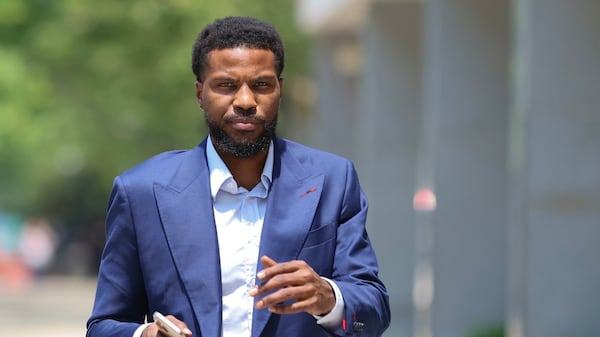
The Smith government unveiled a 30-year strategy to improve passenger rail in the province, with work already said to be underway on connecting LRT systems with international airports in Edmonton and Calgary. Founder of the group High Speed Rail Canada Paul Langan joined Alberta Primetime’s Michael Higgins to discuss Alberta’s master plan. This interview has been edited for clarity and length. Michael Higgins: High-speed rail has been studied before in the province. How different is this approach by the Smith government and how realistic is it? Paul Langan: We started off in 1985 so I’d like to be optimistic. This is a large study that’s not just talking about high speed rails, it’s also talking about other commuter and regional rail. I want to be positive about it, but no. There is some cynicalness in me. MH: Is high speed rail a want or a need? What would warrant making this a reality? PL: I’ll be honest with you, I would just like to see any inter-city passenger rail in Alberta. It’s an embarrassment that between your largest cities, you have nothing. High-speed rail would be great, but we really need something like it doesn’t make sense. The rest of the modern world has passenger rail and for some historical reasons, Edmonton and Calgary, just don’t get it together to make it happen. MH: You actively advocated here in Alberta for high-speed rail back in the early 2000s. Why have those past efforts fallen by the wayside? PL: It’s pretty simple and you can’t blame any particular party because it didn’t matter which party was in power. The political will was not there, but to supplement that, the public will was not there. Politicians do respond to the public so if the public isn’t saying “we want a train between Calgary and Edmonton,” and saying, “we’d rather go on that Highway 2 and risk our lives in the wintertime,” then that’s what you get. MH: Linking Edmonton and Calgary with their respective airports, if that gets off the ground, how likely is that to pave the way to further expansion? PL: What I would like to see is your premier next to the prime minister announcing a definitive amount of money saying, “Here’s what we’re building.” What we got was, “We’re going to spend $50 million on another study.” I want it to happen so bad, but it’s just become another process. Right now we’re nation building. We could have announced an Edmonton to Calgary rail. They announced Toronto to Quebec City, but the premier was more preoccupied with pipelines, so it’s not happening. We’re just getting a $15 million further study. MH: What about realistic renewal of passenger rail between Calgary and Banff? That’s certainly a project here in Alberta that’s been pitched by the private sector. PL: Oh, great, fantastic. Again, it shouldn’t even be a question. You have a situation there that you’re desperate to have an alternative to taking the highway and there’s a way. It’s a no brainer. Somehow there’s a cultural mindset in Alberta from the politicians that are preventing this from making it a priority. But as far as the idea goes, it’s fantastic and anybody in Banff will tell you it’s a great idea and anybody that wants to go there will tell you it’s a great idea. MH: If there is commitment from the province to pursue high-speed rail, is it then on the private sector to pony up the necessary dollars to make any of this a reality? Could this be a situation that maybe mirrors dynamics around the Alberta-Ottawa MOU? PL: Just like in Ontario or many projects around the world, it’s a public-private partnership to make this happen, 100 per cent. What I’ve always said about this is you need to say we’re open for business to do this. Then you can even get other countries that come in and want to partner. The Japanese are always looking to partner, the Chinese, people of the Spanish consortiums, and of course the French consortiums. But your premier has to say, “We’re open for business. We want to connect Calgary to Banff, for example. Let’s make this happen.” I haven’t heard that. MH: There is some contention over the current federal government’s efforts to link Toronto and Quebec City. How challenging do you see the Alberta government maybe being in harnessing the degree of right of way needed for such a train between Calgary and Edmonton? PL: NIMBYs (Not In My Backyard) is very strong these days because of social media and the ability to get your message out so quickly. But again, that’s not the reason you don’t say let’s go for it. That might be the reason when you’re implementing it, like you say, “We should do this route. It’s best for the public, it’s best for the environment,” whatever your criteria is. But that’s not the reason not to say let’s have passenger rail return to Alberta after over half a century. We can’t worry about that. There’s always people that are going to protest any major infrastructure project. MH: “A future that runs on rails.” That was signage that appeared at the rollout of the master plan. Who needs to lead the way to make any of this a reality? PL: I think the premier does, but it can’t be a wide-scope, 30 to 60 years thing. We have to get a win right now. Like Calgary to Banff, let’s say that’s our priority, “Prime Minister Mark Carney, we want $500 million to get this going. Private sector, we want you to join in. We want you to build and operate it. Yes, we want these train cars made in Canada.” It’s a very concrete project. This is the time. This is not a time to say, “let’s do a study that stuff will happen between 30 and 60 years.” In the plan, it suggests that Lethbridge wouldn’t get trains for 60 years. Jeez, everybody will be dead.