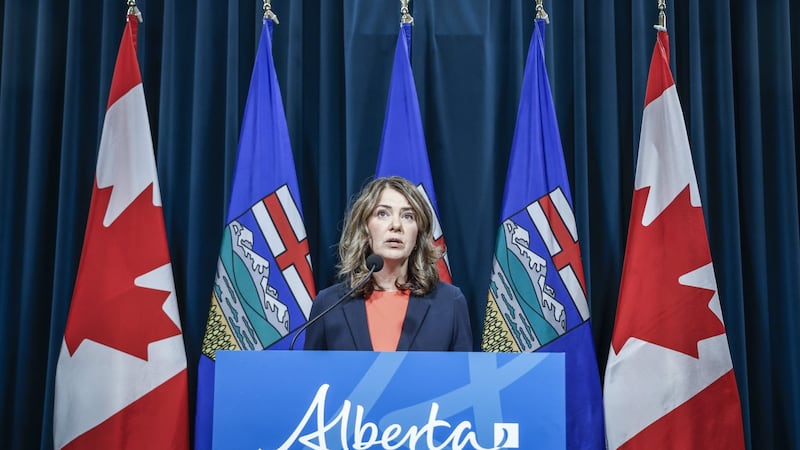
Cynthia Vermette wasn’t old enough to self-refer for a mammogram in 2024, and didn’t think much of it when her doctor suggested she book the test during a yearly physical, just in case. That seemingly premature screening at 42 years old caught an early form of aggressive breast cancer that would have otherwise gone undetected. Had it advanced, her odds of survival would’ve been 33 per cent. “That doctor, she saved my life,” Vermette told CTV News Edmonton. She had no history of breast cancer in her family and said she was “absolutely shocked.” “As it turns out, the majority of women that are diagnosed with breast cancer have no history of breast cancer in their family.” She underwent surgery, 12 rounds of chemotherapy, 15 rounds of radiation and 17 rounds of immunotherapy. She’s been cancer-free ever since. About one in seven Albertan women will have breast cancer in their lifetime, according to Primary Care Alberta. So Vermette is celebrating the news that Alberta will soon be on par with the rest of the country in making early detection more accessible to younger women. The Government of Alberta announced plans to lower the age of self-referral for breast cancer screening on Wednesday. Beginning April 2027, Albertans over 40 will be able to book a free screening without a doctor’s referral. In the meantime, those 40 to 44 can access free screening with a one-time physician referral. “It’s putting the agency back into women’s hands, where it should be,” Jennie Dale, founder of Dense Breasts Canada (DBC) said Thursday. Dale started the DBC after her own breast cancer diagnosis in 2016 to advocate for optimal breast cancer screening. She called Alberta a leader in some respects for its use of 3D mammography and being the only province to offer ultrasounds regularly for dense breasts, which are breasts made up of fibrous tissue that makes mammograms less effective in detecting early cancer. “Alberta has great cancer detection rates … That’s why it’s a little bit unusual to see a delayed implementation of (the lowered age), because it will mean Alberta will lag behind most of the country by the time they implement self-referral,” she explained. Longer wait times for testing eligibility, Dale said, could contribute to higher rates of advanced breast cancer until the screening age is officially lowered. “It’s a win for the province at a time where health-care systems are so overburdened. By finding cancer early, you can save money … you’re reducing the burden on oncology, radiology, surgery,” she added. In a statement to CTV News Edmonton, Alberta’s ministry of primary and preventative health services said people between the ages of 40 and 44 who get a one-time physician referral for breast cancer screening are able to book follow-ups without needing extra referrals until the age drop is official. “This timeline ensures the system is ready to manage increased demand and supports the smooth transition as awareness of the change builds ahead of full implementation,” the ministry said. “Alberta was the first province to lower the screening age from 50 to 45 in 2022. Since then, we’ve seen a wave of change across the country over the past five years, with each jurisdiction implementing adjustments based on its own circumstances.” Currently, every province except for Saskatchewan, Manitoba, Quebec and Alberta allow self-referrals starting at age 40. Saskatchewan’s self-referral age is 43. Quebec’s is under review. Manitoba’s is set to become 40 in December 2026. The Canadian Cancer Society recommends screening for breast cancer every two years if you are between the ages of 40 and 74. Dale says the earlier, the better. “When you find a lump, it’s already at a more advanced stage. It’s usually stage two or three or four. So it’s really important to get screening, because mammograms can find cancer two to three years before a lump can be felt or a symptom is seen,” she said. And Vermette can attest that really, the process isn’t that bad. “They call it a squish for a reason. I mean, it’s not comfortable, but hey, if it saves your life, then absolutely do it. It is worth it.” With files from CTV News Edmonton’s Miriam Valdes-Carletti and Angela Amato