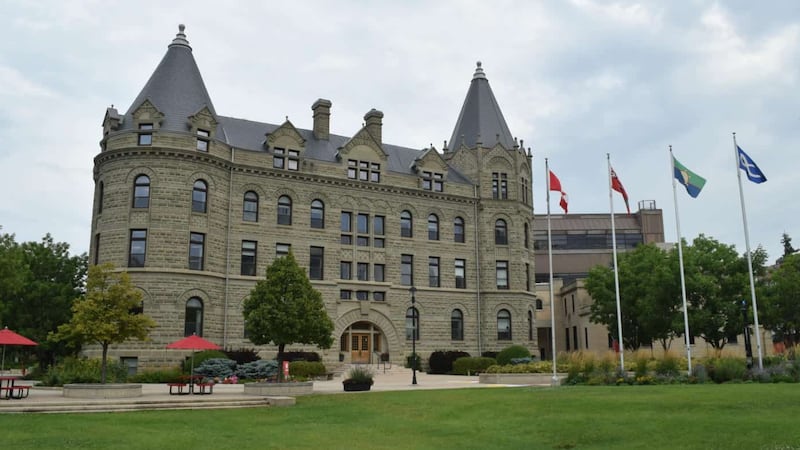
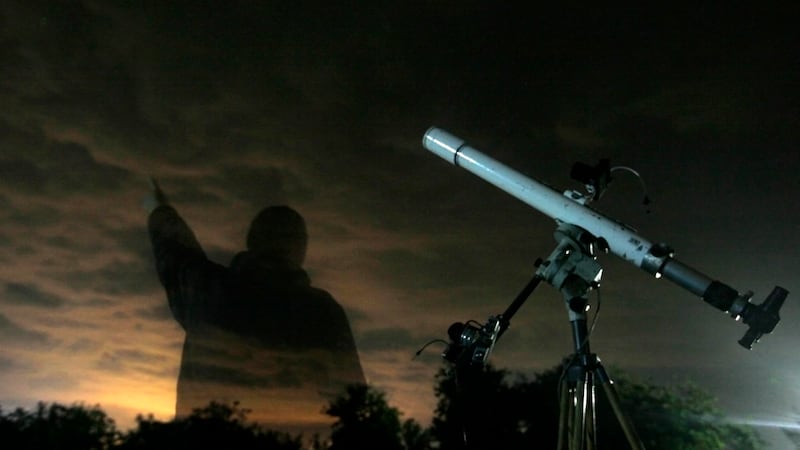
Ever wanted to go to space? Chances are, you can’t in this lifetime. But your signature could, if you donate to the University of Alberta students who are launching their newest satellite into orbit. Student group AlbertaSat is creating Ex-Alta 3, a Cube satellite (or CubeSat, as they call it) meant to orbit earth and help conduct environmental research. Priya Manavalan, an undergrad student at U of A and the project manager of AlbertaSat, leads a team of volunteer students who are responsible for designs, builds, tests and operation of the CubeSats. The satellite is meant to launch next summer on a rocket from SpaceX and is handled entirely by the Canadian Space Agency (CSA). Tom Cundict, deputy project manager, explained that CSA does give out grants for the projects, and the team receives funding through sponsors and the university. But making a satellite isn’t cheap. This one will cost in the range of half a million dollars, Cundict said. That’s why the team is running a crowdfunding campaign. “We want to bring our donors literally with us on the mission,” Manavalan said. Donors who give $100 or more to the project get to have their names etched onto a silicon chip that will be travelling into space on the satellite next summer. “This is done here at the U of A nanoFAB facilities. Then we’ll affix your name on the chip to the satellite,” Manavalan said. They’ll also let you put three names on for $200. The research Manavalan said the team specifically chose an “ice and snow monitoring objective” for the satellite to support research on climate change. “We know that wildfires are a hot button issue for a lot of Albertan communities, so we wanted to support national climate change research efforts, as well as wildfire monitoring efforts,” she said. “That’s something that impacts even students within our team.” She explained how the satellite works with a student-designed multispectral imager that uses visible light and short wave infrared light to detect melting snow coverage and ice. In the summer, it will help monitor vegetation in post-burn areas. That’s the simple explanation. Cundict said people might be surprised by how small the satellite is at just 30 centimetres long. “It’s [the size of] a loaf of bread, and it contains everything that you need to run and operate,” he said. ‘It lets students know what they’re capable of’ Kevin Liu, who helps design the structure and systems of the satellite, said he’s known he wanted to design something that goes to space for a long time. He thought it was a goal for his late twenties or thirties. “To have this opportunity to help design something that’s going to go to space in my first year, that’s incredible,” Liu said. “That’s why I think a club like this is so important, because it lets students know what they’re capable of.” AlbertaSat is aiming for $20,000 to cushion the cost of launching Ex-Alta 3 by Sept. 9. “It’s a good opportunity to represent U of A, Alberta and Canada in the advancing world of space and satellites,” said Cundict. With files from CTV News Edmonton’s Miriam Valdes-Carletti