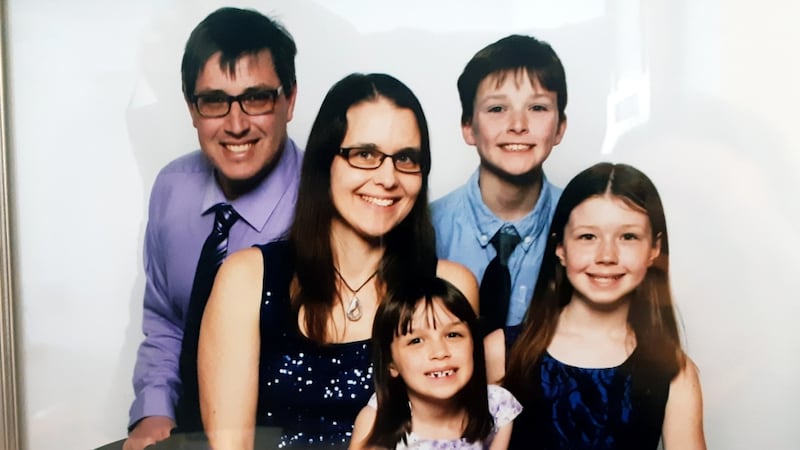
The Alberta government’s move to restrict eligibility for medical assistance in dying, or MAID, is seeing both praise and concern from those with varying firsthand experiences. Bill 18, among other recommendations, seeks to limit MAID approvals to those likely to die of natural causes within 12 months. Read more: Alberta government moves to drastically reduce access to medically assisted dying Mike Pangman would not have been eligible to die using MAID last month had the UCP government’s bill already been passed. Sharon, his widow, worries that changes to the program would deny autonomy to people like her husband. “His life was deteriorating to the point that it was becoming a struggle for him to have what he thought was a good quality of life,” she told CTV News Edmonton on Thursday. Her husband, she says, was an active skier, traveller, hiker and grandfather before his diagnosis in November 2019 and deterioration thereafter. He had Parkinson’s and later developed dementia related to the disease. Mike applied for MAID in January, spent what Sharon calls “extensive” time with two different doctors performing assessments, and was fully approved by February. He died on Feb. 20, 2026, surrounded by family. “I carry joy and sorrow. Mike had choices. He lived life the way he wanted to, and he was able to die the way he wanted to, and he’s not suffering any longer. Of course, I miss him every day,” Sharon said. And while she says MAID is not a course everyone in Mike’s situation may want to take, she believes her family had the benefit of weighing options early while her husband was still able to advocate for himself under current parameters. She acknowledged that Mike’s dementia diagnosis could’ve meant that in another year, he may not have been able to make his own decision. “Mike was given choice in his life. He was able to control his life right up until the day he died, and the legislation will remove that choice for a lot of individuals,” she said. Address support needs before MAID eligibility: disability advocacy groups Inclusion Alberta, a non-profit advocating for individuals with intellectual disabilities, says it hopes others would follow the province’s lead in reducing what it says is “unequal and discriminatory” MAID practices. Outside the steps of the legislature on Wednesday, CEO Trish Bowman said the bill would save lives by limiting what’s known as Track 2 MAID. Track 2 is for those whose death is not reasonably foreseeable within the next year and involves a strict assessment process under the Canadian Criminal Code. In 2021, Canada did expand eligibility to allow those suffering from a serious illness or disability that isn’t considered terminal and who are in an advanced state of irreversible decline to use MAID, which Inclusion Canada CEO Krista Carr previously called a “tragedy” resulting in the deaths of thousands of people with disabilities. “Disability, in and of itself, does not cause suffering. It’s the social and economic conditions we impose on people with disabilities that cause the suffering,” she told reporters on Wednesday. Bowman said people with disabilities should be able to retain access to MAID like every other Canadian if their death is reasonably foreseeable but not have it presented to them as an option otherwise. “We don’t think that there are any safeguards that will protect vulnerable people from assisted suicide when their death is not reasonably foreseeable,” she said. “We don’t think that that is the answer. We think our efforts and our answer needs to lie in ensuring and advocating for appropriate supports.” Currently, MAID operates largely under a federal framework that has safeguards in place to limit abuse of the program. This includes prohibiting children or those who cannot make their own health-care decisions from accessing MAID. Ottawa also does not allow requests made by patients in advance. Alberta’s bill would prohibit mental illness as a sole reason for applying to MAID as well as stop medical professionals from referring patients to providers in other provinces. Doctors and nurse practitioners who break that rule would face the loss of their licence under the amendments. Premier Danielle Smith told reporters Wednesday that the changes were meant to keep MAID as a compassionate option only for those who would not recover from terminal illness. In a media statement Wednesday, Alberta’s Opposition NDP said there was a need for “proper guardrails and oversight” to access MAID but would be taking time to review the legislation. Justice ministry press secretary Heather Jenkins said Bill 18 would come into effect through proclamation and would not be retroactive, meaning those who have been approved for MAID already may move forward with their application. With files from CTV News Edmonton’s Nicole Weisberg and The Canadian Press